Historical Background of Rebberg Movements
The story of the Rolex Rebberg movement lies at the very intersection of pocket watch miniaturization and the birth of the modern wristwatch. In the early 20th century, Hans Wilsdorf, co-founder of Wilsdorf & Davis (the precursor to Rolex), envisioned a world where timekeeping moved from the waistcoat pocket to the wrist. To achieve this, Wilsdorf partnered with the Aegler movement manufacture located in the Rebberg district of Biel/Bienne, Switzerland. Aegler specialized in producing exceptionally small, high-grade lever-escapement movements that were robust enough to withstand the motion of the arm while maintaining chronometric precision.
During the First World War, officers required quick, hands-free time tracking to synchronize artillery barrages and infantry charges. Standard pocket watches were unsuited for tactical conditions, prompting soldiers to weld makeshift wire loops onto small pocket or pendant watches so they could be strapped to the wrist. These crude wristlets evolved into dedicated trench watches. At the heart of many high-grade civilian and military adaptations was the Aegler-produced Rebberg caliber, marked with W&D signatures or early Rolex brandings. Executing an vintage Rolex wristwatches restoration or conversion requires understanding this heritage, as these movements represent the precise bridge between 19th-century horological traditions and early 20th-century industrial watchmaking.
Today, performing an aegler rolex wristwatch conversion or restoring an original period wristlet demands respect for this historical context. Many original Rebberg movements survived in small silver or gold pocket watch cases, while others lost their housings to gold-scraping booms over the decades. Converting a bare or pocket-housed Rebberg movement into an early-style wristlet allows watchmakers to preserve a vital piece of horological engineering, rendering a functional mechanical artifact suitable for modern wear while strictly preserving its internal integrity.
Technical Specifications and Movement Architecture
The Rolex Rebberg platform was produced in various sizes, predominantly ranging from 10½ to 13 lignes (1 ligne = 2.2558mm). Visually, the Rebberg movement is recognized by its classical Swiss finger-bridge construction. Rather than using a single unified top plate, the train wheels are secured by distinct, hand-finished bridges—typically a separate bridge for the barrel, center wheel, third wheel, fourth wheel, and escape wheel. This layout not only offers superior aesthetics with polished bevels (anglage) and damaskeening or Geneva stripes, but it also allows watchmakers to adjust individual endshake and depthings for each wheel in the gear train independently.
Underneath the top bridges, the Rebberg caliber incorporates a traditional Swiss club-tooth lever escapement. High-grade variants feature a cut bimetallic compensation balance wheel equipped with gold timing screws, paired with a Breguet overcoil hairspring. This hairspring configuration dramatically improves isochronism across various positions compared to flat hairsprings found in lower-tier movements. Lower-grade versions may feature a solid nickel balance, but high-end 15-jewel and 17-jewel executions utilize screwed ruby chatons or tight-tolerance friction jewels for the upper and lower balance staff pivots, pallet arbor, and gear train pivots.
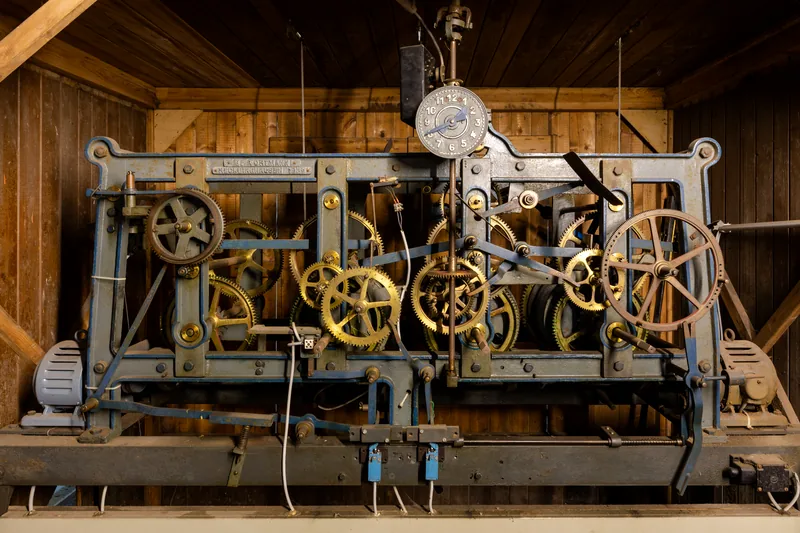
The keyless works (the winding and setting mechanism) on a typical Rebberg caliber utilizes a rocking-bar or pull-out setting mechanism, depending on the generation and size. Early open-face (Lépine) and hunter (Savonnette) layouts feature stem-set or sleeve-set configurations where pulling the crown shifts the setting lever to engage the minute wheel. Understanding the stem stroke, sleeve tension, and winding arbor geometry is critical prior to attempting any modern rolex rebberg conversion, as these mechanical tolerances leave zero room for misalignment.
Challenges of Converting Rebberg Pocket Watches to Wristwatches
Transforming a vintage pocket watch movement into a functional wristwatch presents severe mechanical and structural hurdles. The primary challenge stems from dial architecture and movement layout. Pocket watch movements were designed in either Lépine (open-face) or Savonnette (hunter) configurations. A Lépine movement places the winding stem at 12 o'clock and the sub-seconds pivot at 6 o'clock. If cased directly into a standard wristwatch configuration without modification, the crown remains at 12 o'clock (requiring a top-mounted strap attachment) or must be rotated to 3 o'clock, which awkwardly shifts the small seconds sub-dial to 9 o'clock. Savonnette movements, conversely, feature the winding stem at 3 o'clock and sub-seconds at 6 o'clock relative to a standard dial orientation, making them far better structural candidates for wrist alignment.
Another major obstacle is shock protection. Rebberg calibers manufactured between 1905 and 1920 were engineered decades before the invention of modern shock-absorbing jewel settings such as Incabloc or KIF. The micro-pivots on the balance staff measure a delicate 0.07mm to 0.09mm in diameter. On a pocket watch shielded inside a vest pocket, these pivots were relatively safe; on a moving wrist, sudden impacts can easily shear an unprotected pivot. Watchmakers undertaking an early rolex trench conversion must ensure the balance staff is perfectly trued, the jewel clearances are flawless, and the finished watch case offers adequate structural dampening.
Lastly, environmental sealing poses a continuous risk. Antique pocket watch cases rely on simple snap-fit bezels or hinge joints that lack modern synthetic rubber O-rings or threaded gaskets. Dust, ambient humidity, and skin oils can enter through the stem opening or case seams, rapidly oxidizing steel train pivots and drying out organic oils. Adapting these movements demands re-engineering the case fitments and crown tubes to prevent rapid wear and movement contamination.
Lug Welding and Case Selection
Proper case selection and modification dictate whether a conversion is horologically sound or structurally flawed. When executing a high-caliber conversion, watchmakers typically choose between two paths: modifying an original period silver pocket/pendant case or utilizing an authentic period-correct donor trench case. If using an original sterling silver (.925) or continental silver (.935) pocket case, fixed wire lugs must be fabricated and permanently fused to the case perimeter to accept a NATO or wire-lug leather strap.
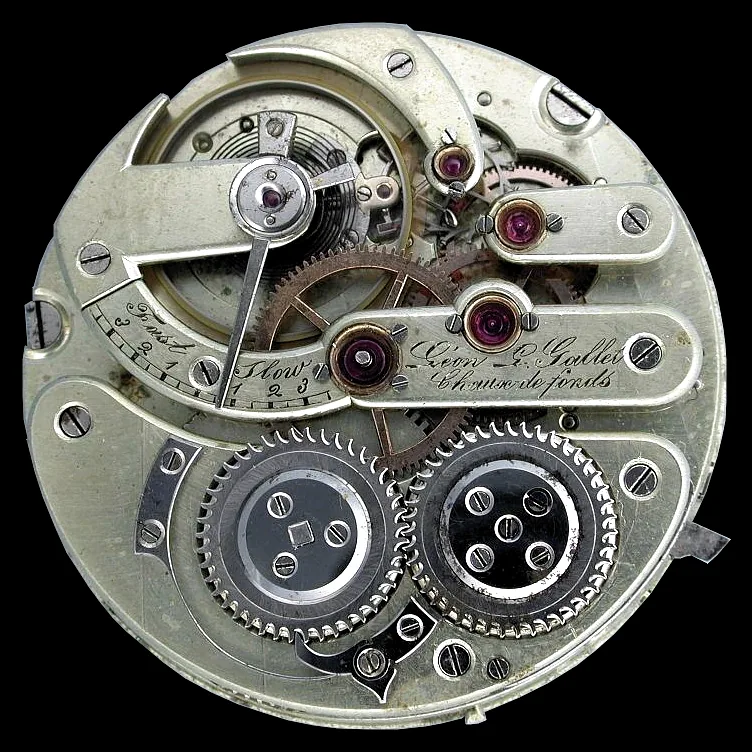
Welding or soldering lugs to a vintage silver case requires precise thermal control and metallurgical understanding. Traditional soft soldering (lead/tin) lacks the tensile strength required to withstand daily wrist forces and will eventually shear. High-temperature silver soldering (hard brazing) or modern Micro-TIG / Laser welding is required. When using hard silver solder, the entire case body must be stripped of movement, crystal, springs, and hinges. Borax flux is applied to clean joint zones, and silver wire loops (typically 1.5mm to 2.0mm solid sterling silver) are fitted against the curved case wall. The case must be heated evenly with a jewelers torch to prevent warping the thin silver walls or melting nearby soldered seams.
Modern micro-welding methods, such as laser welding or pulse-arc TIG, offer significant advantages. They allow the watchmaker to introduce high-purity silver filler wire at concentrated points without heating the entire case. This preserves historical hallmarks inside the case back and avoids heat-crazing the metal. Lugs must be aligned symmetrically along the 12 o'clock to 6 o'clock axis, angled slightly downward to conform to the wrist, and stress-tested under lateral torque to guarantee structural safety.
Crown and Stem Solutions
One of the most complex mechanical phases of a rolex rebberg pocket watch conversion involves turning, fitting, and sealing the winding stem and crown assembly. Pocket watch stems are frequently too thick, too short, or equipped with metric thread pitches that do not match modern wrist crowns. Conversely, original pocket watch crowns are oversized "onion" or "cabochon" styles designed for thumb-and-forefinger winding, which can dig uncomfortably into the wrist if not properly scaled.
To fabricate a custom stem, the watchmaker mounts a high-carbon annealed steel blank (such as Gauge 30 / Blue steel rod) into a precision watchmaker's lathe (e.g., a Schaublin or Levin lathe). The stem's square section—which engages the clutch wheel and winding pinion—must be turned and filed to exact tolerances within 0.01mm. The pivot tip must fit smoothly into the mainplate recessed hole without excessive side-play, which would cause the keyless works to skip teeth during winding or time-setting operations.
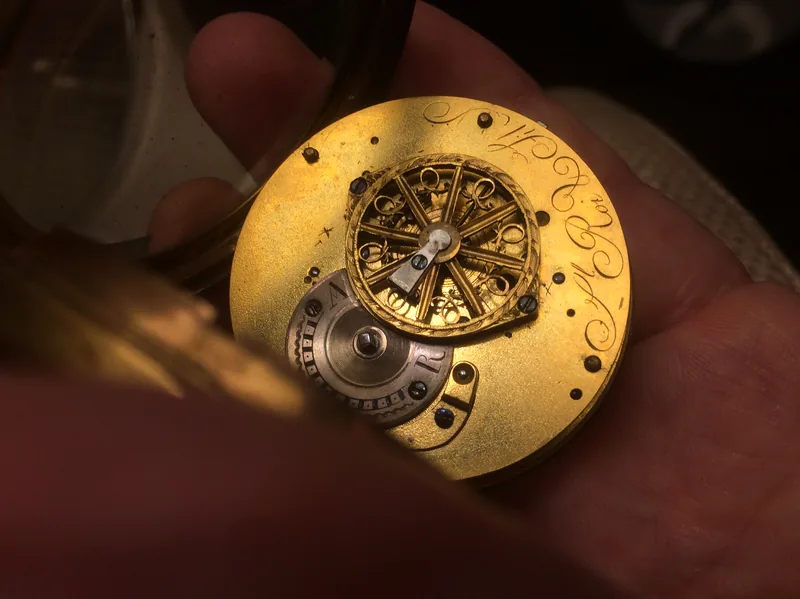
After turning the square arbor and burnishing the bearing pivots, the outer end of the stem is cut with micro-threads (commonly Swiss Tap 9 or Tap 10 threads, equivalent to 0.90mm or 1.00mm thread diameters) to accept a period-correct, low-profile onion or trench-style crown. To mitigate moisture ingress, a custom brass or sterling silver crown tube is turned on the lathe, press-fitted into the case wall, and paired with an internal gasket rimmed within the crown cavity. The stem is then hardened in heat and quenched in oil, followed by tempering to a spring-blue color to prevent brittleness under winding torque.
Dial and Hand Considerations
The original dials found on Rebberg movements are almost exclusively double-sunk or single-piece vitreous enamel fired over copper baseplates. Vitreous enamel provides timeless beauty and never fades or oxidizes, but it is notoriously brittle. When modifying a movement layout or re-casing, extreme care is required to avoid flexing the dial plate, which induces hairline cracks or catastrophic enamel chipping around the dial feet and center hole.
If the dial legs (dial feet) do not line up with the mainplate clamping screws in a new case orientation, new feet must be attached. Traditional soldering with a torch will scorch and ruin the enamel front face due to extreme heat conduction through the copper plate. Watchmakers utilize a specialized capacitive-discharge dial foot soldering machine. This device delivers a lightning-fast electric arc through copper copper-headed feet directly onto the copper baseplate back in milliseconds, fusing the metal without raising the temperature of the enamel surface above its cracking threshold.
Hand fitting requires equal precision. Vintage Rebberg movements feature non-standard cannon pinion and hour wheel pipe diameters. Replacement hands—such as blued steel Cathedral, Skeleton, or Spade styles—must have their mounting collars precisely closed or broached using a set of micro-cutters and staking punches. If blued steel hands exhibit corrosion or lost luminescent paint, modern watchmakers scrape away failing radium compound (following strict hazardous material handling protocols) and re-lume the skeletonized frames using non-radioactive, color-matched modern pigments that mimic aged vintage patina.
Why Rolex Rebberg is More Common for Conversion
Among all antique pocket watch calibers, the Rebberg movement manufactured by Aegler is uniquely suited for wristwatch conversions. The primary reason is size: while North American pocket watches (such as standard 16-size or 18-size Waltham, Elgin, or Hamilton calibers) range from 43mm to 48mm in movement diameter alone—resulting in massive, unwieldy wrist conversions measuring over 50mm—the Rebberg line was systematically designed in compact wristlet-friendly proportions (11½ to 13 lignes, or ~26mm to 29.5mm diameter).
Furthermore, Aegler produced large quantities of 11½ and 13-ligne hunter (Savonnette) movements during the early 1900s. Because Savonnette layouts naturally place the winding stem at 3 o'clock and the small seconds sub-dial at 6 o'clock, these calibers drop effortlessly into a wristwatch case layout without requiring awkward dial rotations or custom re-printing of enamel graphics. This spatial harmony allows watchmakers to produce conversions that visually mirrors authentic WW1 trench watches that came directly from Wilsdorf's early workshops.
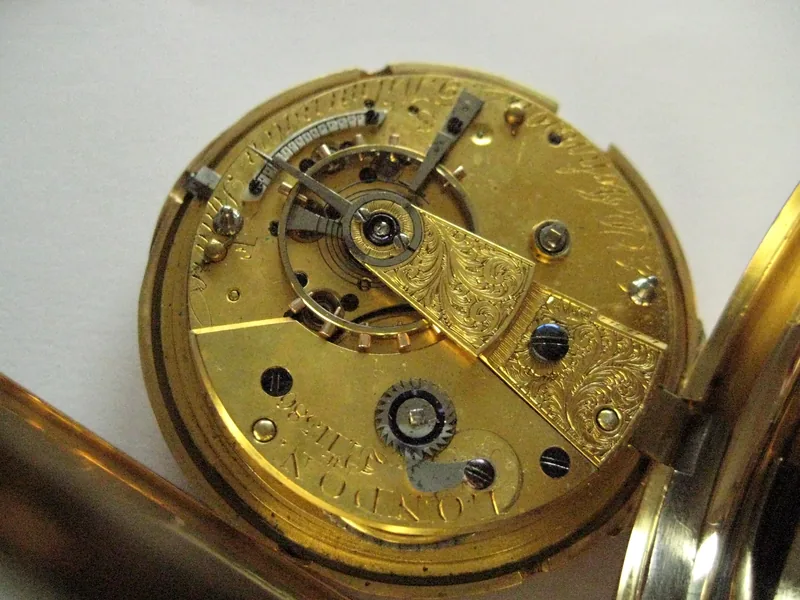
Lastly, the horological prestige and mechanical reliability of the Rebberg platform make the intensive labor of a conversion economically and historically viable. The movement's robust construction, high-grade balance assembly, and direct pedigree to early Rolex branding mean that a meticulously executed conversion yields a highly collectible, wearable piece of history rather than an oversized novelty watch. Collectors seeking authentic aesthetic appeal combined with genuine vintage engineering frequently turn to the Rebberg platform for these reasons.
Final Thoughts on Rolex Rebberg Conversions
Performing a high-level conversion on a vintage Rolex Rebberg movement bridges the gap between historical preservation and practical horology. When executed by an experienced watchmaker using period-appropriate materials and precise machining practices, a conversion saves orphaned high-grade movements from remaining hidden in drawers or lost to time. It transforms a delicate relic into a functional piece of wristwear that showcases the ingenious engineering of Aegler and Hans Wilsdorf's early vision.
However, technical rigor must guide every step of the process. From preserving brittle vitreous enamel dials to lathe-turning custom hardened steel stems, micro-welding sterling silver lugs, and adjusting zero-shock balance staffs, every phase requires uncompromising bench standards. Those interested in building or acquiring antique pocket watch conversions should prioritize horological authenticity: ensuring that no destructive modifications are made to original rare signed components, and that modern synthetic lubricants (such as Moebius 9010 and HP-1300) are utilized to preserve pivot longevity for decades to come.
Ultimately, a masterfully crafted rolex rebberg conversion honors the early era of military aviation and trench warfare, where wristwatches were forged out of absolute necessity. By maintaining strict standards of metal compatibility, train geometry, and case architecture, watchmakers ensure that these iconic movements continue to tick reliably on modern wrists, keeping the vibrant history of early 20th-century watchmaking alive.