Historical Background of Valjoux 0s Movements
The Valjoux manufacture, originally founded as Reymond Frères in 1901 by John and Charles Reymond in Les Bioux within the renowned Vallée de Joux, holds a legendary status in Swiss horological history. While the company achieved global renown for its high-grade column-wheel chronograph calibers, its early 20th-century production included exceptionally fine time-only and pendant watch ebauches. Among these early creations was the 0-size (0s) movement architecture, a compact movement standard measuring approximately 13 to 14 lignes (roughly 29.0mm to 30.0mm in diameter). This intermediate size occupied a pivotal position during the transition from traditional pocket timekeeping to wrist-worn instruments.
During the period spanning 1905 through the post-WWI era, societal and practical demands spurred a rapid evolution in watch design. Gentlemen began shifting away from bulky waistcoat timepieces in favor of wristlets, a transformation accelerated by military officers demanding hands-free operational timekeeping. Early watchmakers met this demand by adapting smaller pocket movements—particularly 0-size pendant watch movements originally crafted for women's jewelry pieces or smaller men's open-face watches. These early adaptation techniques laid the foundation for what collectors now identify as authentic WW1 trench watches.
Understanding this history is essential when approaching a project to convert valjoux 0s pocket watch into wristwatch configurations today. Valjoux 0s ebauches reflect an era when high-end bench finishing, individual component hand-fitting, and traditional lever escapements were standard. Recognizing the historical significance of these raw calibers ensures that any modern conversion respects the original architecture while giving a rare Swiss caliber a second life on the wrist.
Technical Specifications and Movement Architecture
From a mechanical perspective, the Valjoux 0s pocket watch movement is a masterpiece of early Swiss ebauche manufacturing. Nominally sized between 29.0mm and 29.5mm, the movement typically features a traditional Swiss lever escapement driven by a manual-wind going barrel. The regulation organ usually consists of a cut bimetallic compensation balance wheel equipped with gold timing screws, paired with a blued steel hairspring featuring a Breguet overcoil for improved positional isochronism. The train wheel layout is configured with elegant finger bridges or a classic three-quarter plate layout, decorated with fine Côtes de Genève, perlage on the mainplate, and mirror-polished anglage along the bridge bevels.
The jeweling on high-grade Valjoux 0s calibers ranges from 15 to 17 jewels, with top-tier variations utilizing screwed bronze or gold chatons to secure the upper train wheel pivots. The keyless works utilize either a traditional stem-set mechanism or a pin-set/nail-set arrangement commonly found in turn-of-the-century Swiss pocket watches. The pallet fork and escape wheel feature highly polished steel pivots running in unshocked jewel bearings. The mainspring barrel is engineered to deliver a 36 to 40-hour power reserve running at a traditional frequency of 18,000 vibrations per hour (2.5 Hz).
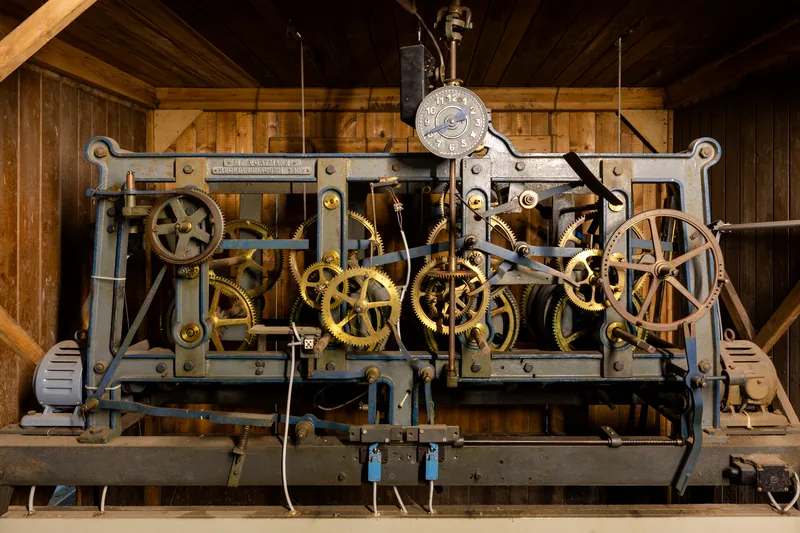
Crucially, the physical proportions of the Valjoux 0s caliber offer distinct advantages and challenges for the bench watchmaker. With an overall movement thickness generally between 4.2mm and 4.8mm, it is noticeably slimmer and more proportional for wrist wear than common 16-size or 18-size pocket watch movements like the Unitas 6497 or Hamilton 992B. However, this reduced scale means internal components—including the balance staff pivots, winding pinion, and setting levers—are delicate, requiring extreme precision during disassembly, cleaning, and re-casing.
Challenges of Converting Valjoux 0s to Wristwatch
When horological enthusiasts ask, "can you convert valjoux 0s pocket watch movements into modern wristwatches?", the technical answer is yes—but only by solving several complex engineering hurdles. The first major obstacle involves dial orientation and sub-seconds alignment. Depending on whether the donor movement originates from a Lépine (open-face, stem at 12 o'clock, sub-seconds at 6 o'clock) or Savonnette (hunter-case, stem at 3 o'clock, sub-seconds at 6 o'clock) architecture, housing the movement in a wristwatch format rotates the display. Casing a Lépine movement with the winding stem at 3 o'clock shifts the running sub-seconds subdial to the 9 o'clock position, requiring careful custom dial design or acceptance of an asymmetrical aesthetic.
The second primary hurdle concerns shock absorption and environmental resilience. Vintage Valjoux 0s movements were built to reside inside protective waistcoat pockets and lack modern shock-protection systems like Incabloc or KIF on the balance jewels. When worn on the wrist, the micro-fine pivots of the original balance staff are directly exposed to rotational impacts, vibration, and accidental knocks. Therefore, a successful conversion must incorporate a protective movement mounting system inside the case band, combined with modern rubber gasket seals to prevent moisture, sweat, and atmospheric dust from ruining non-stainless internal steel components.
Finally, spatial integration within a new enclosure demands exact tolerance machining. Pocket watch movements were held in place using specialized casing screws, perimeter lips, or snap-ring bezels specific to their original cases. Securing a vintage Valjoux 0s movement into a wristwatch case requires custom-fabricated movement spacer rings, accurate alignment of the stem height with the case tube center, and strict clearance verification so that the balance wheel rim and hairspring coils never contact the inner case wall.
Lug Welding and Case Selection
Selecting or constructing a proper valjoux 0s pocket watch to wrist conversion case is the foundational step in turning a raw movement into a comfortable, wearable timepiece. Watchmakers typically approach case selection in one of two ways: modifying an original vintage pocket watch case by soldering wire lugs to the case band, or custom-machining a modern stainless steel conversion case engineered specifically for 13-ligne vintage movements. If preserving the original sterling silver, coin silver, or nickel pocket watch housing is desired, wire lugs fabricated from matching wire stock are silver-soldered or TIG-welded directly to the case ring at the 12 and 6 o'clock positions.
Lug welding onto an original antique case demands rigorous thermal management. The watchmaker must fully strip the case of all movement components, crystals, and solder joints to prevent heat discoloration or structural distortion. Using micro-TIG welding or high-temperature silver brazing, the lugs are fused to the case perimeter. After cooling, the joint areas are hand-filed, sanded through progressive abrasive grades, and hand-polished to blend the seam flawlessly into the case body, recreating the nostalgic appearance of early military conversions.
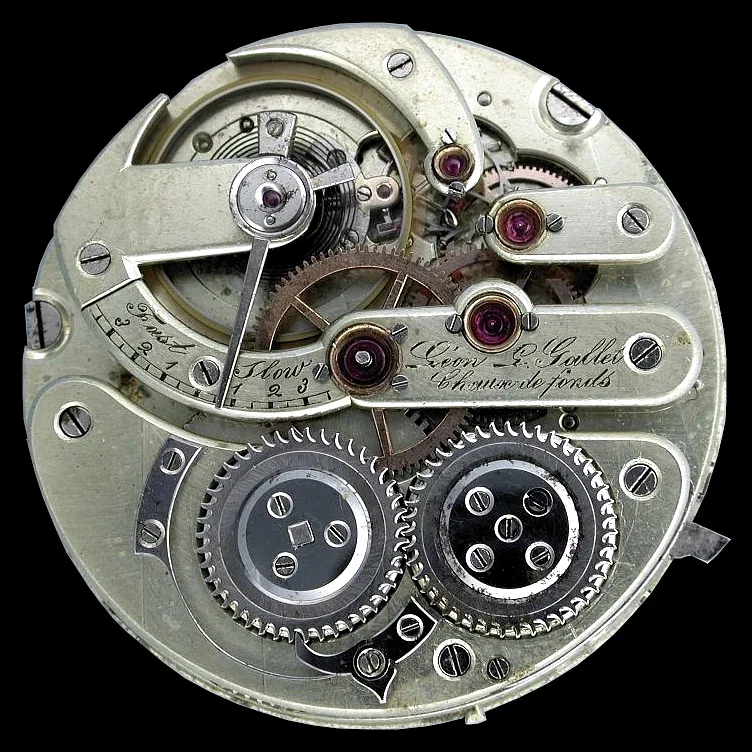
Alternatively, using a modern custom-machined conversion case provides vastly superior dust and water resistance, structural durability, and scratch resistance. Because the 0-size movement measures approximately 29.5mm, a modern conversion case can maintain refined outer dimensions of 36mm to 38mm—a perfectly balanced size for modern wrists. The watchmaker turns a custom spacer ring on a lathe from naval brass or 316L stainless steel, milling precise interior retaining ledges to seat the movement securely while ensuring the casing screws firmly lock the assembly into place.
Crown and Stem Solutions
Re-engineering the winding and setting interface is one of the most mechanically demanding phases when you convert valjoux 0s pocket watch mechanisms for wrist operation. Antique pocket watch stems often used non-standard thread pitches, square winding arbors, or negative-set push-pull mechanisms designed for pocket watch case tubes. Modern wristwatch crowns, by contrast, use standardized thread sizes (such as Tap 9 or Tap 10) and require a positive-set keyless work system where pulling the crown directly shifts the setting lever.
To overcome stem incompatibilities, the watchmaker must turn a custom winding stem on a precision watchmaker's lathe or construct a hardened steel stem adapter. Turning a fresh stem from annealed tool steel requires turning tiny journal pivots, milling the square section that engages the winding pinion, cutting the setting lever groove, and threading the outer end to accept the crown. Once machined, the stem undergoes heat treatment—hardening in oil and tempering to a straw blue color—to achieve optimal toughness without becoming brittle under winding torque.
The crown must match the vintage aesthetic while delivering reliable environmental sealing. Onion, pumpkin, or cabochon-style crowns are frequently chosen to match early 20th-century styling, but they are fitted internally with modern fluorocarbon O-ring gaskets. The case stem tube is press-fitted into the case band with thread-locking compound, ensuring that the stem moves smoothly without lateral play and seals tightly against ambient moisture.
Dial and Hand Considerations
The dial and hands serve as the visual center of any conversion project. Many original Valjoux 0s movements were fitted with double-fired (grand feu) enamel dials over copper baseplates. Enamel dials retain their brilliant lustre indefinitely and never tarnish, but they are extremely brittle. When restoring or repositioning an enamel dial during a conversion, extreme care must be exercised. If the original dial feet do not match the new movement orientation or spacer ring layout, soldering new brass dial feet demands specialized low-temperature silver solder or dial-foot soldering machines to avoid cracking the enamel face.
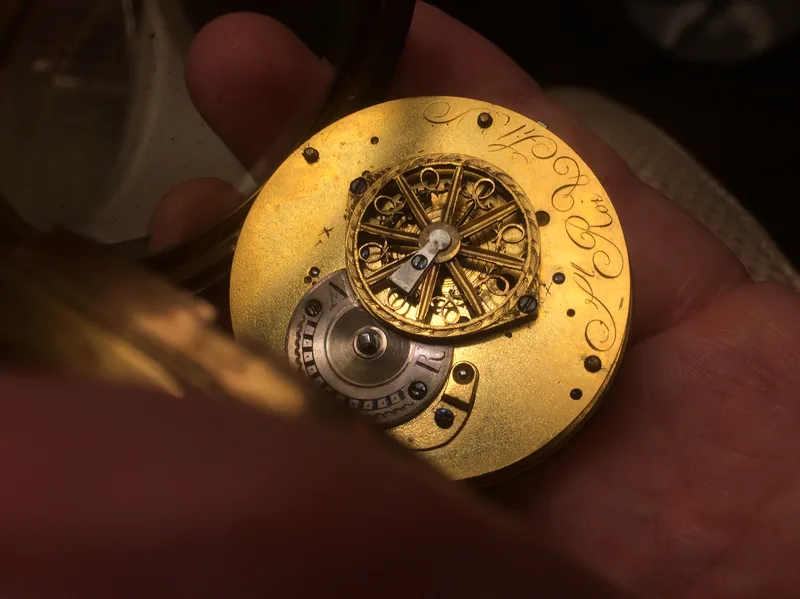
Hand fitting presents its own set of mechanical checks. The center cannon pinion shaft, hour wheel neck, and sub-seconds pivot diameters on an antique Valjoux 0s rarely match off-the-shelf modern wristwatch hands. Hand holes must be reamed or closed using precision hand broaches and staking punches to ensure an exact friction fit over the vintage arbors. Furthermore, vertical clearance inside the case crystal must be meticulously calculated. The distance between the hour hand, minute hand, sub-seconds hand, and the internal curve of the glass must be verified under a stereo microscope so hands move freely without dragging across each other or touching the dial.
When selecting hands, flame-blued steel spade, cathedral, or poire-style hands preserve historical accuracy. If glowing legibility is desired, restoring skeletonized steel hands with vintage-tinted non-radioactive Super-LumiNova recreates the luminous aesthetic of early military combat timepieces, as seen on historic authentic WW1 trench watches, while providing reliable nighttime visibility.
Why 0s is less common for conversion
While pocket watch conversions using larger 16-size or 12-size movements (such as American Hamiltons, Walthams, or Swiss Unitas calibers) have become relatively widespread, conversions using the Valjoux 0s are significantly rarer. The primary reason is the higher degree of technical difficulty involved. A 16s movement measures roughly 43mm across, allowing it to drop into readily available, large aftermarket cases with minimal custom lathe work. In contrast, the 29.5mm diameter of the Valjoux 0s requires miniature component fabrication, micro-lathe work, and delicate handling comparable to restoring high-end early vintage Rolex wristwatches or rare Aegler calibers from the 1920s.
Movement rarity also contributes to the scarcity of 0s conversions. Valjoux produced far fewer standalone simple time-only 0s movements compared to their vast output of chronograph calibers or mass-market pocket watch producers. Finding a complete, undamaged Valjoux 0s donor caliber with a sound balance staff, intact hairspring, and undamaged gear train requires searching through specialized horological auctions and estate collections. Because factory replacement parts for these vintage movements are long extinct, any damaged component must be hand-made on a lathe, elevating both the cost and bench time required.
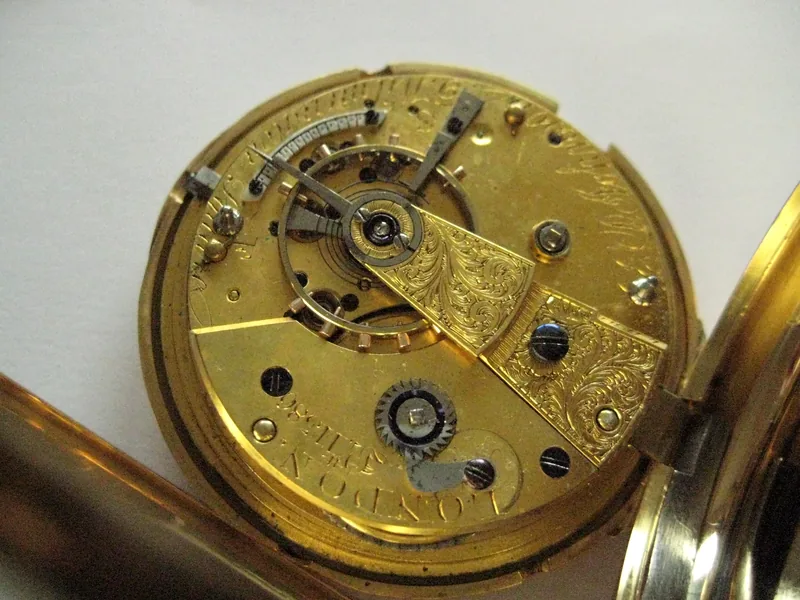
Finally, horological preservation ethics play a significant role. Purists naturally prefer to maintain complete, original Valjoux pendant watches in their original state. As a result, ethical watchmakers reserve 0s conversions primarily for "orphan" movements—calibers whose original gold or silver pocket cases were melted down in historical metal booms, leaving pristine, high-grade Valjoux ebauches without a home. Converting these orphan movements rescues horological art from the scrap pile and returns it to functional life.