1. Historical Background of Valjoux 12L Movements
The Valjoux 12L movement occupies a unique place in early 20th-century horology. Manufactured in Les Bioux by Reymond Frères (which later officially adopted the name Valjoux, short for Vallée de Joux), the 12-ligne caliber platform was engineered during a transitional era when timekeeping was migrating from vest pockets to wrists. Introduced during the early 1910s and produced through the 1930s, the 12L was originally designed for high-grade pendant watches, open-face dress pocket watches, and early conversion pieces crafted for military officers and wealthy patrons.
During the First World War, the demand for wrist-worn timepieces spiked dramatically. Standard pocket watches were cumbersome to operate in combat, prompting watchmakers to adapt small-sized pocket calibers into wristlet configurations. This technical shift laid the foundation for authentic WW1 trench watches, where small Lépine and Savonnette movements were fitted into modified cases with soldered wire lugs. The Valjoux 12L became a preferred engine for these adaptations due to its high precision, superior bridge stability, and compact footprint relative to standard 16 or 18-ligne pocket watch movements.
Today, vintage horologists and master watchmakers frequently target the 12L for modern re-casing projects. Because thousands of gold and sterling silver pendant cases were melted down during economic downturns over the past century, many pristine 12L movements survived as loose, "orphaned" movements. Restoring these movements and fitting them into modern wrist cases gives new life to an iconic piece of Swiss mechanical history.
2. Technical Specifications and Movement Architecture
Understanding the architectural nuances of the Valjoux 12L requires examining the classic French/Swiss measurement system. The "ligne" (denoted as ''') is an traditional unit of measurement equal to approximately 2.2558 millimeters. A 12-ligne movement measures roughly 27.07 mm in overall diameter. This compact size allows modern watchmakers to fit the movement into cases that align perfectly with contemporary dress watch dimensions, avoiding the oversized proportions common to 18-ligne pocket watch conversions.
Architecturally, the 12L is a manual-wind, finger-bridge or split three-quarter plate movement operating at a traditional frequency of 18,000 vibrations per hour (2.5 Hz). It features a Swiss lever escapement, a cut bimetallic balance wheel with gold adjusting screws (or a monometallic balance in later executions), and a high-grade Breguet overcoil or flat balance spring. Most executions feature 15 to 17 jewels, with raised screwed chatons found on higher-grade variants. Power transmission is handled via a robust mainspring barrel driving a standard gear train (center wheel, third wheel, fourth wheel, and escape wheel).
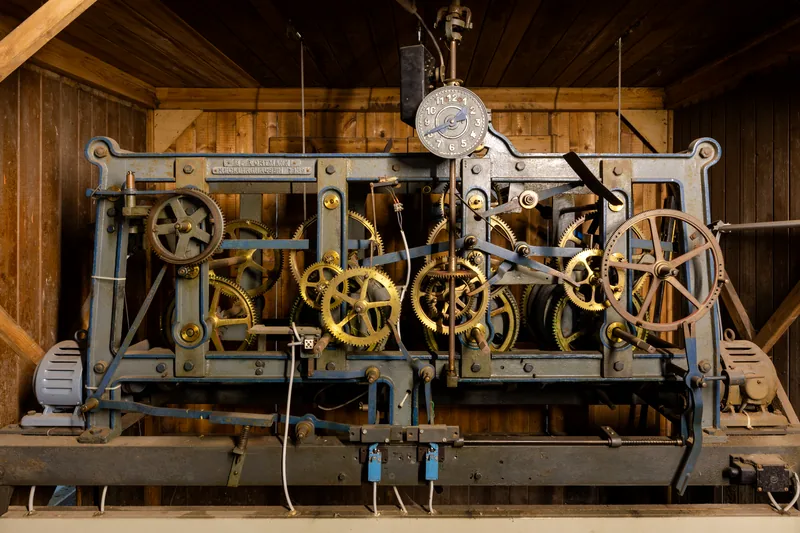
The keyless works on the 12L utilize a traditional crown-wheel and ratchet mechanism with a sliding pinion and yoke setup. Lower-grade versions relied on a push-pin setting system (pin-set), while higher-end iterations incorporated a pull-out stem setting system. Stem tap sizes typically vary between Tap 9 (0.90mm) and Tap 10 (1.00mm), requiring careful measurement prior to fitting custom crowns or stem extensions during restoration.
3. Challenges of Converting Valjoux 12L to Wristwatch
When you attempt to convert valjoux 12L pocket watch into wristwatch configurations, you face distinct horological hurdles that do not exist in standard watch assembly. The primary challenge stems from dial architecture and sub-seconds orientation. In an open-face (Lépine) 12L movement, the winding stem is located at 12 o'clock, and the small seconds sub-dial sits directly opposite at 6 o'clock. If you re-orient the movement so that the stem sits at the standard wristwatch position of 3 o'clock, the sub-seconds register moves to 9 o'clock. If a traditional 6 o'clock seconds layout is desired, a hunter-style (Savonnette) 12L movement must be sourced, or an intermediate transfer wheel must be added—a complex modification that alters movement thickness.
Another major obstacle is shock protection. Valjoux 12L movements were produced prior to the widespread adoption of shock-absorption systems such as Incabloc or Pare-choc. The balance staff pivots on a 12L are exceptionally fine—often measuring between 0.08mm and 0.10mm in diameter. Pocket watches experienced relatively mild physical stress suspended in vest pockets, but wristwatches are subject to violent deceleration, arm swings, and impacts. Without extreme care in daily wear or modern balance pivot modifications, a drop can instantly shear the balance staff pivots.
Finally, environmental sealing presents a technical barrier. Historical 12L plates were not designed with modern O-ring sealing channels or gasketed stem tubes in mind. Protecting the movement from moisture, dust, and sweat requires selecting or custom-machining a modern wristwatch case equipped with adequate gaskets, dial seats, and stem seals that isolate the sensitive vintage components from the environment.
4. Lug Welding and Case Selection
A crucial factor in a successful valjoux 12L pocket watch to wrist conversion is determining the housing strategy. Watchmakers generally choose between two paths: modifying an original vintage pocket watch case by soldering lugs to it, or retrofitting the movement into a modern custom-machined wristwatch case.
If modifying an original sterling silver or gold-filled pocket case, the process involves silver-soldering wire lugs directly to the 12 o'clock and 6 o'clock positions of the case band. The case must be completely stripped of the movement, crystal, and springs. Using a micro-torch or laser welder, 1.5mm to 2.0mm wire lugs are fused to the band. Extreme temperature control is essential to prevent warping the thin case metal or annealing snap-style bezel joints. Once soldered, the joints are polished, and custom-bent leather straps are fitted around the fixed bars.
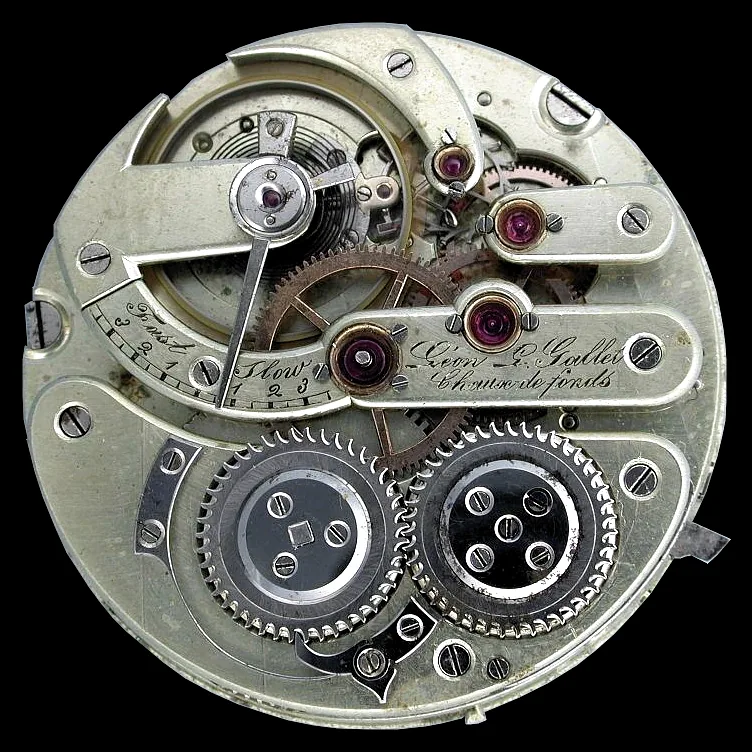
Alternatively, housing the 12L in a modern stainless steel case requires precise calculations to find the best case size for valjoux 12L conversion projects. Given the 27.07mm diameter of the movement, the ideal outer case diameter sits between 36mm and 38mm. A 37mm case provides the perfect balance between vintage aesthetics and modern wearability. Because off-the-shelf modern 37mm cases are usually designed for ETA or Miyota calibers, a custom brass or stainless steel movement adapter ring must be turned on a lathe. This adapter secures the 12L radially and axially using micro case screws and tabs, preventing any lateral play during hand setting or winding.
5. Crown and Stem Solutions
Stem and crown integration is often where amateur conversion attempts fail. Modern wristwatch cases utilize positive-setting keyless works, where pulling the crown outwards shifts the keyless works into the hand-setting position. Many pocket watches, conversely, utilized negative-setting systems (where a spring clip in the case neck holds the stem in setting mode) or push-pin mechanics. Determining the exact mechanism of your specific Valjoux 12L caliber is necessary before selecting stem components.
In most instances, the original vintage stem is too short to reach past the wall of a modern wristwatch case and crown tube. Watchmakers must either turn a new custom winding stem on a precision micro-lathe or fit a hardened steel stem extender. Stem extenders must be joined using micro-thread locker (such as Loctite 270) and turned down seamlessly so the extension sleeve does not bind against the inside of the case crown tube.
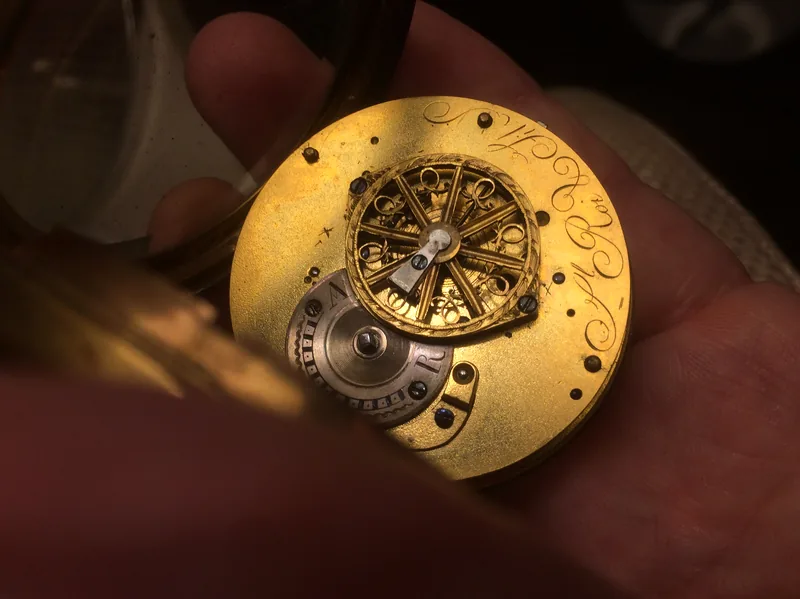
Crown choice must balance functional sealing with historical accuracy. Onion, pumpkin, or oversized flat crowns are historically accurate for conversions inspired by early 20th-century timepieces. The interior of the crown must contain a flexible synthetic gasket that seals around the outer diameter of the case crown tube, creating an effective barrier against humidity and dust without creating excess friction on the winding arbor.
6. Dial and Hand Considerations
Preserving or modifying the dial demands a high degree of technical skill when you convert valjoux 12L pocket watch movements. Original Valjoux 12L dials are frequently crafted from double-sunk vitreous enamel (porcelain) on a copper base plate. Enamel dials are impervious to fading, but they are extremely brittle. Drilling new holes or altering dial feet risks cracking the glass enamel, rendering the dial unusable.
If the original dial feet do not align with the movement casing holes due to a rotated orientation, watchmakers use specialized capacitive-discharge dial-foot soldering machines. This tool welds new copper dial feet to the back of the metal base plate using an instantaneous electrical charge that generates localized heat without cracking the enamel front surface. Alternatively, custom dial rings or specialized friction pads can be engineered for non-invasive mounting.
Hand fitting presents its own set of tolerance challenges. The pivot dimensions on the Valjoux 12L center wheel arbor, hour wheel, and fourth wheel (seconds pivot) are standardized to early 20th-century Swiss gauges. Modern aftermarket hands rarely fit without modification. Vintage blued-steel spade, cathedral, or Poire hands must be broached or closed using staking punches to fit the exact fractions of a millimeter:
- Hour Wheel Pipe Diameter: ~1.35mm to 1.40mm
- Cannon Pinion Diameter: ~0.85mm to 0.90mm
- Fourth Wheel Seconds Pivot: ~0.18mm to 0.20mm
7. Why 12L is more common for conversion
Among vintage watch collectors and custom builders, the Valjoux 12L is widely considered the ultimate candidate for movement recasing. The primary reason is size efficiency. Most standard American and Swiss pocket watch calibers (such as the Hamilton 992B or Unitas 6497/6498) measure between 16 and 19 lignes (36mm to 42mm in movement diameter alone). When cased into a wristwatch, these large calibers result in case diameters of 44mm to 48mm, which can feel uncomfortably top-heavy on the wrist.
The 12-ligne architecture avoids this issue completely. Yielding a finished watch size of 36mm to 38mm, a Valjoux 12L conversion wears with the elegant proportions of a mid-century classic dress watch. Furthermore, Valjoux’s historical reputation for manufacturing high-precision ebauches means the underlying gear train, jewel counts, and steel finishing are of exceptional quality, rivaling early movements found in high-grade vintage Rolex wristwatches and premier chronograph architectures from the same golden age.
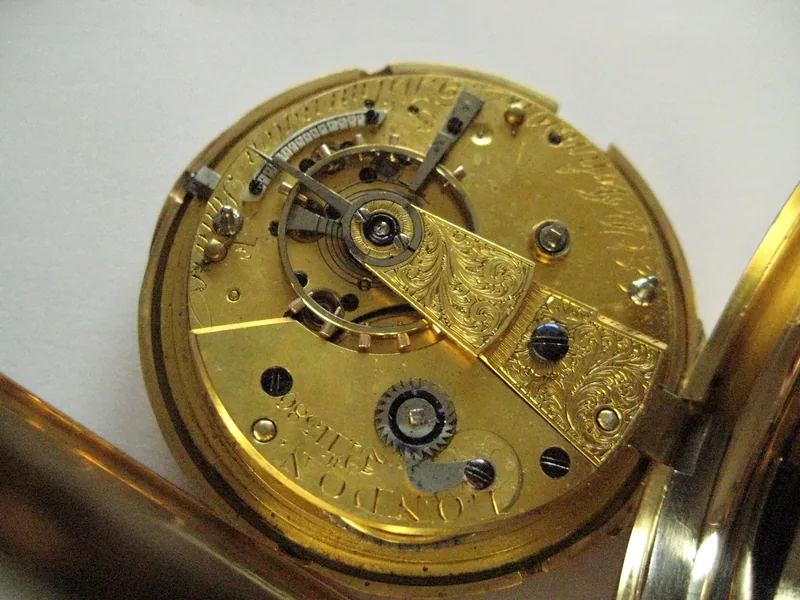
In addition, availability plays a key role. Because 12-ligne pendant and small open-face watches were extremely popular among affluent buyers in the 1920s, a relatively high volume of high-grade 12L movements remain available on the secondary horological market. For artisans creating high-end antique pocket watch conversions, the 12L offers an ideal combination of mechanical reliability, historical prestige, and wearable dimensions.
8. Final Thoughts on Valjoux 12L Conversions
Converting a Valjoux 12L pocket watch into a wristwatch is a sophisticated horological project that blends history, mechanical engineering, and micro-craftsmanship. When executed correctly, the end result is not merely a converted timepiece, but a wearable work of mechanical art that honors the legacy of Reymond Frères and the golden era of Swiss watchmaking.
For collectors considering or undertaking a conversion, emphasis must always be placed on preservation and non-destructive technique wherever possible. Utilizing custom movement spacer rings rather than modifying movement plates, preserving original enamel dials, and selecting cases that protect the unshocked balance pivots will ensure the movement survives for another century. Regular maintenance—including ultrasonic cleaning, re-oiling with synthetic lubricants (such as Moebius 9010 and HP-1300), and avoiding exposure to magnetic fields or water—will keep a converted Valjoux 12L running accurately for generations to come.