Historical Background of Valjoux 12s Movements
The history of Valjoux—originally founded as Reymond Frères in 1901 by brothers John and Charles Reymond in Les Bioux, Switzerland—is inextricably linked to the evolution of precision timekeeping. Located in the heart of the Vallée de Joux, the manufacture specialized from its inception in high-complication ebauches, particularly chronographs and split-second timers. During the early decades of the twentieth century, pocket watches were the standard for personal timekeeping, and Valjoux produced some of the finest raw movements supplied to top-tier Swiss houses. Among these, the 12-size (or 12-ligne base class) pocket watch movements established a reputation for exceptional durability, elegant bridge architecture, and superior micro-mechanical tolerances.
As the horological landscape shifted during the Interwar period, the demand for pocket timepieces declined rapidly in favor of wrist-worn instruments. Watchmakers were faced with vast inventories of high-grade pocket watch ebauches that possessed decades of operational life left within their components. The 12s designation—representing a movement diameter of approximately 38.5mm to 39.5mm—occupied a unique evolutionary space. Neither as massive as the standard railroad-grade 16s or 18s American movements nor as compact as purpose-built women's wrist calibers, the Valjoux 12s movement was initially designed to provide pocket-watch precision in slim, elegant dress cases. Today, these historical calibers serve as the primary candidates for high-end antique pocket watch conversions.
Understanding the heritage of these movements requires recognizing their hand-finished nature. Unlike modern automated calibers, a vintage Valjoux 12s pocket watch movement features hand-beveled bridges (anglage), polished steel levers, perlage on the mainplate, and individually fitted train wheels. Converting such an ebauche into a wearable wrist instrument is not merely an exercise in re-casing; it is an act of historical preservation that bridges early 20th-century Swiss bench-craft with contemporary horological tailoring.
Technical Specifications and Movement Architecture
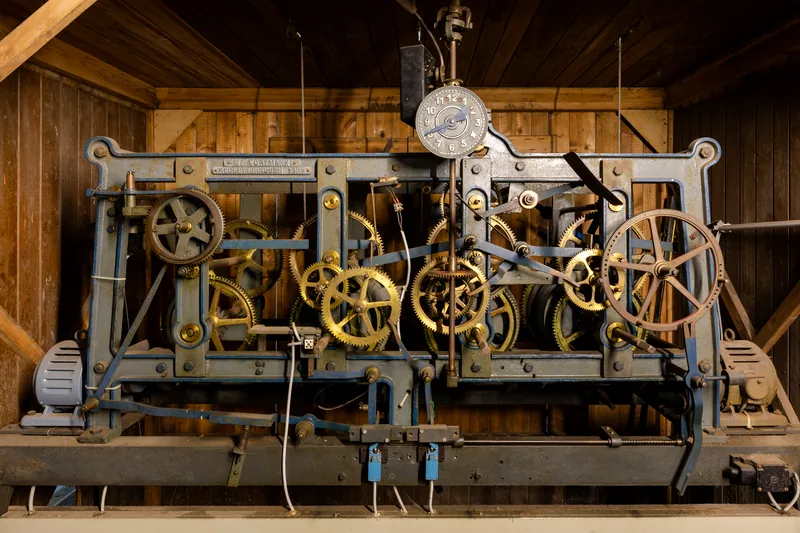
From a mechanical perspective, the Valjoux 12s movement architecture is a masterclass in classic Swiss watchmaking. The movement typically operates at a traditional frequency of 18,000 vibrations per hour (2.5 Hz), utilizing a large, high-inertia balance wheel that ensures stable timekeeping across varying power reserve states. Most standard 12s variants feature between 15 and 17 jewels, with high-complication or observatory-grade executions utilizing cap jewels on the escape wheel and balance pivots to minimize frictional drag and retain lubrication over extended periods.
The gear train layout generally follows traditional Swiss finger-bridge construction, where the center wheel, third wheel, fourth wheel, and escape wheel are supported by distinct or semi-integrated bridges. The escapement is a traditional Swiss lever design, accompanied by a cut bimetallic compensation balance wheel paired with a blue steel Breguet overcoil hairspring. This hairspring configuration allows the spring to expand and contract concentrically, dramatically reducing positional errors when the watch transitions between horizontal and vertical orientations—a critical feature when shifting a caliber built for a vest pocket onto an active human wrist.
Mainspring torque in the Valjoux 12s is substantial compared to modern wristwatches. The barrel housing holds a wide, thick mainspring designed to drive heavy steel hands across a broad dial plate. Stem winding and setting mechanisms rely on traditional crown-wheel and ratchet-wheel setups, featuring a click spring mechanism that yields a distinct, tactile tactile feedback during manual winding. The stem height and winding pinion spacing are engineered around traditional pocket watch case dimensions, which dictates the specific tolerances required when manufacturing a modern wrist casing ring.
Challenges of Converting Valjoux 12s to Wristwatch
When horologists and collectors ask, "can you convert valjoux 12s pocket watch movement into a wearable piece," the answer is unconditionally yes, but it carries significant technical hurdles. The foremost challenge lies in orientation and layout. Pocket watches are predominantly arranged in either a Lépine (open-face) or Savonnette (hunter-case) configuration. In a Lépine movement, the winding stem is positioned at 12 o'clock, with the sub-seconds pivot located directly opposite at 6 o'clock. If you rotate a Lépine movement inside a wristwatch case to place the winding crown at the standard 3 o'clock position, the sub-seconds dial shifts awkwardly to the 9 o'clock position. Conversely, a Savonnette movement places the stem at 3 o'clock and the sub-seconds at 6 o'clock relative to the crown, making Savonnette layout movements vastly more desirable for wrist conversion.
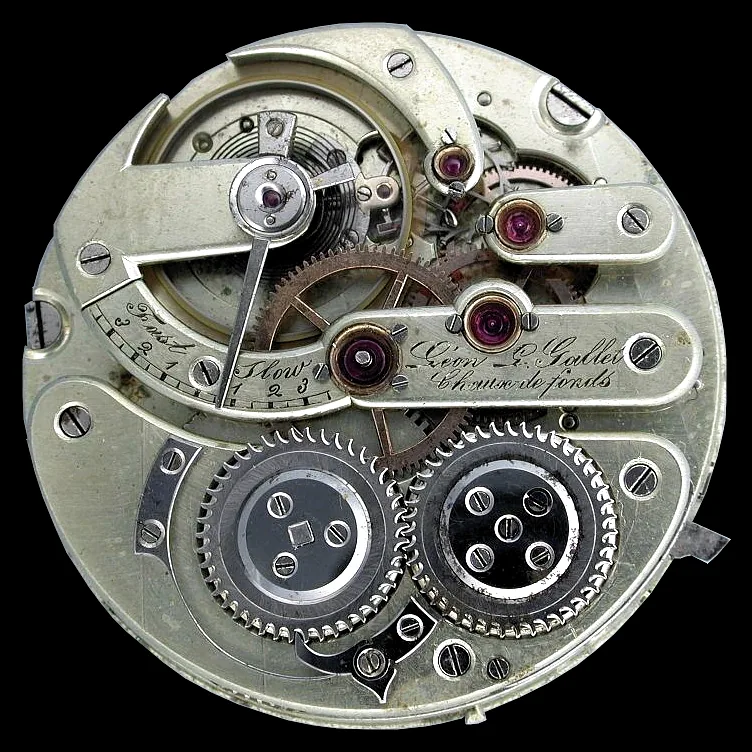
Another monumental technical obstacle is shock protection. Vintage Valjoux 12s movements were engineered before the widespread implementation of shock-absorption systems such as Incabloc or KIF (which emerged in the 1930s). The balance staff pivots on a vintage 12s are microscopic—often measuring under 0.10mm in diameter—and are suspended rigid within fixed ruby jewels. Wearers who submit a converted 12s wristwatch to sharp impacts, such as dropping the watch or sudden wrist shocks, risk snapping the balance staff pivots instantly. A master watchmaker executing this conversion must ensure perfect endshake and sideshake adjustments, and often advises the client on the inherent mechanical fragility of balance staffs without modern shock spring protection.
Finally, environmental sealing presents a major engineering hurdle. Pocket watch cases were never designed to withstand modern moisture exposure, dust intrusion, or sweat. The winding stem entry point, bezel seat, and caseback joints of an unconverted pocket watch are unsealed. Thus, converting the movement requires either retrofitting internal rubber O-ring gaskets inside a custom-engineered enclosure or rebuilding the stem tube assembly to protect the pristine steel components inside from humidity and ambient oxidation.
Lug Welding and Case Selection
Selecting or fabricating a suitable valjoux 12s pocket watch to wrist conversion case is the foundational step of the physical transformation. There are two primary paths available to the watchmaker: modifying an original vintage pocket watch case by adding custom lugs, or engineering a bespoke, modern stainless-steel conversion case machined specifically to house the 12s ebauche. Each method presents distinct aesthetic and technical considerations.
Modifying an original solid silver or gold pocket watch case requires specialized silver soldering or micro TIG/laser welding techniques to attach custom wire lugs or solid horn lugs. When welding lugs directly onto an antique pocket case, heat management is critical. The case must be completely stripped of its movement, crystal, springs, and hinges. The jeweler or watchmaker must select lug material that matches the metallurgical composition of the parent case to prevent galvanic corrosion or visible color mismatching. Modern wire lug attachments often pay homage to early transitional military timepieces, reminiscent of authentic WW1 trench watches, where wire loops were soldered directly onto silver pocket watch shells.
Alternatively, the modern approach utilizes a purpose-built 316L stainless steel conversion case. These cases are CNC-machined to modern wrist proportions while housing an internal bronze or stainless steel movement adapter ring. The adapter ring is custom-lathed on a precision lathe to secure the exact outer diameter of the Valjoux 12s mainplate. Casing clamps (movement dogs) are then screwed into the rim of the mainplate to secure the movement flush against the front case reflector ring, ensuring zero internal lateral or vertical movement under wrist motion.
Crown and Stem Solutions
Fabricating a reliable winding stem and crown system is arguably the most demanding lathe operation in the conversion process. Vintage pocket watch stems are rarely long enough to extend through a modern wristwatch case tube and engage with a modern waterproof crown. In most instances, the watchmaker must turn a new winding stem from annealed W1 tool steel on a watchmaker's lathe (such as a Schaublin or Lorch lathe), followed by precise heat treatment, hardening, and tempering.
The stem fabrication process begins by turning the square section of the stem, which drives the winding pinion and clutch wheel. The tolerances here must be exact to within hundredths of a millimeter; if the square profile is too loose, the winding mechanism will slip and strip under the high torque of the 12s mainspring; if it is too tight, the setting mechanism will bind when pulling the crown into the hand-setting position. Once the square and pivot journals are turned, the outer section is threaded using a precise thread die—typically Tap 8 or Tap 9—to accept the selected crown.
The crown choice must balance period-correct aesthetics with ergonomic leverage. Pocket watch mainsprings require significantly more force to wind manually than modern automatic or small manual wristwatches. Installing a tiny modern dress crown makes winding painful and difficult for the user. Therefore, watchmakers favor onion-style, pumpkin-style, or large coin-edge crowns that provide ample grip area while maintaining historical visual harmony with the early twentieth-century movement architecture.
Dial and Hand Considerations
The dial and hands serve as the artistic interface of the converted timepiece. Vintage Valjoux 12s movements typically featured double-sunk vitreous enamel dials, engine-turned silver dials, or printed brass dials. Vitreous porcelain enamel dials are prized for their permanent brilliance and resistance to UV discoloration, but they are exceptionally brittle. Modifying an original enamel dial—such as trimming its outer perimeter or drilling new holes—will invariably cause catastrophic cracking across the enamel plate.
If the original dial dial feet do not align with the conversion case orientation or if a Lépine movement is being converted to a standard 3 o'clock crown configuration, the dial feet must be repositioned. On metal dials, watchmakers use a specialized capacitive-discharge dial feet welder. This device welds new copper dial feet onto the back of the brass plate without generating excessive heat that would scorch or discolor the painted dial face on the reverse side. On enamel dials, welding is impossible, requiring the application of specialized low-profile dial dots or machining a custom friction dial ring.
Hand fitting presents its own set of mechanical challenges. The mounting hole diameters for vintage pocket watch cannon pinions, hour wheels, and second pivots are vastly larger than modern standard hand dimensions. The dimensions of a Valjoux 12s hour wheel tube and cannon pinion require traditional blued-steel hands with large central collets. If original hands are damaged or missing, the watchmaker must custom-ream historical hands or turn custom brass collets on the lathe, friction-fitting them into modern hand hubs. The hands must then be chemically or thermally blued using a traditional bluing pan over an alcohol flame to achieve a deep, oxidation-resistant cobalt blue finish.
Why 12s is more common for conversion
When evaluating vintage American and Swiss pocket watch calibers for wrist conversion, the 12-size format consistently emerges as the ultimate goldilocks sizing standard. To understand why collectors choose to convert valjoux 12s pocket watch into wristwatch configurations rather than larger calibers, one must analyze wrist ergonomics and case geometry. Larger pocket watch standards—such as 16-size (approx. 43mm movement diameter) or 18-size (approx. 45mm movement diameter)—yield finished wristwatches with outer case diameters exceeding 48mm to 52mm. Such dimensions are unwearable for the vast majority of wrist sizes and suffer from severe imbalance on the wrist.
In contrast, the 12-size movement features a mainplate diameter of roughly 38.5mm to 39.5mm. When mounted within a streamlined custom conversion case featuring ultra-thin bezel walls, the overall finished wristwatch measures between 42mm and 44mm in diameter. This falls precisely within the modern preference for oversized dress and sports timepieces. It allows the wearer to enjoy the mechanical grandeur of a massive, pocket-watch-era balance wheel and hand-finished bridges without enduring an oversized or awkward footprint on the wrist.
Furthermore, the high aesthetic caliber of Valjoux 12s ebauches places them in a higher horological tier than mass-produced standard time-only pocket watch movements. Valjoux produced high-spec movements that were historically supplied to prestigious brands, competing directly with high-end Swiss fabricators whose movements powered early luxury lines, including early mid-century releases and vintage Rolex wristwatches. The structural stability, thicker bridges, and high jewel counts of the 12s platform make it resilient enough to handle modern re-casing while providing a stunning visual presentation through a sapphire crystal exhibition caseback.
Final Thoughts on Valjoux 12s Conversions
Converting a historical Valjoux 12s pocket watch into a modern wristwatch represents a profound intersection of historical preservation, mechanical restoration, and custom micro-engineering. When executed properly by a skilled watchmaker, a conversion breathes new life into a movement that might otherwise spend decades forgotten in a drawer or scrapped for its precious-metal pocket case. The process demands absolute respect for the original mechanical architecture, requiring custom-tailored solutions for case housing, stem geometry, shock mitigation, and dial alignment.
For the horological enthusiast, wearing a converted Valjoux 12s offers an experience unmatched by mass-produced modern timepieces. Sweeping open the display caseback reveals a ticking piece of early 20th-century Swiss history—a oversized, slow-beating balance wheel, hand-chamfered steel levers, and rich perlage finishings that reflect the pinnacle of traditional hand bench-work. As long as conversions are undertaken using orphaned movements or damaged cases, preserving the integrity of rare original pieces, the Valjoux 12s wrist conversion stands as a magnificent tribute to the golden era of Swiss mechanical watchmaking.