1. Historical Background of Valjoux 13L Movements
The story of the Valjoux 13L movement begins in the heart of Swiss horology, the Vallée de Joux. Founded by the Reymond brothers—John and Charles—in Les Bioux, the company initially known as Reymond Frères SA produced high-grade ébauches (raw movements) that would come to define classic Swiss mechanical watchmaking. The designation "13L" refers directly to its size: 13 lignes, a traditional French unit of measurement where one ligne equals approximately 2.2558 millimeters. At roughly 29.33mm in movement diameter, the 13L occupied a unique middle ground during the early decades of the 20th century. It was small enough to power delicate gentleman's pocket watches yet large enough to provide robust timekeeping accuracy and structural stability under varied physical conditions.
During the transitional era of early 20th-century horology—spanning roughly from 1900 through the late 1920s—the global market witnessed a massive paradigm shift from traditional vest-pocket timepieces to wrist-worn instruments. Driven by military demands during the Boer War and accelerated exponentially during the First World War, soldiers and officers required hands-free time measurement in tactical environments. Manufacturers turned to their existing inventory of high-grade 13-ligne pocket watch raw ebauches, adapting them into early trench or wrist-worn cases. The Valjoux 13L, known for its fine tolerances, high component finish, and structural rigidity, emerged as a favored choice among watchmakers converting traditional movements into modern wrist-worn timepieces. If you explore authentic WW1 trench watches, you will frequently see this exact dimensional footprint reflected in the early wristlet designs of the period.
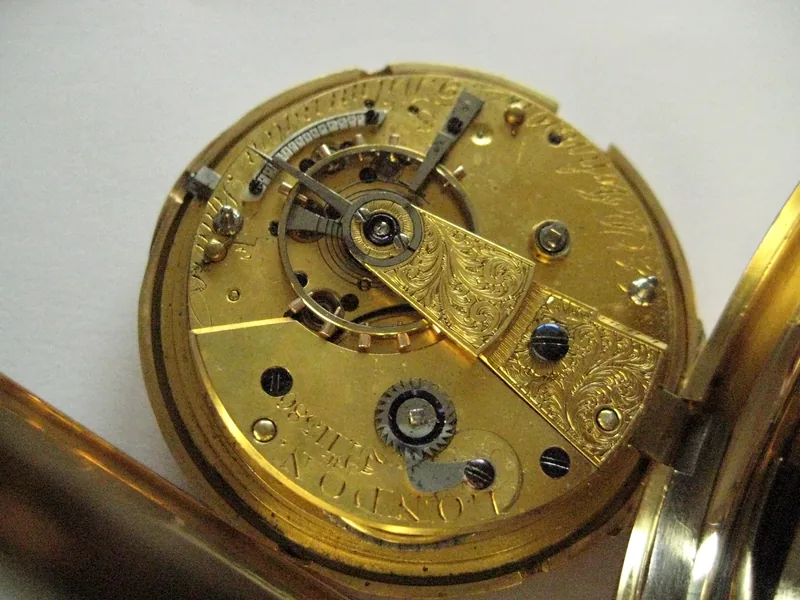
Understanding this historical context is essential for any modern watchmaker or restorer undertaking a project to convert valjoux 13L pocket watch into wristwatch configurations. The Valjoux 13L is not merely a generic, mass-produced ticker; it represents a pinnacle of hand-finished, traditional Swiss ébauche manufacturing. Many of these movements were supplied to top-tier brands who added bespoke finishing, Geneva stripes (Côtes de Genève), perlage, and upgraded regulating organs before placing them into gold or silver pocket cases. By preserving and recasing a Valjoux 13L today, you participate in a long-standing horological tradition that bridges traditional bench handiwork with modern wearable engineering.
2. Technical Specifications and Movement Architecture
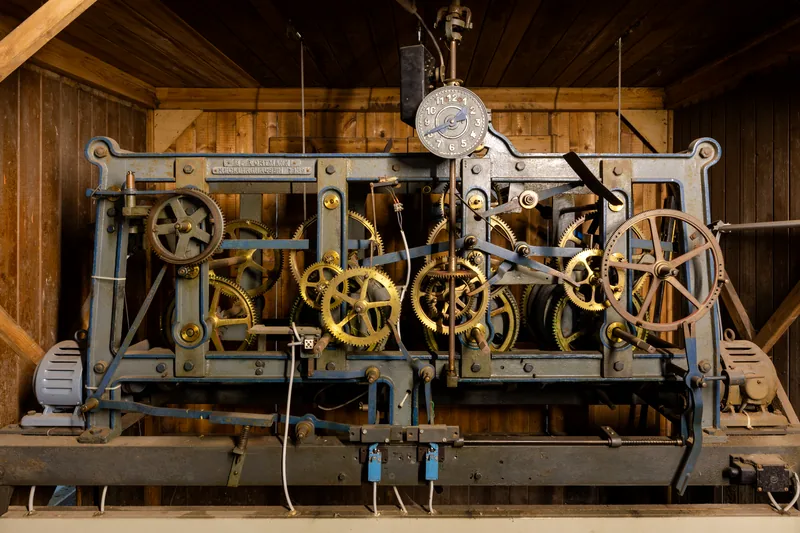
From an architectural perspective, the Valjoux 13L is a quintessential classic Swiss movement. The movement measures approximately 29.33mm in casing diameter with an overall movement height ranging between 4.2mm and 4.5mm depending on the specific bridge layout and canon pinion height installed. It typically operates at a traditional beat frequency of 18,000 vibrations per hour (vph), or 2.5 Hertz, which provides that deliberate, resonant ticking sound characteristic of vintage Swiss horology. The balance wheel assembly features a traditional split-bimetallic compensating balance with timing screws, coupled with a Breguet overcoil hairspring on higher-tier variants, or a flat hairspring on utility-grade executions. Power delivery is managed via a manual-wind mainspring delivering roughly 36 to 38 hours of continuous running time.
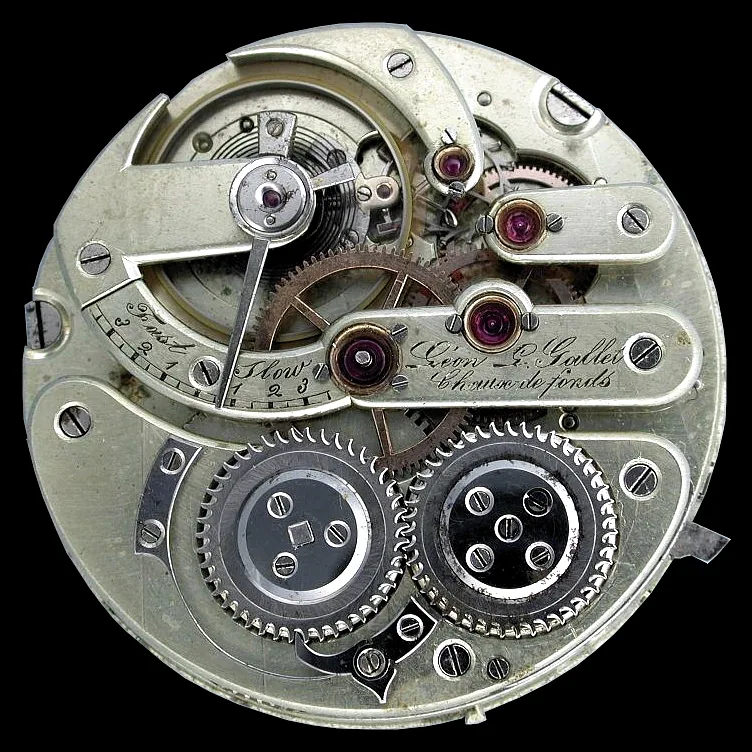
The wheel train design utilizes a classic straight-line Swiss lever escapement. The jewels—ranging from 15 to 17 jewels in standard configurations—are set into machined chatons or friction-set directly into the nickel-plated or gilt brass mainplate and finger bridges. The bridge configuration often features elegant, separate bridges for the escape wheel, third wheel, and center wheel, though unified train bridges exist across different generation sub-variants. The keyless works mechanism relies on a traditional pull-out stem configuration for hand setting, controlled by a setting lever, yoke, and setting wheel system situated neatly under the dial plate. Understanding these mechanical specs is crucial when evaluating a valjoux 13L pocket watch to wrist conversion candidate, as component tolerances must be audited before any casing work begins.
Another defining feature of the 13L architecture is its robust, oversized mainspring barrel relative to its overall 29.33mm diameter. This design provides smooth, consistent torque delivery across the working power reserve curve, minimizing amplitude drop-off as the mainspring unwinds. The ratchet wheel and crown wheel are usually finished with high-polish sunburst patterns or radial grinding, frequently secured with mirror-polished, left-hand threaded screws on the crown wheel. This structural integrity and mechanical elegance explain why the 13L platform remains a favorite among master watchmakers and custom horologists worldwide.
3. Challenges of Converting Valjoux 13L to Wristwatch
While the Valjoux 13L is fundamentally well-suited for wrist wear due to its 13-ligne size, executing a professional valjoux 13L pocket watch to wrist conversion presents significant technical challenges that demand advanced watchmaking skills. Chief among these issues is movement orientation and seconds display placement. Traditional pocket watch movements come in two structural layouts: Lépine (open-face, where the winding stem is at 12 o'clock in line with the sub-seconds register at 6 o'clock) and Savonnette (hunter-case, where the winding stem is at 3 o'clock, perpendicular to the sub-seconds register at 6 o'clock). If you re-case an open-face Lépine 13L movement into a standard wristwatch case with the crown positioned at 3 o'clock, your sub-seconds subdial will end up at the 9 o'clock position on the wrist. If you want a classic 6 o'clock sub-seconds layout, you must source a Savonnette movement or design a custom dial that accommodates the 9 o'clock orientation cleanly.
The second major technical obstacle involves shock protection—or the complete lack thereof. The original Valjoux 13L was engineered decades before the widespread adoption of modern shock-absorbing jewel systems such as Incabloc or KIF. The delicate balance pivots—often measuring just 0.08mm to 0.10mm in diameter—are held rigidly in fixed jewel caps and settings. When worn on the wrist, a mechanical watch encounters severe dynamic forces, impacts, and directional g-forces that a vest-pocket watch was never designed to endure. Dropping a converted 13L wristwatch onto a hard surface will almost certainly shear or bend a balance pivot. A skilled watchmaker must meticulously inspect the balance staff under a microscope, ensure endshake and sideshake are perfectly adjusted, and counsel the final wearer on appropriate daily handling.
Finally, dust, moisture, and environmental sealing present continuous design hurdles. Antique pocket watch cases relied on snap-fit or friction-fit bezels and case backs that offer virtually zero protection against ambient humidity, wrist perspiration, or atmospheric dust. Modern conversions require engineered casing solutions with modern fluoropolymer or nitrile O-ring gaskets at the case back, crystal, and winding crown tube. Managing these tolerances without ruining the historical aesthetic of the 13L movement requires custom machining capabilities, precise micro-lathe work, and carefully calculated casing ring clearances.
4. Lug Welding and Case Selection
Selecting the ideal housing is the most critical aesthetic and functional decision when planning to convert valjoux 13L pocket watch movements into modern wristwatches. You have two primary technical pathways: modifying an original vintage pocket watch case by silver-soldering or TIG-welding custom wire lugs onto its perimeter, or machining a bespoke, modern stainless-steel wristwatch case specifically engineered to hold the 29.33mm 13L movement via a custom spacer ring. Both methods have distinct technical trade-offs that impact durability, serviceability, and wrist presence.
When selecting or manufacturing a case, determining the best case size for valjoux 13L conversion projects comes down to balancing structural proportions. Because the movement is 29.33mm in raw diameter, the optimal outer case diameter ranges between 38mm and 40mm, with a total thickness of roughly 10.5mm to 12mm. A 38mm-40mm case provides sufficient wall thickness for mechanical strength, threaded case backs, and internal rubber O-rings, while allowing 3mm to 5mm of radial space for a custom brass or 316L stainless-steel movement holding ring. Choosing a case larger than 42mm creates an unnaturally thick movement holding ring and visually drowns the vintage scale of the dial, while cases smaller than 37mm leave insufficient wall clearance for secure stem-tube press-fitting and structural lug attachment.
If you choose to weld or solder wire lugs onto an original brass, silver, or gold pocket watch frame, thermal management is paramount. Silver-soldering requires heating the case shell with an oxy-acetylene or micro-torch to around 600°C–700°C (1100°F–1300°F) to flow high-grade silver braze. If the movement components, crystal, or delicate snap-springs are not fully stripped, the heat will instantly ruin the temper of the steel parts and warp the case geometry. Modern master watchmakers often prefer precision pulse-arc or micro-TIG welding. Micro-welding applies localized high-intensity heat at the exact lug contact point, allowing the attachment of solid or fixed-loop wire lugs without overheating the adjacent metal or warping the case back threads.
5. Crown and Stem Solutions
Fabricating a reliable stem and crown assembly for a Valjoux 13L conversion is an exercise in microscopic lathe work and threading precision. Original pocket watch stems were designed for thick pocket watch case walls and long pendant tubes. When transitioning the movement into a modern wristwatch case, the original stem is almost always either too short, worn out at the square winding arbor, or cut with an obsolete thread pitch (such as legacy Swiss metric taps) that does not match modern replacement crowns.
To overcome this, a watchmaker must either use a high-precision stem extender or turn a completely new winding stem from high-carbon steel rod stock (such as ANSI W1 steel or gauge plate) on a precision watchmaker’s lathe (e.g., Schaublin or Levin). The stem must feature exact dimensions: the square section must mate perfectly with the winding pinion and sliding clutch without slop, the pivot pilot tip must seat securely into the mainplate recess, and the threaded outer end must match standard modern crown threads—typically Tap 9 (0.90mm) or Tap 10 (0.80mm). Once machined, the custom stem must undergo heat treatment: heating to critical temperature (cherry red), quenching in oil, and tempering back to a blue spring temper (roughly 300°C) to prevent brittleness and snapping under winding torque.
The crown choice must balance historical era authenticity with modern environmental sealing. An oversized "Onion" or "Pumpkin" style crown is historically appropriate for transitional military watches, offering excellent tactile grip for manual winding. However, the crown must interface with a internal case tube fitted with an internal O-ring gasket. As the wearer winds the watch daily, the crown stem rotates continuously within this tube; without proper lubrication (using high-viscosity fluorinated watchmaker's silicone grease like Moebius 8513), the gasket will wear out prematurely, leading to moisture intrusion. The stem length must be fitted to within 0.02mm: too long, and the crown sits away from the case, inviting moisture and stem damage; too short, and the setting lever cannot drop cleanly into the hand-setting detent position.
6. Dial and Hand Considerations
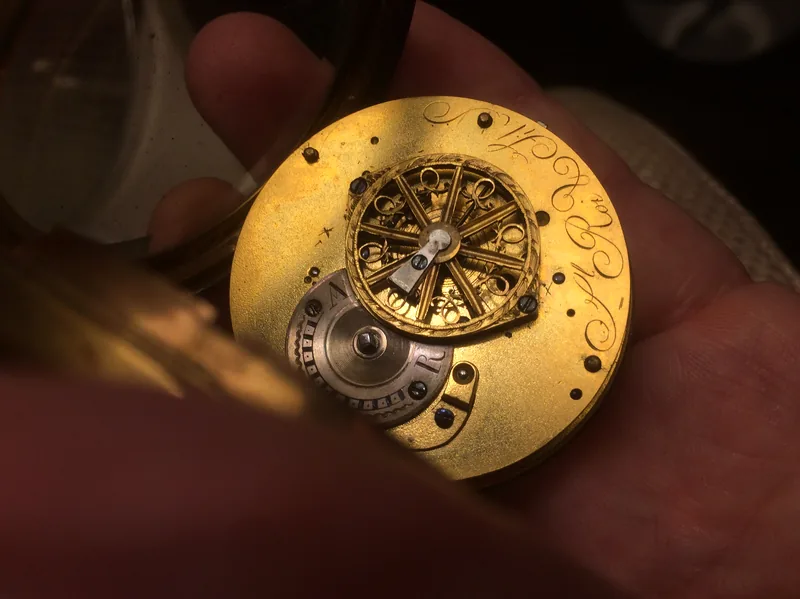
The dial and hand integration defines the visual soul of any custom timepiece. Many original Valjoux 13L pocket watches came equipped with magnificent double-sunk enamel (porcelain) dials or fine engine-turned silver dials. Enamel dials are impervious to fading and oxidation, but they are exceptionally brittle. Drilled holes, dial foot removal, or flexing during casing can instantly cause hairline fractures or spidering across the fired glass surface. If you are converting a watch with its original enamel dial, extreme care must be taken never to apply direct lateral torque to the dial edges.
Securing the dial to the 13L mainplate requires precise alignment of the copper dial feet. If placing the movement into a new case or reorienting the dial layout, the original feet may not align with the 13L mainplate dial-foot locking screws. Watchmakers use a specialized dial-foot soldering tool or capacitive-discharge spot welder to attach copper replacement feet to the backside of brass or silver dials without scorching the front painted or enameled finish. Modern adhesive "dial dots" should be strictly avoided in high-grade conversions; they degrade over time, off-gas chemical solvents that fog the crystal interior, and allow the dial to shift, binding the hour wheel and canon pinion.
Hand fitting presents its own set of precision tolerances. The hour wheel pipe, canon pinion, and fourth wheel pivot (sub-seconds post) on vintage 13L movements feature non-standard historical diameters. Replacement hands must be carefully measured with a micrometer and adjusted using staking sets or hand-broaches. Thermal blued steel hands (heated to roughly 290°C to achieve a deep cobalt blue oxide layer) are historically accurate and provide exceptional contrast against white or cream dials. Clearance is critical: because vintage movements have high center pinion stacks, you must ensure the hour hand clears the dial indices, the minute hand clears the hour hand and glass interior curve, and the small second hand rotates freely without touching the sub-second dial recess walls. Similar hand-fitting techniques and movement refinements can be observed in fine vintage horology, including early vintage Rolex wristwatches that utilized Valjoux raw movement blanks during the early-to-mid 20th century.
7. Why 13L is More Common for Conversion
Among the vast landscape of vintage Swiss pocket watch calibers, the Valjoux 13L stands out as one of the most practical and popular choices for custom wrist conversions. The primary driver behind this popularity is pure physical geometry. Standard American and European pocket watches were built around 16-size or 18-size platform dimensions (ranging from 41mm to 45mm in movement diameter alone). When cased into a wristwatch body, these massive pocket movements result in gigantic 48mm to 52mm hockey-puck cases that are unwearable on standard wrists. In contrast, the 13L’s compact 29.33mm foot-print maps perfectly into modern, ergonomic watch cases between 38mm and 40mm, making it immensely versatile for modern daily wear.
Furthermore, the inherent mechanical quality of Valjoux manufacturing makes the 13L an absolute dream to work on at the bench. Unlike low-grade mass-produced cylinder escapement pocket watches of the 1890s, Valjoux engineered every 13L with high-grade steel components, precisely turned pivot shoulders, robust keyless works, and modular bridge layouts. Components interlace with satisfying Swiss precision. Even century-old 13L ébauches can be fully restored to chronometer-grade performance with basic servicing: ultrasonic cleaning, pegwood pivot hole cleaning, fresh synthetic horological lubricants (such as Moebius 9010 for high-speed pivots and HP-1300 for train wheels), and standard poising/truing of the balance wheel assembly.
Finally, parts availability and modern documentation significantly lower the barrier to entry compared to obscure, unbranded antique calibers. Valjoux produced variations of the 13-ligne movement platform in healthy quantities, meaning donor components—such as balance staffs, mainsprings, setting levers, and winding stems—can still be sourced through specialized horological supply houses or salvaged from secondary market movements. This mechanical reliability and parts ecosystem make deciding to convert valjoux 13L pocket watch into wristwatch builds both a practical craft endeavor and a sound horological investment.
8. Final Thoughts on Valjoux 13L Conversions
Converting a historic Valjoux 13L pocket watch movement into a functional, wearable wristwatch is far more than a simple re-casing job; it is an act of horological preservation that grants a second life to an exquisite piece of mechanical artistry. Left inside broken, scrap-melted, or lost pocket watch cases, these magnificent Swiss engineering triumphs often sit forgotten in drawers or workbench scrap boxes. By combining modern machining techniques, precision lathe work, custom case engineering, and traditional hand-finishing, a master craftsman transforms a dormant century-old ébauche into a striking, unique piece of bespoke wearable art.
However, owning and wearing a converted Valjoux 13L requires an understanding of its vintage mechanical limitations. These timepieces lack shock absorption, magnetic shielding, and automated winding systems found in contemporary luxury watches. Wearers must embrace the daily ritual of hand-winding their timepiece each morning, avoiding vigorous sports, water exposure, or magnetic fields created by modern personal electronics. When properly serviced, encased with precision gaskets, and treated with respect, a 13L wrist conversion will reliably keep time to within seconds per day, serving as a constant tactile link to the golden age of Swiss bench watchmaking.
For horological enthusiasts, bench artisans, and collectors seeking a truly distinct timepiece, undertaking or acquiring a Valjoux 13L conversion provides unmatched satisfaction. It combines historical importance, brilliant structural design, ideal modern dimensions, and hand-crafted individuality that no mass-produced modern watch can ever match. If you are interested in exploring broader vintage wrist conversions and historical timepieces, discover our complete collection of antique pocket watch conversions to see how these legendary mechanical calibers continue to capture the imagination of watch lovers worldwide.