Historical Background of Valjoux 14L Movements
The story of the Valjoux 14L (14-ligne) caliber sits at the fascinating intersection of traditional pocket watch manufacture and the dawn of modern wrist-worn Horology. Founded in the Vallée de Joux by the Reymond brothers—John and Charles—in the early 20th century, Reymond Frères SA (later rebranded as Valjoux SA) established an unshakeable reputation for producing exceptionally reliable, high-grade base ebauches and raw movements. While Valjoux became universally famous for its column-wheel chronograph movements in mid-century wristwatches, its early 14-ligne raw movements were originally crafted as high-precision pocket watch calibers during an era when portable timekeeping was undergoing a radical transformation.
During the 1910s and 1920s, the watchmaking industry experienced a seismic shift driven by military necessity and industrial modernization. Small pocket watches, particularly those built on 13 to 15-ligne base plates, were increasingly favored over traditional 18 or 19-ligne giant pocket watches. The Valjoux 14L platform emerged during this transition, serving both open-face (Lépine) and hunter-case (Savonnette) pocket watch configurations. These movements featured exquisite finishing, robust steel components, and superior mechanical geometry, making them prized choices for top-tier Swiss brands who cased them under their own names.
Today, as intact historical pocket watch cases are often melted down or damaged beyond repair over decades of use, high-grade "orphaned" 14L movements remain available to master watchmakers. Choosing to convert valjoux 14L pocket watch movements into custom wristwatches offers horological enthusiasts a rare opportunity: breathing new life into a historic, handcrafted Swiss caliber by housing it in a modern, highly wearable format that echoes the spirit of early twentieth-century authentic WW1 trench watches.
Technical Specifications and Movement Architecture
To appreciate why horological restorers hold the Valjoux 14L in such high regard, one must examine its mechanical architecture. Measuring exactly 14 French lignes—translating to a nominal diameter of 31.58 millimeters—the movement represents a golden ratio of compact durability. Operating at a classic beat frequency of 18,000 vibrations per hour (2.5 Hz), the 14L delivers a stable rate while minimizing friction and long-term mechanical wear across its gear train, yielding an approximate power reserve of 38 to 42 hours when fully wound.
The architecture of the 14L showcases traditional Vallée de Joux design philosophy. Depending on the specific execution, it typically features a classic finger-bridge layout, where separate bridges hold the center wheel, third wheel, fourth wheel, and escape wheel. The escapement relies on a precision-cut Swiss lever mechanism, complemented by a balance assembly that frequently features a cut bimetallic temperature-compensated balance wheel paired with a blued steel Breguet overcoil balance spring. The jewels—ranging from 15 in standard grades to 17 or more in high-grade chronometer executions—are friction-set or held in chatons, reducing pivot wear on the balance staff and gear train arbors.
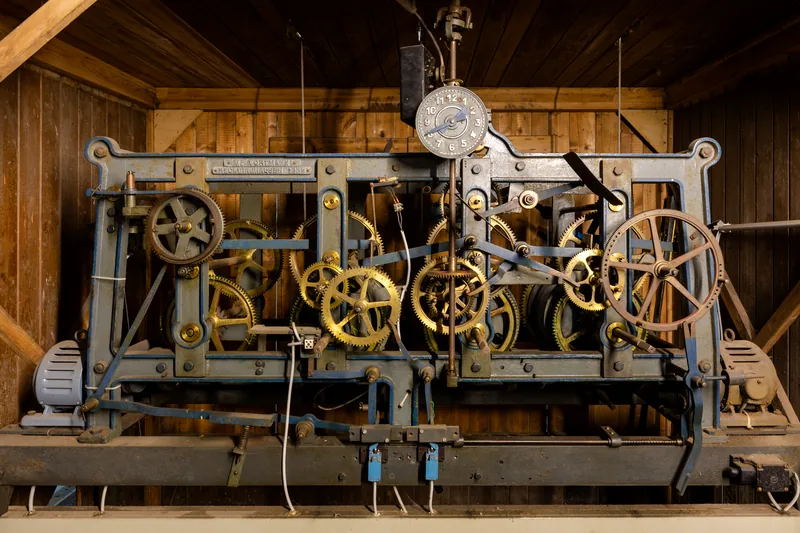
Key technical specifications of the Valjoux 14L architecture include:
• Movement Diameter: 14 Lignes (31.58 mm)
• Movement Height: Approx. 4.2 mm to 4.8 mm (depending on mainplate variation)
• Escapement: Swiss Lever with ruby impulse pin
• Balance Type: Compensation balance wheel with timing screws; flat or Breguet hairspring
• Beat Rate: 18,000 VPH (2.5 Hz)
• Keyless Works: Push-piece or pull-stem setting mechanism
Challenges of Converting Valjoux 14L to Wristwatch
When an artisan decides to convert valjoux 14L pocket watch into wristwatch specifications, they face significant engineering hurdles. The most critical challenge stems from the fundamental distinction between open-face (Lépine) and hunter-style (Savonnette) movement layouts. In a standard Lépine pocket watch, the winding stem is positioned at 12:00, and the sub-seconds register resides directly opposite at 6:00. If this movement is cased into a wristwatch format with the crown rotated to 3:00, the sub-seconds display shifts to 9:00. While a 9:00 sub-seconds dial is visually striking, it requires custom dial manufacture or sophisticated re-dialing techniques.
Conversely, a Savonnette (hunter) layout places the winding stem at 3:00 relative to a 6:00 sub-seconds display, making it natively configured for wrist orientation. However, finding pristine Savonnette 14L calibers requires meticulous sourcing. Beyond layout geometry, another critical challenge is shock protection. Vintage 14L calibers were manufactured prior to the widespread adoption of Incabloc or KIF shock-absorption systems. The balance staff pivots measure mere fractions of a millimeter in diameter and can easily bend or snap under modern drop impacts if the finished wristwatch is treated carelessly.
Finally, achieving proper dust sealing and moisture resistance presents a unique problem. Modern wristwatches utilize rubber O-rings and threaded casebacks to insulate movements from atmospheric humidity. Vintage pocket watch movements, however, were designed to breathe inside snap-back or hinge cases. The watchmaker must engineer a custom casing enclosure that isolates the movement from physical impact while providing a dust-tight barrier around the winding stem tube and crystal interface, akin to the craftsmanship seen in early fine vintage Rolex wristwatches.
Lug Welding and Case Selection
Selecting the proper housing is paramount when undertaking a valjoux 14L pocket watch to wrist conversion. Because modern wristwear aesthetics demand proportion and comfort, finding the balance between mechanical housing constraints and wrist ergonomics is key. Master watchmakers unanimously agree that the best case size for valjoux 14L conversion projects sits between 38mm and 41mm in outer diameter. Because the movement itself is 31.58mm, a 38–41mm case allows sufficient wall thickness for thread cutting, internal movement spacer rings, and protective gaskets without yielding an over-sized, unwearable watch.
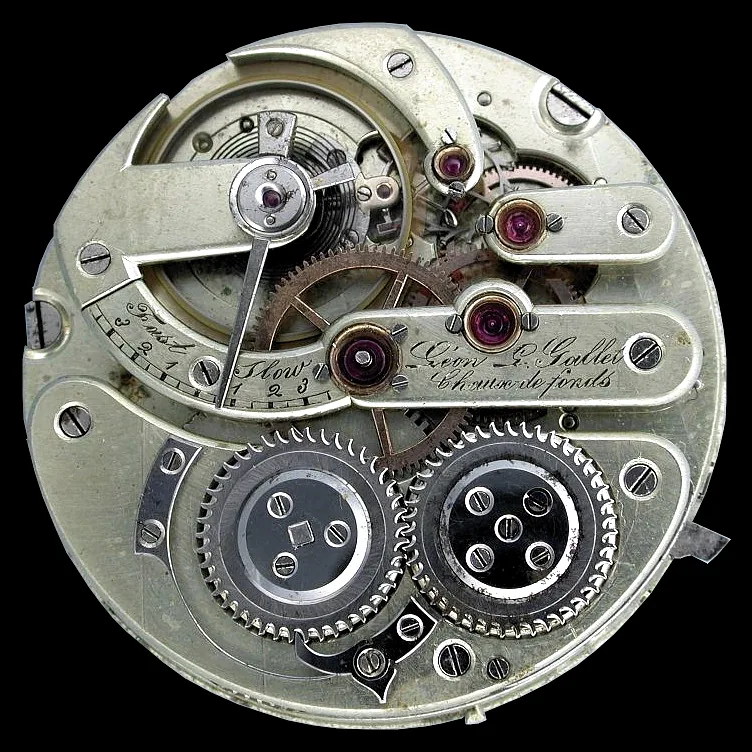
When custom-crafting a case or adapting an existing donor shell, lug architecture dictates the overall personality of the piece. Watchmakers generally employ one of three methods for lug implementation:
1. TIG / Micro-Laser Welded Lugs: High-precision micro-welding allows custom-machined solid steel or bronze lugs to be fused directly to a machined cylindrical case ring. This creates high structural integrity capable of enduring daily wrist stress.
2. Silver Soldered Wire Lugs: To replicate the historic look of early twentieth-century field watches, silver soldering solid wire loops onto a converted case offers an authentic vintage aesthetic. However, precise heat control is critical to avoid distorting the circular geometry of the movement bay.
3. CNC Machined Monobloc Cases: The modern preferred approach involves machining a dedicated case from a solid billet of 316L stainless steel on a lathe and 5-axis mill. This ensures perfect tolerances for stem alignment and crystal seating.
Securing the Valjoux 14L movement inside the case requires a custom movement spacer ring. Turned on a precision watchmaker’s lathe (such as a Schaublin or Levin), this ring compensates for the structural gap between the 31.58mm mainplate edge and the inner diameter of the case wall. The movement is secured to the ring using original or custom-bent casing clamps (casing screws), ensuring zero rotational or axial play when the watch experiences vibration.
Crown and Stem Solutions
The keyless works of the Valjoux 14L movement were originally designed to interact with a pocket watch stem, which often possessed a non-standard square section and custom thread pitch (typically dynamic metric sizes like Tap 8 or Tap 9). Modern watch replacement stems and standard crowns (which generally use Tap 10 or Tap 6 threads) will not thread directly onto vintage Valjoux arbors. Consequently, creating a seamless stem and crown solution requires custom micro-machining.
To overcome this issue, a watchmaker must either turn a new custom winding stem from annealed W1 tool steel on a lathe—hardening and tempering it afterward—or manufacture a precision threaded stem adapter. If the original stem is intact, the watchmaker can turn down the outer threaded portion and thread-sleeve it to accept a modern crown. The stem length must be calculated down to hundredths of a millimeter: too long, and the crown will stand off from the case tube, exposing the stem to bending forces; too short, and the setting lever will fail to engage the hand-setting position correctly.
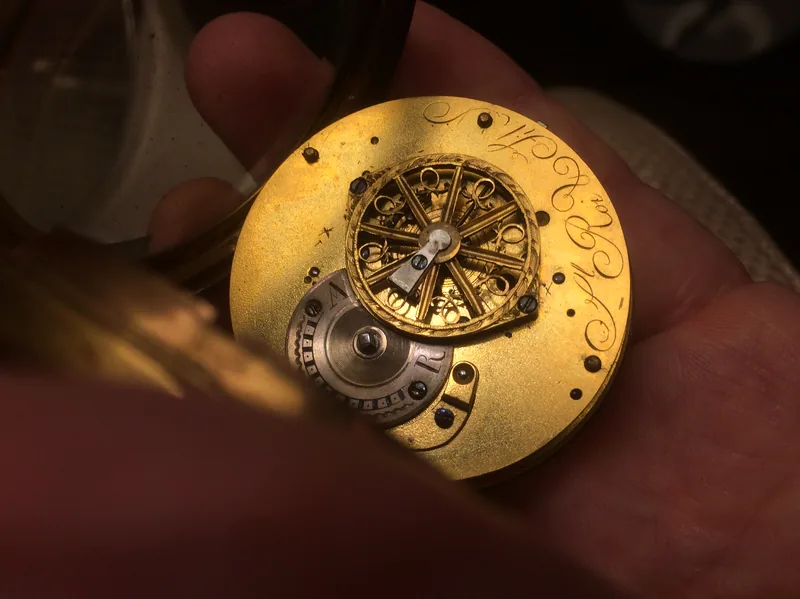
The choice of crown also defines the operational feel and dust safety of the completed conversion. An "Onion" or "Pumpkin" style oversized crown is traditionally favored, homage to early aviator watches where pilots adjusted their timepieces while wearing thick leather gloves. Internally, the crown must feature an inner recess fitted with a nitrile gasket that slides over an external case tube. This creates a multi-stage barrier against dust and airborne debris, ensuring the vintage Valjoux keyless works remain clean and smoothly lubricated for years to come.
Dial and Hand Considerations
Working with the dial and hand assembly of a Valjoux 14L requires a delicate touch. Antique 14L pocket watches frequently feature fire-enameled dials (grand feu enamel) on copper baseplates or hand-engraved silver dials. Enamel dials are impervious to fading or UV damage, but they are exceptionally brittle. Any direct mechanical stress, improper clamping, or twisting can instantly create catastrophic spider-web cracking across the glass-like surface.
When re-casing the movement, the original dial feet locations must align perfectly with the movement plate holes. If the conversion uses a repurposed dial or a modern custom dial, new copper dial feet must be attached. On metal dials, this is accomplished using a capacitive discharge dial foot welder, which fuses new feet onto the brass backing without scorching the front painted surface. On enamel dials, heating the dial is impossible without cracking the glaze; here, watchmakers must utilize specialized low-profile dial feet attached with structural anaerobic adhesives or precision milled mounting rings.
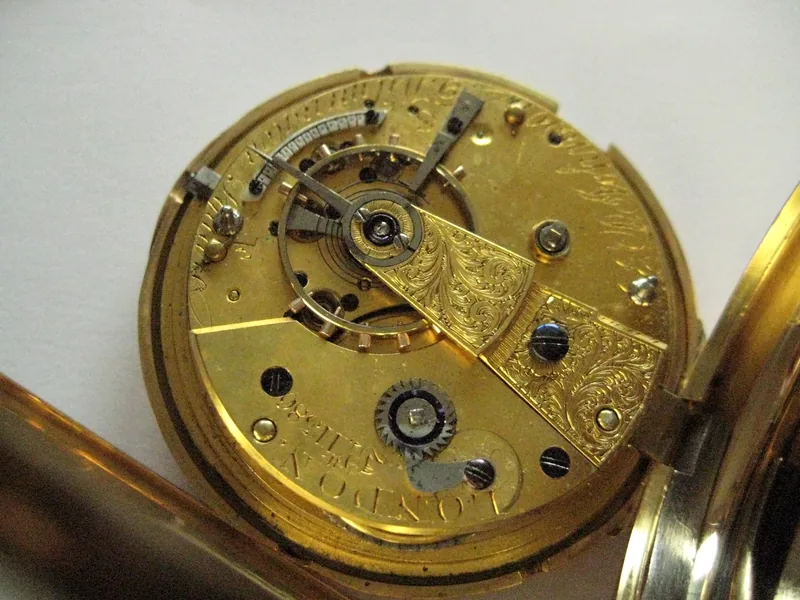
Hand fitting presents another micro-mechanical task. The hour wheel pipe, canon pinion, and fourth wheel sub-seconds pivot diameters on a Valjoux 14L movement differ from modern standardized hand hole sizes. The watchmaker must either resize vintage blued steel hands using precision smoothing broaches or turn down hand hubs on a lathe to fit the 14L posts. Hand clearance is equally critical: because wristwatches experience subtle flex and movement, the stack height between the hour hand, minute hand, crystal interior, and running seconds hand must be set with precise clearance to prevent hand collisions during operation.
Why 14L is more common for conversion
In the world of custom horology and antique pocket watch conversions, the Valjoux 14L movement occupies a uniquely popular status among master watchmakers and collectors alike. The primary reason for its popularity is its physical size. Larger pocket watch calibers—such as 18, 19, or 20-ligne movements—result in wristwatches with finished case diameters exceeding 45mm to 48mm. These massive proportions are uncomfortable for everyday wear and look disproportionate on the average wrist.
At 14 lignes (31.58 mm), the Valjoux 14L sits precisely in the "Golden Zone" of wristwear proportions. Cased efficiently, a 14L movement translates into a finished 39mm or 40mm wristwatch—the universal sweet spot for modern tailored watch design. Furthermore, the 14L movement architecture possesses superior structural stability compared to ultra-thin dress pocket movements. Its mainplate and bridge thickness provide robust thread depth for screws, sturdy pivot points, and a heavy balance wheel that yields stable inertia and reliable timekeeping.
A breakdown comparing movement sizes illustrates why the 14-ligne size remains the premier choice for conversions:
• 18–20 Lignes (40mm+ movement): Results in a 46–50mm wristwatch. Highly unpractical; uncomfortable lug-to-lug length; susceptible to side impacts.
• 16–17 Lignes (36mm–38mm movement): Results in a 42–44mm wristwatch. Wearable for larger wrists, but often lacks modern proportions.
• 14 Lignes (31.58mm movement): Results in a 38–41mm wristwatch. Ideal for daily wear; perfect balance of dial legibility, case strength, and wrist comfort.
• 10–12 Lignes (22mm–27mm movement): Small vintage cocktail or compact movements. Fragile components; difficult to source replacement parts.
Final Thoughts on Valjoux 14L Conversions
Converting a historical Valjoux 14L pocket watch movement into a bespoke wristwatch is far more than a mere mechanical modification; it is an act of high-level horological preservation. By marrying early twentieth-century Swiss hand-finishing with modern micro-machining, casing, and sealing techniques, a watchmaker rescues a masterwork of micro-engineering from disappearing into history inside forgotten or damaged pocket watch cases.
When carried out with reverence for the movement's history—ensuring non-destructive mounting techniques, proper shock precautions, and flawless stem geometries—a convert valjoux 14L pocket watch project creates a bridge across eras. The owner wears not just a functional timekeeping instrument, but a ticking piece of living history: a 14-ligne Valjoux heart beating faithfully upon the wrist, carrying its rich heritage into the modern age.