1. Historical Background of Valjoux 14s Movements
The history of Valjoux—originally founded as Reymond Frères SA in 1901 by brothers John and Charles Reymond in Les Bioux, Switzerland—is inextricably tied to the golden age of mechanical chronograph and high-grade ebauche development. The Vallee de Joux, a region revered for its harsh winters and brilliant horological minds, provided the perfect crucible for precision manufacturing. By the early 20th century, the workshop had earned an immaculate reputation for producing exceptionally reliable raw movements, or ébauches, which were supplied to premier watch houses across Geneva and Le Locle. Among these historical calibers, the 14-ligne (14''') movement family occupied a unique position during the transitional era when personal timekeeping shifted from the pocket to the wrist.
The 14s designation refers to a movement diameter of 14 lignes, equivalent to approximately 31.58 millimeters in metric measurements. During the 1910s and 1920s, Valjoux developed these mid-sized calibers primarily for smaller pocket watches, pendant watches, and early high-end wrist chronographs. These movements were crafted with traditional Swiss lever escapements, meticulously finished bridges, and oversized mainspring barrels designed to provide stable torque delivery. The architecture of these early 14-ligne calibers was so robust and geometrically refined that elite manufactures used them as base platforms. Their legacy is tightly bound to early high-grade timepieces, including early luxury chronographs and vintage Rolex wristwatches that relied on third-party raw movements during the interwar period.
Today, vintage watchmakers and master restorers frequently seek out these original Valjoux 14s pocket watch mechanisms. Many of these movements survived in immaculate mechanical condition, even when their original solid gold or sterling silver pocket watch cases were melted down during economic downturns of the past century. Preserving these horological works of art by building a custom wristwatch around them breathes new life into historical mechanical engineering, allowing a century-old movement to be worn and appreciated daily on the wrist.
2. Technical Specifications and Movement Architecture
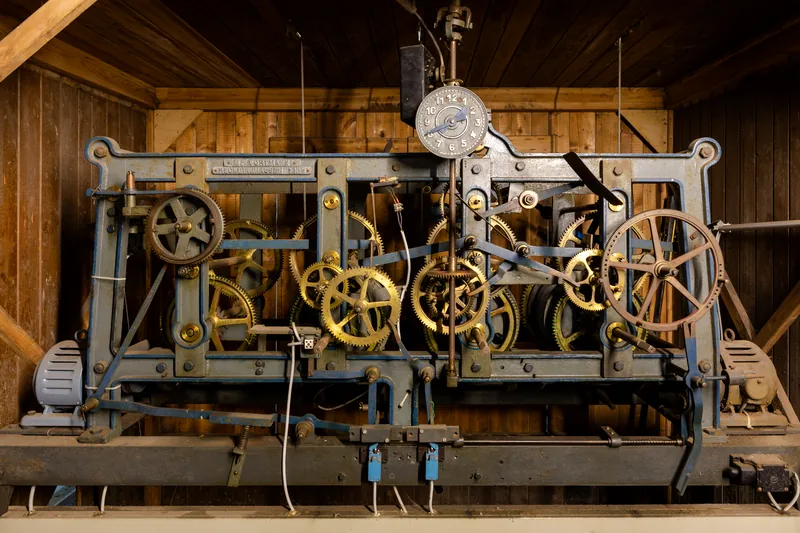
Understanding the architecture of the Valjoux 14s is essential before undertaking any transformation. Standard 14-ligne Valjoux calibers feature a movement diameter of 31.58mm, with total movement thickness ranging between 4.5mm and 6.2mm depending on whether the caliber is a simple time-only mechanism or a single-button (monopusher) chronograph. These movements typically operate at a traditional frequency of 18,000 vibrations per hour (vph), or 2.5 Hz. This low-beat frequency gives the balance wheel its majestic, highly visible sweep and places significantly less physical wear on the train wheel pivots compared to high-frequency modern calibers.
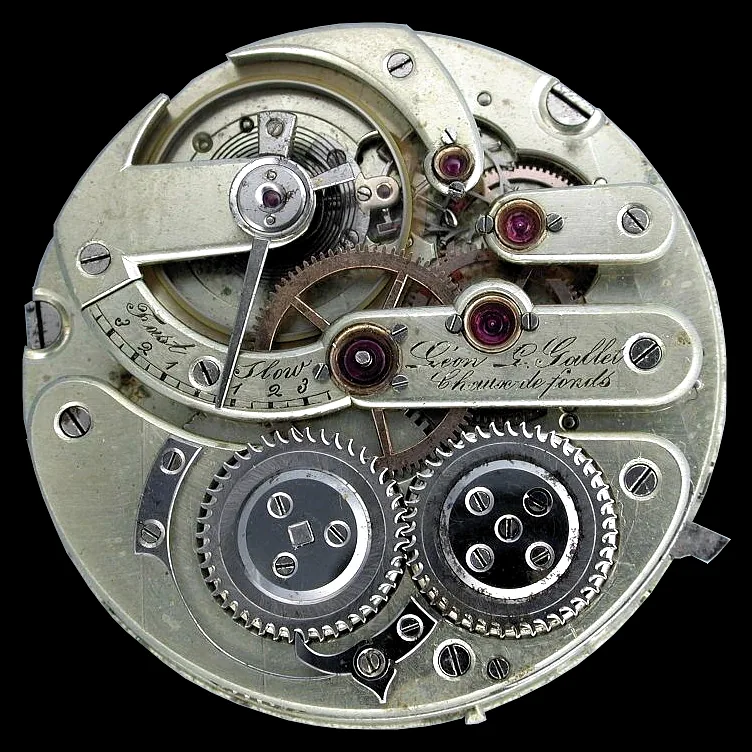
The escapement design in these calibers represents classical Swiss watchmaking at its finest. They generally feature a cut bimetallic balance wheel with gold or brass timing screws, paired with a hand-curved Breguet hairspring to maintain isochronism across various positions. The movement jewels—ranging from 15 in standard time-only configurations to 17 or 23 in upper-tier complications—are often set in polished brass or gold chatons, held in place by heat-blued steel screws. The train bridges display traditional finger-bridge or three-quarter bridge geometry, adorned with hand-applied Côtes de Genève (Geneva stripes) or delicate perlage finishing on the lower mainplate.
Another defining technical characteristic of the Valjoux 14s is its keyless works and winding mechanism. Designed originally for pendant or pocket watch operation, the winding pinion and sliding pinion are sized for robust manual winding torque. The click spring and ratchets are substantial, offering tactile feedback during manual winding that is virtually impossible to find in modern mass-produced timepieces. The balance arbors feature burnished pivots that rest in polished ruby cap jewels, delivering minimal friction and exceptional long-term amplitude when properly cleaned and lubricated with modern synthetic oils like Moebius 9010 and HP-1300.
3. Challenges of Converting Valjoux 14s to Wristwatch
When clients ask us, "can you convert valjoux 14s pocket watch movements into functional modern wristwatches?" the answer is unequivocally yes—but it requires navigating complex mechanical and structural obstacles. The primary challenge stems from the inherent difference in orientation between pocket watches and wristwatches. Pocket watches were designed either as "open-face" (Lépine) models, where the winding stem is located at 12 o'clock and the running seconds sub-dial sits at 6 o'clock, or "hunter-case" (Savonnette) models, where the stem is at 3 o'clock and the seconds sub-dial sits at 9 o'clock. If an open-face Valjoux 14s movement is placed directly into a conventional wristwatch case with the stem at 3 o'clock, the seconds hand will end up at the 9 o'clock position, requiring a complete reimagining of the dial layout.
The second major mechanical obstacle is shock protection. Vintage 14s Valjoux calibers were constructed before the widespread adoption of modern shock-absorbing jewel settings such as Incabloc or KIF (which emerged in the 1930s and 1940s). The fine balance pivots of an antique movement—measuring a mere 0.08mm to 0.12mm in diameter—are vulnerable to lateral and axial impacts. A sudden drop or sharp wrist movement can bend or snap an unprotected balance staff. A master watchmaker must either exercise extreme care during reassembly or retro-fit shock-absorbing jewel settings if the balance bridge geometry allows, though maintaining original jewel settings is usually preferred for historical authenticity.
Finally, environmental sealing presents a continuous engineering hurdle. Pocket watches were designed to live inside coat pockets, shielded from rain, humidity, and direct dust exposure. Wristwatches, conversely, live in an environment exposed to moisture, atmospheric humidity, and physical impacts. Creating a modern seal around a vintage winding stem—which was never designed to interface with modern rubber O-rings—demands precise lathe work and custom-machined case components to ensure the movement remains protected against ambient moisture and debris.
4. Lug Welding and Case Selection
When planning to convert valjoux 14s pocket watch into wristwatch configurations, selecting or fabricating the appropriate housing is the single most critical structural step. There are two primary avenues available to the horologist: retrofitting the original antique case through lug fabrication, or utilizing a specialized modern stainless steel or titanium conversion housing. Each approach requires precise calculations regarding inner movement cavity tolerances, crystal height clearance, and wrist ergonomics.
If retaining the original pocket watch shell, the craftsman must weld or hard-solder custom wire lugs directly onto the perimeter of the coin-silver or solid-gold pocket case. This technique mirrors the early historical conversion methods seen in authentic WW1 trench watches, where soldiers soldered wire loops onto pocket cases to strap them to their wrists. Using silver solder or micro-TIG (Tungsten Inert Gas) welding, wire lugs made of matching metallic composition are secured at 12 and 6 o'clock. The heat must be carefully controlled with thermal blocking gel to prevent distorting the internal case threads, bezel snap-joints, or hand-engraved details on the caseback.
Alternatively, the most secure modern solution is procuring or custom-machining a dedicated valjoux 14s pocket watch to wrist conversion case. Modern CNC-machined 316L stainless steel conversion cases are engineered specifically to accommodate the 31.58mm diameter of the 14-ligne movement ring. These cases feature precision internal retaining tabs or custom brass movement rings that lock the Valjoux movement firmly in place. This prevents any rotational or axial movement inside the case when the watch is subject to vibration. Modern conversion cases also feature thread-down display backs fitted with sapphire crystals, allowing full view of the hand-finished movement bridges while offering reliable water-resistant gaskets.
5. Crown and Stem Solutions
Interfacing a high-grade 100-year-old Valjoux keyless works with a modern watch case requires custom stem engineering. Antique pocket watch stems were tailored specifically to the pocket case thickness and stem tube length. In almost all instances, the original pocket watch stem will be either too short, possess the wrong thread pitch (such as legacy Swiss thread standards), or lack the proper shoulder diameter needed to pass through a modern water-resistant crown tube. Extending or manufacturing a new winding stem is standard practice during a professional conversion project.
To craft a correct stem extension or custom stem, the watchmaker uses a precision jeweler's lathe (such as a Schaublin or Bergeon lathe) to turn down high-grade hardened steel stock. The square portion of the stem—which slides through the winding pinion and clutch wheel—must match the square bore of the original keyless works down to hundredths of a millimeter. Misalignment or improper tolerances here will result in rough winding action, keyless works slippage, or premature wear on the setting lever and yoke spring. Once the internal geometry is verified, the outer end of the stem is threaded (typically to modern Tap 9 or Tap 10 standards) to accept a high-quality crown.
The crown choice must balance historical design fidelity with modern utility. Large "onion" or "pumpkin" style crowns are favored because they mirror the aesthetic of early 20th-century timepieces while offering ample surface area for manual winding. Internally, the crown must incorporate an internal rubber gasket that slides smoothly over the external case tube. This creates an effective barrier against ambient dust and sweat without placing excessive drag on the winding stem when the owner winds the mainspring manually every morning.
6. Dial and Hand Considerations
The dial and hands serve as the aesthetic interface of the timekeeping mechanism, and converting a 14s Valjoux movement presents unique visual and structural choices. Many Valjoux 14s pocket watches feature original grand feu enamel dials. These vitreous enamel dials are immune to fading or UV degradation, but they are extremely brittle. Drilling new dial feet holes or removing original feet to adapt the dial to a new case carries a high risk of causing spiderweb hairlines or catastrophic chipping across the enamel surface.
If the original enamel dial is pristine, the watchmaker must craft custom dial clamps or utilize existing dial feet locations by machining matching retaining channels in the movement mounting ring. If the dial is severely damaged or missing altogether, a bespoke brass dial plate must be blanked, engine-turned, or hand-enameled. When designing a new dial, extreme care must be taken regarding hand-hole clearances. The distance between the hour wheel, canon pinion, and central second or sub-second post must be measured with micrometer precision to ensure hands rotate without rubbing against one another or touching the inner surface of the front crystal.
Hand fitting on vintage 14s movements requires traditional hand-truing and re-reaming tools. Vintage friction-fit hand sockets (the mounting holes of the hour and minute hands) rarely match modern aftermarket hand dimensions. The watchmaker must ream original hands to fit larger arbors, or carefully close hand sockets using a staking set if the holes are oversized. The hands are often crafted from carbon steel and heat-treated over a brass-filings tray until they achieve an authentic peacock-blue or deep royal-blue oxide layer. Thermally blued steel hands not only offer exceptional contrast against an enamel dial, but the oxide layer also provides long-term corrosion resistance.
7. Why 14s is More Common for Conversion
Among vintage timepieces, enthusiasts frequently compare different pocket watch sizes—such as 18s (44.86mm), 16s (43.18mm), 12s (39.37mm), and 14s (31.58mm)—when considering structural repurposing. The 14s movement size emerges as the indisputable "golden standard" for anyone seeking to convert valjoux 14s pocket watch into wristwatch pieces designed for daily ergonomic wear. Larger American or European pocket watch calibers (18s and 16s) yield massive wristwatches with overall outer case diameters exceeding 48mm to 52mm. These oversized dimensions sit awkwardly on the average human wrist, subjecting the watch case to frequent wall bumps and door-frame impacts.
Conversely, the 14-ligne movement footprint—measuring just under 32mm in bare movement diameter—allows watchmakers to construct finished wristwatch cases with an exterior diameter between 38mm and 41mm. This dimension aligns perfectly with modern horological proportions, fitting comfortably under a shirt cuff while offering substantial wrist presence. Furthermore, because Valjoux 14s calibers were originally engineered as high-end mid-size mechanisms, their internal gear train components are robust, far thicker, and more durable than delicate tiny wrist movements produced during the same historical period.
This ideal balance of compact size and physical durability makes 14-ligne calibers the premier choice within the realm of antique pocket watch conversions. Enthusiasts gain the best of both worlds: the classical architecture, detailed beveling, and slow-beat charm of a century-old pocket caliber, housed within a wearable modern framework that comfortably tolerates modern lifestyle demands.
8. Final Thoughts on Valjoux 14s Conversions
Transforming a vintage Valjoux 14s pocket watch movement into a bespoke, functional wristwatch is far more than a simple casing exercise—it is an act of high-level horological preservation. It bridges the gap between historical bench craftsmanship and modern industrial design. When executed correctly by an experienced watchmaker who respects the integrity of the original mechanics, a conversion converts an obsolete, drawer-bound pocket watch into a daily wearable piece of kinetic mechanical art.
Ethical horology dictates that complete, pristine, and historically significant museum-grade pocket watches in intact original precious-metal cases should remain preserved in their original state whenever possible. However, hundreds of orphaned, high-grade Valjoux 14s movements exist worldwide whose original cases were melted down for scrap metal long ago. Rescuing these orphaned engineering marvels, re-servicing their gear trains, machining new protective housings, and wearing them on the wrist ensures that the brilliant legacy of the Vallee de Joux artisans continues to tick vibrant life into the 21st century.
For collectors and vintage enthusiasts alike, wearing a custom Valjoux 14s conversion provides an intimate connection to horological history. Every sweep of the blued-steel hands and every tactile click of the manual winding crown serves as an enduring reminder of a time when watchmaking was governed by micrometer feel, hand-applied finishing, and uncompromising mechanical elegance.