1. Historical Background of Valjoux 18s Movements
The story of Valjoux begins in the heartland of Swiss complicated horology—the Vallée de Joux. Founded in 1901 by brothers John and Charles Reymond as Reymond Frères SA, the company initially focused on manufacturing high-grade chronograph ebauches (unfinished movement blanks) for elite watch manufacturers. It was not until 1929 that the firm officially adopted the name Valjoux, an abbreviation of Vallée de Joux, cementing its status as the premier architect of mechanical stopwatches and chronograph mechanisms. During the early 20th century, the standard instrument for precision timekeeping remained the pocket watch, and Valjoux’s 18-ligne (often referred to in conversion circles as "18s" or 18-line format, measuring approximately 40.6mm to 44mm in blank diameter) architecture was the gold standard for split-second timers, medical pulsometers, and military artillery stopwatches.
The Valjoux 18-ligne caliber family—including early raw ebauches that evolved into iconic architectures—was supplied to the world’s most prestiges maisons. Patek Philippe, Audemars Piguet, Vacheron Constantin, and Breitling routinely purchased these 18s raw movements, finishing them in-house with exquisite Anglage, Geneva stripes, and perlage. During the interwar period, as wristwatches began to supplant pocket watches, Valjoux scaled down their 18-ligne designs into 13-ligne and 14-ligne wrist chronograph movements, such as the famous Valjoux 22 and Valjoux 72. However, the original 18-ligne pocket watch engines remained legendary for their structural robustness, massive balance wheels, and effortless legibility across large chronograph registers.
Today, surviving Valjoux 18s pocket watch movements represent a fascinating bridge between traditional 19th-century bench watchmaking and mid-century industrial chronograph engineering. Many of these movements, housed originally in solid gold, sterling silver, or nickel pocket watch cases, share deep mechanical DNA with early horological icons, including early vintage Rolex wristwatches that relied on high-grade Swiss chronograph ebauches. Understanding this heritage is crucial for any horologist considering a conversion, as working on a Valjoux 18-ligne movement means interacting with some of the finest traditional Swiss mechanical architecture ever produced.
2. Technical Specifications and Movement Architecture
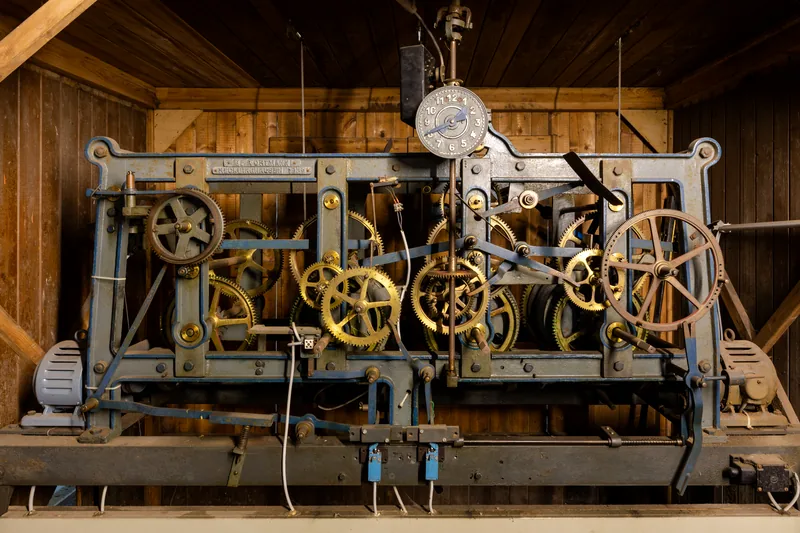
From a mechanical perspective, the Valjoux 18s pocket movement is a masterpiece of classical column-wheel chronograph engineering. Operating at a traditional balance frequency of 18,000 vibrations per hour (2.5 Hz), the movement utilizes a large, high-inertia balance wheel—frequently equipped with a Breguet overcoil hairspring and temperature-compensating weight screws along its perimeter. The power delivery is driven by a heavy-duty mainspring housed within a spacious mainspring barrel, delivering a power reserve ranging between 36 and 44 hours. Depending on the exact complication tier (single-pusher chronograph, two-button chronograph, or split-second *rattrapante*), jewel counts typically range from 15 to 23 functional rubies set in polished chatons or friction-set bushings.
The architecture of the chronograph mechanism relies on a classical lateral clutch (horizontal coupling) system. When the chronograph is engaged via the column wheel, the driving wheel mounted on the fourth wheel arbor pivots outward to mesh with the central chronograph runner wheel. The column wheel itself—a meticulously machined, castle-topped steel pillar—coordinates the precise sequence of start, stop, and reset actions using a series of hand-finished steel levers, hammers, and jumper springs. Because this movement was engineered for pocket watch scale, every component is oversized compared to modern wristwatches, featuring thick pillar plates, substantial wheel bridges, and robust click springs that deliver distinct, crisp tactile feedback when operating the chronograph pushers.
Another major structural consideration is the winding and setting layout. Valjoux 18s movements were produced in both Lépine (open-face) and Savonnette (hunter-case) configurations. In a Lépine movement, the sub-seconds register sits at 6 o'clock relative to the winding stem at 12 o'clock. In a Savonnette configuration, the winding stem is positioned at 3 o'clock while the sub-seconds register sits at 6 o'clock. Understanding whether a movement is Lépine or Savonnette is essential before attempting a build, as this determines how the movement will orient inside a modern wrist case and where the chronograph control pushers must be located relative to the dial.
3. Challenges of Converting Valjoux 18s to Wristwatch
When clients ask modern watchmakers, "can you convert valjoux 18s pocket watch movements into wearable timepieces?", the answer is technically yes, but with severe engineering caveats. Converting a massive pocket watch engine into a wrist-worn instrument is one of the most complex tasks in custom horology. The primary hurdle is pure physical volume. An 18-ligne movement has a naked diameter of over 40mm and a total thickness—including the height of the chronograph column wheel, central arbor, and cannon pinion—that can easily reach 8mm to 10mm. Once encased, the resulting wristwatch will typically measure between 46mm and 50mm in diameter, demanding careful wrist ergonomics to prevent the piece from feeling unwearable or comically oversized.
A second major technical challenge involves shock resistance. Traditional Valjoux 18s pocket watch movements were engineered during an era before the invention of modern shock-absorption systems such as Incabloc, KIF, or Novodiac. The delicate steel pivots of the balance staff sit directly inside rigid synthetic ruby jewels. While a pocket watch safely rested inside a vest pocket, a wristwatch is constantly subjected to rotational acceleration, severe impacts, door-frame bumps, and sudden vibrations. A single hard fall can snap a vintage balance staff pivot cleanly off, requiring custom lathe work to turn a replacement staff from raw steel rod—a tedious and expensive repair.
Finally, aligning the chronograph activation controls poses an enormous geometry problem. Unlike standard time-only pocket watch movements that merely require a winding stem alignment, a Valjoux 18s chronograph requires exact mechanical alignment between external wrist case pushers and internal movement levers. The tolerances between the case pusher pins and the movement's column wheel operating levers are measured in fractions of a millimeter. If the pusher stroke is too short, the chronograph will fail to engage; if it is too long, the internal steel levers can be bent or cracked under hard manual pressure.
4. Lug Welding and Case Selection
Selecting or constructing a proper valjoux 18s pocket watch to wrist conversion case requires careful consideration of structural integrity, aesthetics, and component clearance. Watchmakers generally take one of two approaches: fabricating a completely modern, custom-machined CNC stainless steel wrist case, or modifying an original vintage pocket watch case by silver-soldering or laser-welding custom wire lugs directly to its perimeter. Welding wire lugs directly to an original nickel or sterling silver pocket case mimics the historic transition era, much like the authentic WW1 trench watches worn by officers during the Great War.
If choosing to build or source a dedicated custom conversion case, modern watchmakers usually turn to surgical-grade 316L stainless steel or lightweight titanium. The internal movement cavity must be precision-machined on a lathe or CNC mill to fit the exact stepped profile of the Valjoux mainplate. Because pocket watch movements do not feature standard modern casing clamps, a custom brass or steel movement retention ring (casing ring) must be turned to hold the 18s caliber securely without flexing. This ring acts as a vibration buffer and ensures that the winding stem aperture lines up perfectly with the case tube.
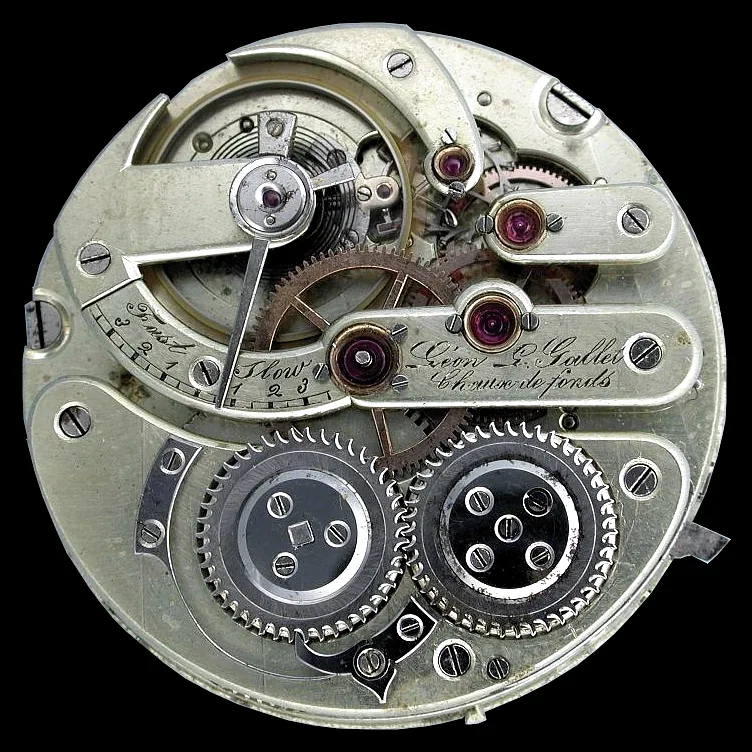
Furthermore, casebacks for an 18s conversion almost universally feature a display design with a transparent sapphire crystal. Covering up a hand-finished Valjoux column-wheel chronograph movement behind solid metal would hide the visual artistry of the lateral clutch and reset hammers in action. The bezel and caseback must utilize synthetic rubber O-ring gaskets to protect the historic movement against atmospheric moisture and ambient dust, though true water resistance is rarely achievable due to the open nature of vintage winding stems and chronograph pusher tubes.
5. Crown and Stem Solutions
Mastering the winding stem and crown assembly is arguably the most delicate mechanical task in any conversion project. Vintage pocket watch stems were tailored to match specific pocket case neck lengths and sleeve-set or stem-set mechanisms. When transferring a Valjoux 18s movement into a wristwatch case, the original stem is almost never long enough or correctly threaded to accept a modern wristwatch crown. Therefore, the watchmaker must turn a new custom winding stem on a precision watchmaker's lathe (such as a Bergeon or Schaublin lathe) using hardened, tempered high-carbon steel.
The stem fabrication process involves machining a square section that slides precisely through the movement's clutch wheel and winding pinion, followed by turning a pivot end that seats into the mainplate pivot hole. The outer end of the stem must be threaded with standard horological tap dimensions (typically Tap 9 or Tap 10) to accommodate the chosen crown. The watchmaker must precisely heat-treat and oil-quench the fabricated stem to achieve the correct balance between hardness and flexibility; an over-tempered stem will snap under winding torque, while an under-tempered stem will twist and deform inside the movement.
Because an 18s conversion watch features a large mainspring barrel with substantial spring tension, winding the watch requires significant manual force. The crown must be chosen carefully—an oversized onion crown or a broad diamond-shaped crown provides the necessary finger leverage to wind the heavy mainspring smoothly. Modern custom cases also incorporate spring-loaded crown tube seals to prevent dust and ambient air from entering along the stem axis, ensuring that the critical keyless works remain clean and properly lubricated with synthetic greases.
6. Dial and Hand Considerations
The dial and hands of a Valjoux 18s caliber give the conversion its visual personality, but they also present significant restoration and clearance issues. Original pocket watch dials from the early 20th century are predominantly made of fired enamel on copper plates. While enamel never fades or oxidizes, it is extremely brittle. Attempting to modify, solder, or drill a vintage enamel dial will inevitably cause fine spiderweb cracks or complete loss of the porcelain coating. Therefore, watchmakers must preserve the dial in its pristine original form, carefully aligning the case design around the existing copper dial feet positions.
Hand fitting on a converted 18s movement demands strict attention to vertical clearances (hand stack height). The distance between the main dial surface, the running seconds hand, the central chronograph hand, and the crystal's inner surface is extremely tight. If the cannon pinion, hour wheel, or central chronograph arbor have excessive vertical endshake, the hands can rub against one another or touch the underside of the front crystal, causing the movement to stall. Hand hole diameters must be precisely sized using a staking set and broaches to match the hand arbors perfectly without applying excessive downward force that could fracture jewel bearings.
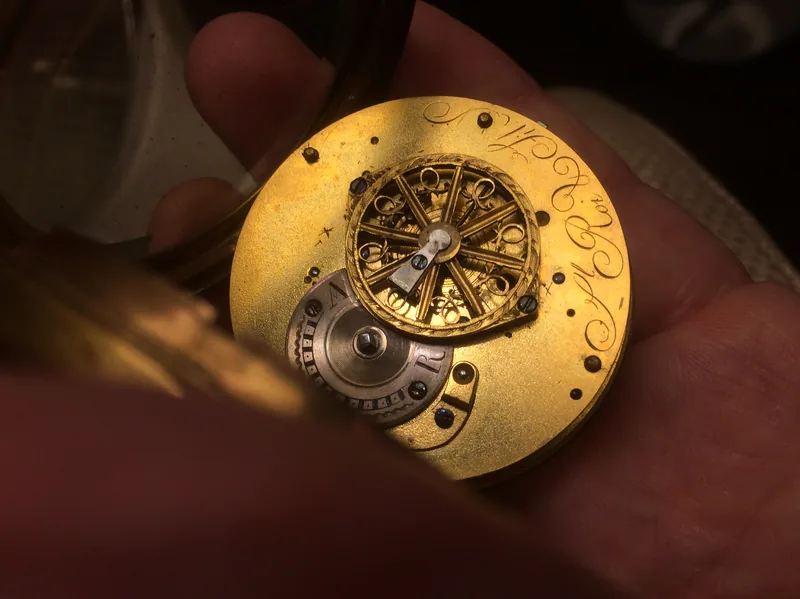
Many watchmakers prefer to keep the original heat-blued steel spade or Breguet-style hands that accompanied the movement in its pocket watch era. If replacement hands are required due to damage, they must be meticulously hand-finished, blued over a heated brass pan, and friction-fitted to the posts. Modern watchmakers often avoid applying luminescent paint to historical enamel dials, preferring to maintain the authentic turn-of-the-century aesthetic that defined Valjoux's golden era of pocket chronographs.
7. Why 18s is less common for conversion
While pocket watch conversions have enjoyed a surge in popularity among independent horologists, choosing to convert valjoux 18s pocket watch movements remains far less common than converting smaller calibers like 10s, 12s, or 16s formats (such as the ubiquitous Unitas 6497/6498). The primary reason is physical scale and wrist presence. An 18s pocket movement results in an finished case size that routinely exceeds 48mm to 50mm in diameter. For the average wrist, such a watch can feel unwieldy, top-heavy, and susceptible to striking objects during daily wear.
Another crucial factor is historical scarcity and financial value. Pristine Valjoux 18-ligne pocket watch movements—especially column-wheel chronograph and split-second variants—are rare collector items in their own right. Preserving these historic instruments in their original pocket watch cases is strongly advocated by vintage watch scholars. Undertaking a destructive conversion, where an original precious-metal pocket case is melted down or permanently altered, destroys horological provenance. As a result, ethical watchmakers usually limit conversions to isolated, "orphaned" movements whose original pocket cases were lost or scrapped decades ago.
Finally, the sheer mechanical complexity of an 18-ligne column-wheel chronograph increases the labor time exponentially compared to converting simple time-only movements. Machining a valjoux 18s pocket watch to wrist conversion case with two sealed chronograph pushers, custom stem alignment, and display casebacks requires advanced machinist skills and horological expertise. For broader perspective on how different movement sizes are handled in the restoration market, enthusiasts often explore broader collections of antique pocket watch conversions to compare the wearability of various caliber scales.
8. Final Thoughts on Valjoux 18s Conversions
To successfully convert valjoux 18s pocket watch into wristwatch configurations is to perform a high-wire act balancing historic preservation, mechanical engineering, and micro-machining art. When executed properly by an experienced master watchmaker, the resulting timepiece is nothing short of breathtaking—a living, ticking piece of early 20th-century Swiss horological royalty transferred directly to the owner's wrist. The sight of a massive, hand-finished column-wheel chronograph movement operating behind a display crystal offers a visual spectacle that few modern mass-produced watches can match.
However, prospective owners and builders must approach these projects with realistic expectations. A converted 18s Valjoux watch is an oversized, delicate, non-waterproof instrument intended for casual or ceremonial wear rather than daily abuse. It lacks shock protection and requires mindful ownership, careful winding, and regular service by specialized vintage conservators who understand classical horizontal-clutch chronographs.
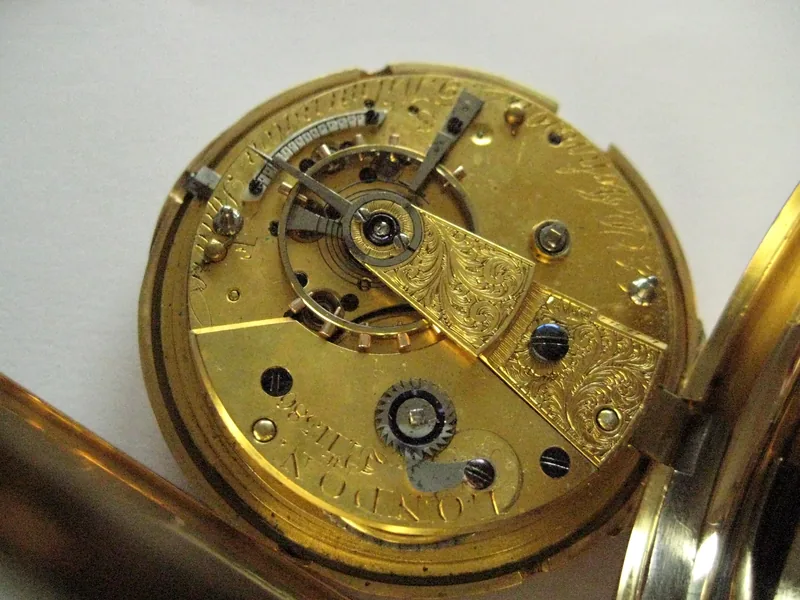
Ultimately, when an orphaned Valjoux 18s movement is saved from obscurity and expertly given new life inside a modern bespoke case, it honours the heritage of Reymond Frères and the golden age of the Vallée de Joux. It preserves a vital chapter of mechanical chronograph development, allowing the mechanical genius of past generations to continue ticking proudly into the modern era.