Historical Background of Waltham 0s Movements
The American Waltham Watch Company (AWWCo), situated along the Charles River in Waltham, Massachusetts, stood at the absolute pinnacle of industrial horology during the late nineteenth and early twentieth centuries. While Waltham gained legendary status through its large railroad chronometers—specifically its 18-size and 16-size workhorses—the manufacture was equally groundbreaking in its production of smaller calibers. Introduced around the late 1880s and perfected into the early 1900s, the 0-size (0s) caliber was engineered primarily for high-grade pendant watches, lapel timepieces, and luxurious dress watches aimed at discerning clientele. These compact movements represented a triumph of miniaturized American mass production, combining interchangeable machine-made parts with meticulous hand-finishing.
As the world transitioned into the era of the modern wristwatch during the First World War, the 0s movement found itself at a critical horological crossroads. Officers and soldiers fighting in the trenches required quick, legible access to time without fumbling in pockets, giving rise to early "trench watches." Watchmakers frequently adapted small pocket watch movements into makeshift wristlets. The Waltham 0s movement was a prime candidate for these early wrist conversions due to its reliable construction and manageable dimensions. Higher-grade 0s models, such as the Riverside, Royal, and Model 1907, featured high jewel counts, raised gold screw settings, and micrometer regulators, proving that small scale did not mean sacrificing technical excellence.
Today, horological enthusiasts and bench watchmakers frequently seek out vintage Waltham 0s movements for conversion projects. Understanding the historical context of these movements is vital before touching a screwdriver to a mainplate. When you elect to convert waltham 0s pocket watch into wristwatch configurations, you are not merely rehousing a vintage mechanism; you are preserving a tangible artifact of American industrial heritage. These movements hail from an era when steel was turned on traditional watchmaking lathes, balance wheels were fitted with real gold timing screws, and enamel dials were fired individually by hand.
Technical Specifications and Movement Architecture
To successfully execute a conversion, a watchmaker must thoroughly analyze the physical geometry and technical architecture of the Waltham 0s movement. Under the traditional Lancashire gauge system used by American watch manufacturers, a 0-size movement features a base plate diameter of 1 1/10 inches, which translates to precisely 27.94 millimeters (commonly rounded to 28mm-29mm depending on the exact lip and movement pillar geometry). This diameter is particularly advantageous for modern wristwear. Unlike massive 16s or 18s pocket watch movements—which yield wristwatches exceeding 44mm to 48mm in case diameter—a 0s caliber permits the construction of a perfectly proportioned wristwatch with a finished outer case measurement between 35mm and 38mm.
Architecturally, Waltham produced 0s movements in several distinct configurations, including full-plate, three-quarter plate, and split-bridge layouts (such as the famed Model 1900 and Model 1907). Most high-grade 0s movements feature a lever escapement, cut expansion balance wheel with a bimetallic rim to compensate for thermal variances, and a Breguet overcoil hairspring. Jewel counts typically range from 7 jewels in basic utility grades up to 15, 17, or 23 jewels in top-tier adjusted grades. Power is supplied via a manual-wind mainspring housed inside a traditional mainspring barrel, driving a center wheel, third wheel, fourth wheel (which carries the seconds hand pivot), and escape wheel.
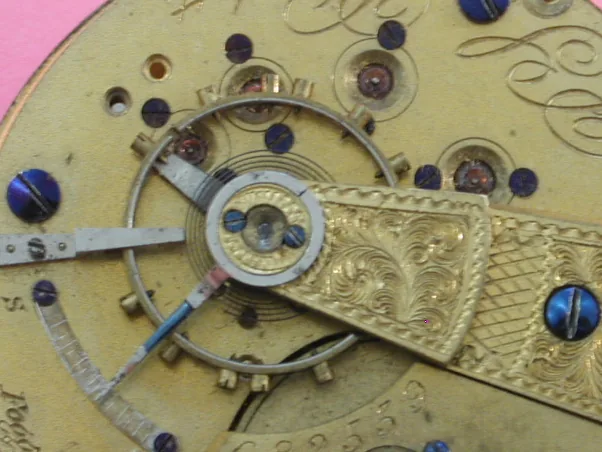
A critical technical element of the Waltham 0s caliber is its winding and setting arrangement. Unlike modern Swiss wristwatches that utilize a positive setting mechanism inside the movement—where pulling the crown operates a setting lever and yoke directly—most classical American pocket watches, including the Waltham 0s, utilize a negative setting mechanism (pendant set). In a negative setting design, the movement itself is spring-loaded into the winding position. The mechanism relies on a split sleeve located within the pendant tube of the original pocket watch case to pull the stem upward into the hand-setting position. Managing this mechanical nuance is the single most important technical hurdle during a wrist conversion.
Challenges of Converting Waltham 0s to Wristwatch
Horology enthusiasts often ask bench professionals: can you convert waltham 0s pocket watch movements into fully functional modern wristwatches? The short answer is yes, but it presents a unique array of technical hurdles that differentiate it from standard watch assembly or simple casing projects. The primary challenge stems directly from the aforementioned negative setting mechanism. Because modern aftermarket watch cases are universally designed for positive setting movements (where the detente mechanism resides inside the movement itself), dropping a negative-set Waltham 0s movement into a standard modern wristwatch case will result in a watch that winds, but cannot be pulled out to set the time.
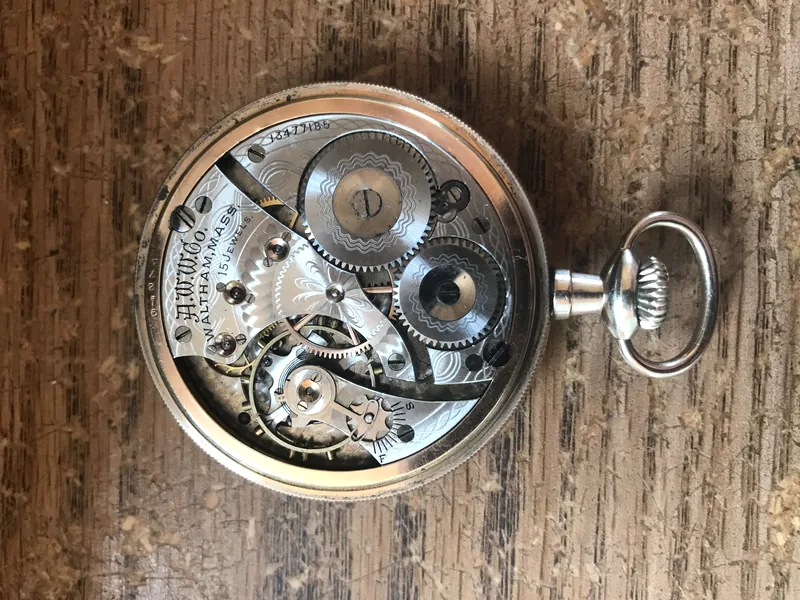
A second major challenge involves shock protection—or the complete lack thereof. Vintage Waltham 0s movements were built with balance staffs riding on unshocked synthetic or natural ruby cap jewels. On a pocket watch worn securely in a vest pocket, shock protection was less critical. However, on a wrist—where timepieces are subject to sudden impacts, door-frame collisions, and ambient vibration—a non-shock-protected balance staff pivot (often measuring less than 0.08mm in diameter) is extremely vulnerable to bending or snapping. Converting a 0s caliber requires the wearer to accept the inherent fragility of antique balance pivots, or requires the watchmaker to exercise expert skill in balance staff reproduction should an accident occur.
Finally, movement orientation and dial architecture demand careful navigation. Pocket watch movements generally come in two styles: Open Face (Lépine style), where the crown is at 12 o'clock and the running sub-seconds subdial is aligned at 6 o'clock, and Hunter style (Savonnette), where the crown is at 3 o'clock and the sub-seconds subdial is at 6 o'clock relative to that crown placement. If you take an open-face Waltham 0s movement and rotate it so the crown sits at the standard 3 o'clock position on your wrist, your running seconds subdial will end up at the 9 o'clock position. Achieving a traditional 3 o'clock crown with a 6 o'clock sub-seconds layout requires either sourcing a true hunter-configuration 0s caliber or having a custom dial manufactured with offset dial feet.
Lug Welding and Case Selection
When selecting or fabricating a waltham 0s pocket watch to wrist conversion case, the watchmaker has two primary philosophical and technical paths: converting an original period pocket watch case through lug addition, or machining/sourcing a bespoke modern wristwatch enclosure built to accommodate the 0s dimensions. Both approaches demand meticulous attention to mechanical alignment, metal chemistry, and water resistance considerations.
If you choose to convert an authentic early 20th-century nickel, silver, or gold-filled pocket watch case, the primary operation involves silver-soldering or laser-welding custom wire lugs directly to the case band. Wire lugs (often styled after original WWI trench watch designs using 1.2mm to 1.5mm sterling silver or stainless steel wire) must be bent, profiled, and jigged with complete symmetry before welding. Laser welding is heavily preferred over traditional torch soldering because it generates concentrated heat, preventing the delicate crystal bezel threads, hinges, or snap-fit tolerances of the original vintage case from warping. The advantage of this approach is absolute period authenticity; you maintain the original pocket watch sleeve, crown tube, and case geometry built specifically for the 0s negative setting stem.
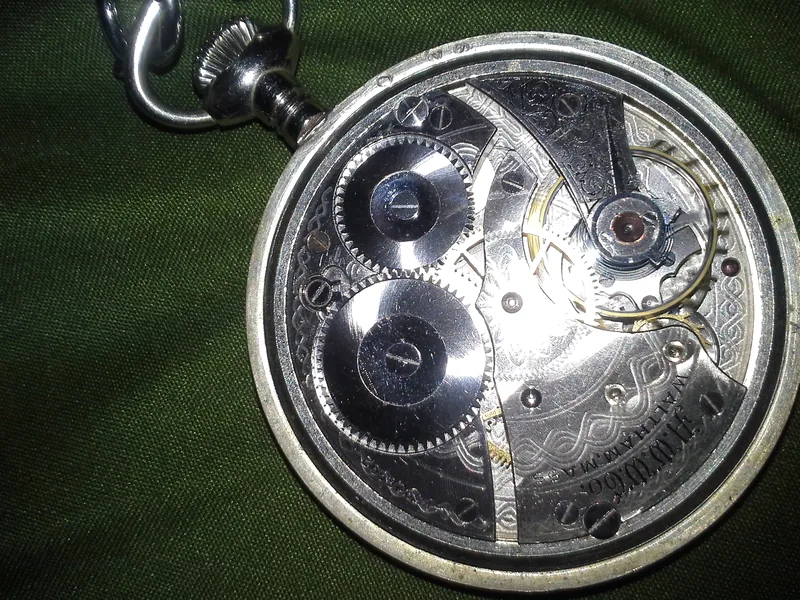
Alternatively, housing the 0s caliber in a modern, CNC-machined 316L stainless steel wristwatch case offers superior daily durability, anti-magnetic shielding, and vastly improved dust/moisture resistance. However, because modern off-the-shelf conversion cases are rarely manufactured specifically for the precise stem-height and lip tolerances of an American 0s movement, custom movement adapter rings are mandatory. The watchmaker must turn a custom brass or aluminum movement spacer ring on a watchmaker's lathe. This ring bridges the outer internal diameter of the stainless case and the exact ~28mm outer diameter of the Waltham 0s mainplate, complete with machined recesses for the casing screws and stem clearance notch.
Crown and Stem Solutions
Resolving the crown and stem assembly is arguably the most intricate mechanical phase when you convert waltham 0s pocket watch into wristwatch models. Because the original Waltham 0s stem relies on a square-shank or key-wound arbor interface coupled with a negative setting sleeve, integrating the movement into a modern wristwatch setting system requires precise horological engineering. Watchmakers typically choose between two custom solutions: retrofitting a friction-fit sleeve inside the crown tube, or converting the movement's setting mechanism to operate positively.
The sleeve-retrofit method preserves the internal historical integrity of the movement. A custom-turned steel or bronze pendant sleeve is threaded or press-fit directly into the conversion case's crown tube. This sleeve contains internal spring-loaded fingers that clasp a specialized square-arbor winding stem. When the wearer pulls the external crown outward, the internal sleeve fingers yield under tension, allowing the stem to shift upward and engage the winding pinion with the setting wheels inside the movement. Manufacturing or adjusting this sleeve demands micro-tolerances; if the spring tension is too light, the watch will pop into setting mode during daily wear; if it is too tight, the crown cannot be pulled without damaging the winding arbor or crown threads.
The second engineering path involves modifying the stem itself. Watchmakers often craft a two-piece "split stem" or custom-machined adapter stem. The lower portion of the stem features the square-profile male end that slots precisely into the original Waltham center winding arbor, while the upper section terminates in a standard tap 10 or tap 9 thread to accept modern vintage-style onion or pumpkin crowns. Proper alignment of the stem height is critical. Even a miscalculation of 0.05mm between the horizontal center line of the crown tube and the stem recess in the movement plate will cause binding, severe wear on the winding pinion teeth, and excessive lateral friction against the balance wheel bridge.
Dial and Hand Considerations
The visual soul of any wristwatch conversion resides in its dial and hand assembly. Antique Waltham 0s pocket watches frequently feature exquisite double-sunk or single-sunk vitreous enamel (porcelain) dials adorned with delicate Roman or bold Arabic numerals. Preserving these historic dials requires extraordinary care during casing. Vitreous enamel is essentially glass fused to a copper plate; it is exceptionally brittle and highly prone to hairline fracturing or catastrophic chipping if subject to torsional stress from case clamping screws or improper crystal clearance.
Dial feet placement presents a notable geometric puzzle. Waltham 0s dials are held to the pillar plate by copper dial feet that lock in place via side-acting eccentric screws or friction pins. If you are re-orienting an open-face movement (crown at 12 o'clock) into a wristwatch layout (crown at 3 o'clock) using a custom or aftermarket dial, the original dial feet locations will no longer align with the mainplate holes. In such scenarios, watchmakers must carefully shear off the original dial feet, solder new copper feet in the correct position using a precision dial-soldering jig, or utilize specialized horological adhesive pads designed specifically for vintage dial mounting without heat exposure.
Hand fitting on a Waltham 0s movement also requires non-standard technical approaches. The center cannon pinion, hour wheel pipe, and fourth wheel pivot diameters on vintage American pocket watches do not match modern Swiss caliber hole sizes (such as standard ETA 6497 or 2824 hand sizing). The minute hand pipe must fit securely over the square or tapered round arbor of the 0s cannon pinion, while the hour hand must fit the specific outer clearance of the hour wheel tube. Watchmakers must either meticulously re-ream and stake original blued-steel spade hands to fit, or custom broach vintage hands to exact friction tolerances using a hand broach and staking set.
Why 0s is Less Common for Conversion
While conversion watches utilizing 16-size and 18-size American pocket watch movements are widely prevalent in today's horological market, authentic 0s conversions remain significantly less common. Understanding why requires examining both market supply dynamics and the mechanical friction points inherent to working with smaller vintage components.
First and foremost is the issue of relative rarity and historical survival rates. During the golden age of American watchmaking, massive quantities of 16-size and 18-size pocket watches were produced for men working in rail, industrial, and maritime sectors. Conversely, 0s watches were predominantly produced as higher-end ladies' pendant pieces or delicate luxury items. As gold and silver melting booms occurred throughout the 20th century, thousands of these smaller, thin precious-metal pocket watch cases were scrapped for bullion, and their delicate 0s movements were often discarded or damaged due to improper storage. Consequently, high-grade, fully functional 0s movements with clean enamel dials are vastly scarcer today than their larger counterparts.
From a bench watchmaker's perspective, working on a 0s movement demands a significantly higher level of skill and micro-precision. The components within a 0s caliber—such as the pallet fork, balance pivots, escape wheel teeth, and hairspring coil—are exponentially smaller and more delicate than those in a standard 16s pocket watch. The margin for error during pivot polishing, jeweling, mainspring installation, and setting-sleeve adjustment is microscopic. Furthermore, because dedicated off-the-shelf conversion cases for 0s movements do not exist in high-volume production, each project requires extensive custom lathe work, bespoke spacer rings, and hand-fitted stems, making it a labor-intensive endeavor that deters amateur modders.
Final Thoughts on Waltham 0s Conversions
Transforming a vintage Waltham 0s pocket watch movement into a functional modern wristwatch is one of the most rewarding endeavors in high-level horology. It bridges the gap between historical preservation and daily utility, breathing vibrant new life into a masterpiece of American mechanical engineering that might otherwise sit forgotten in a drawer or display cabinet. When properly executed, a Waltham 0s wristwatch offers ideal classic wrist proportions, unmatched dial character, and an internal movement finishing standard that simply cannot be replicated by modern mass production at comparable costs.
Success in this specialized discipline relies on absolute respect for the movement's architectural parameters. From conquering the nuances of the Waltham negative setting mechanism and machining custom movement adapter rings, to preserving delicate vitreous enamel dials and custom-fitting hands, every step demands patience, proper watchmaking tools, and deep mechanical insight. For the watchmaker or collector willing to navigate these challenges, the end result is a truly bespoke timepiece—a wearable slice of late 19th-century American innovation ready to measure time on the wrist for another century to come.