1. Historical Background of Waltham 10s Movements
The American Waltham Watch Company, founded in Waltham, Massachusetts, stands as a pillar of industrial horology. Renowned for introducing interchangeable parts and mechanized precision to watchmaking, Waltham transformed an artisan craft into an exact science. Throughout the late 19th and early 20th centuries, standard pocket watch sizes were dominated by the heavy 18-size and 16-size calibers favored by railroad conductors and working men. However, as fashion shifted toward sleeker profiles in the Edwardian era and 1920s, smaller, elegant movements were required for gentlemen’s dress pocket watches. This evolution birthed the Waltham 10-size (10s) movement architecture.
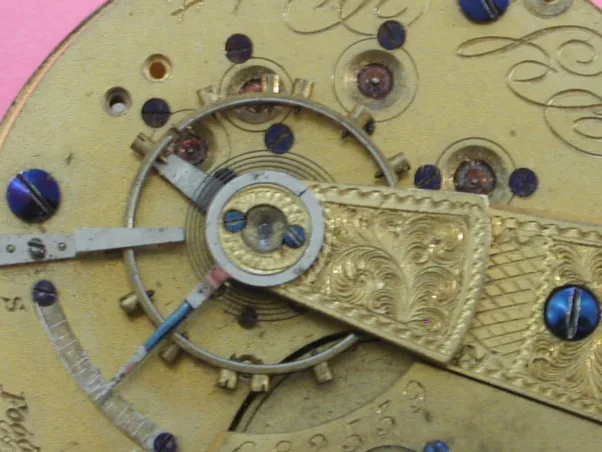
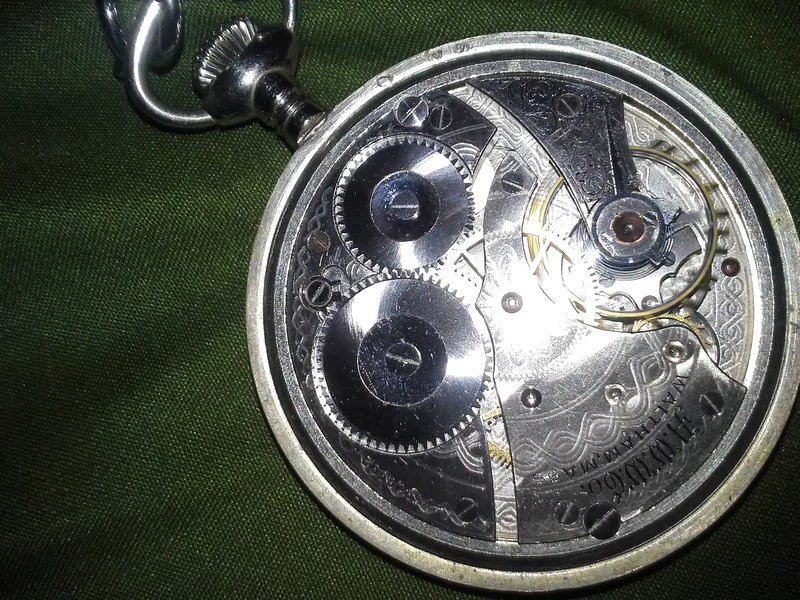
Measuring approximately 38.1 millimeters in plate diameter, the 10s caliber was explicitly designed to offer a slender, sophisticated footprint without sacrificing structural integrity or timekeeping accuracy. Models such as the Colonial series, along with various iterations of the Model 1894 and later thin-model calibers, embodied this design philosophy. These movements featured high-grade finishing techniques, including exquisite nickel plating, intricate damaskeening (Sunburst and Geneva-style engine turning), raised gold jewel settings, and adjusted temperature/position calibrations that rivaled European manufactures of the same era.
In contemporary horology, the historical legacy of the Waltham 10s makes it a prime candidate for restoration and modern adaptation. As original pocket watch cases were frequently melted down for precious metal content during financial downturns, thousands of immaculate 10s movements were left orphaned without cases. Project horologists recognized that this specific size bridges the gap between historical pocket horology and modern wrist ergonomics, laying the foundation for modern artisans to convert modern vintage inventory into functional, wearable art.
2. Technical Specifications and Movement Architecture
Understanding the architecture of a Waltham 10s movement requires deep familiarity with American sizing conventions and keyless works engineering. The "10s" designation follows the standard Lancashire gauge system where 0-size corresponds to a base plate diameter of 1 and 5/30 inches (approximately 29.63 mm), with each increment in size adding 1/30th of an inch. Thus, a 10s movement features a mainplate diameter of roughly 1.5 inches (38.1 mm). The height or thickness of these calibers typically varies between 4.5 mm and 5.5 mm depending on whether the movement is a basic 7-jewel grade or a high-grade 17-to-21-jewel adjusted movement, such as the Waltham Riverside or Vanguard dress models.
The movement layout generally adopts a three-quarter plate or bridge-style configuration. The gear train consists of a tempered steel arbor going barrel, brass or gold-flashed center wheel, third wheel, fourth wheel (which drives the sub-seconds pivot), and a hardened steel escape wheel. The escapement utilizes a classic Swiss-style lever configuration with synthetic ruby or sapphire pallet jewels. The heart of the movement—the balance assembly—features a cut bimetallic compensation balance wheel paired with a Breguet hairspring, oscillating at a traditional frequency of 18,000 vibrations per hour (2.5 Hz). Most high-grade 10s movements also incorporate micrometric regulators, such as the Reed or Star regulator systems, allowing fine rate adjustments down to fractional seconds per day.
A critical technical element when preparing to convert waltham 10s pocket watch into wristwatch configurations is the keyless works mechanism. Unlike contemporary wristwatches where the setting mechanism resides entirely inside the movement plate, vintage American pocket watches frequently utilized negative-setting (or friction-sleeve) mechanisms. In negative-setting systems, the detent and setting mechanism reside within the case stem tube rather than on the movement’s mainplate. Master watchmakers must thoroughly evaluate whether a specific 10s caliber uses a positive (movement-set) or negative (pendant-set) architecture, as this dictates the exact stem modification required during casing.
3. Challenges of Converting Waltham 10s to Wristwatch
While the conversion of vintage timepieces is a rewarding endeavor, horologists encounter significant mechanical hurdles. When clients ask, "can you convert waltham 10s pocket watch mechanisms into reliable wristwatches?", the technical answer is yes, but it requires addressing fundamental physics and structural limits. The primary challenge stems from positional errors and shock susceptibility. Pocket watches were traditionally designed to operate in limited static positions: pendant-up (in a vest pocket), dial-up, or dial-down on a nightstand. On a human wrist, however, the balance assembly experiences violent multi-axis acceleration, sudden impacts, and constant rotation.
Because vintage Waltham 10s calibers predate modern shock-absorption systems like Incabloc or KIF, the balance pivots are exceptionally vulnerable to impact. The hair-thin steel balance staff pivots—often measuring less than 0.09 mm in diameter—rest inside rigid jewel holes topped with flat cap jewels. A direct drop or heavy wrist vibration can instantly bend or snap these pivots. To mitigate this risk, watchmakers performing a conversion must meticulous re-pivot or burnish the balance staff, verify endshake and sideshake tolerances, and advise the end-user regarding active wear limitations.
Another major obstacle involves environmental sealing and orientation. Vintage pocket watches were never intended to be water-resistant, leaving their movements exposed to dust, moisture, and skin oils if encased improperly. Furthermore, the dial layout presents a structural puzzle. Open-face 10s movements feature the winding stem at 12 o'clock and the sub-seconds wheel at 6 o'clock. Rotating the movement inside a wristwatch case to put the crown at 3 o'clock shifts the sub-seconds indicator to the 9 o'clock position. Conversely, hunter-style 10s movements (designed for hinged cases with covers) place the crown at 3 o'clock and sub-seconds at 6 o'clock naturally, making hunter movements visually preferred for traditional layout conversions, albeit harder to find in pristine condition.
4. Lug Welding and Case Selection
Securing a vintage pocket watch movement for wrist wear historically involved solder-welding wire lugs directly onto the original pocket watch case. While historically authentic for early 20th-century "trench watch" conversions, welding lugs onto soft nickel, silver, or gold-filled pocket watch cases presents numerous structural drawbacks. Soft solder degrades over time under mechanical stress, and hard silver-soldering requires stripping the movement entirely and subjecting the historical case to high thermal stress, often ruining precious plating and patina.
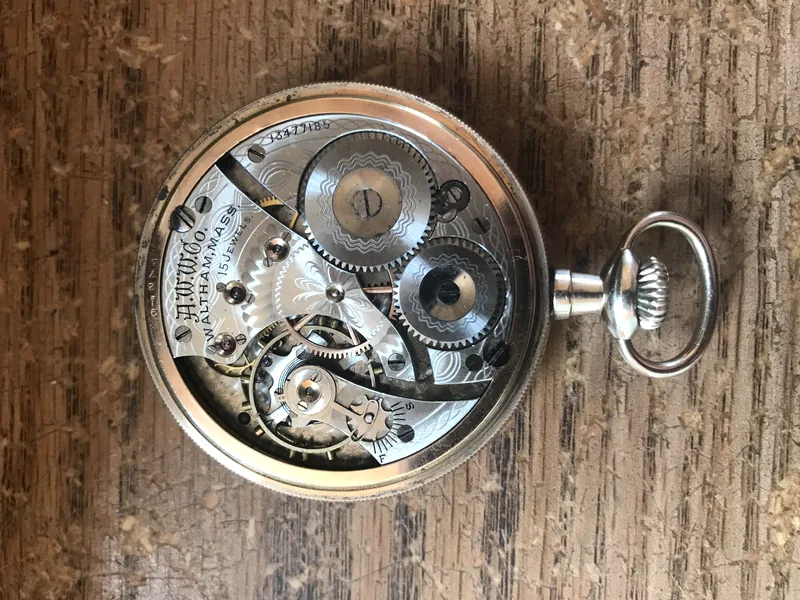
In modern high-end watchmaking, the preferred methodology utilizes a specialized, purpose-built waltham 10s pocket watch to wrist conversion case. These custom cases are CNC-machined from solid 316L stainless steel, titanium, or marine-grade bronze. Designed specifically to accommodate the exact ~38.1 mm diameter of the 10s mainplate, modern cases feature integrated fixed or spring-bar lugs, double-gasketed crowns, and scratch-resistant sapphire crystals on both the front and display case-back. The display back is paramount, as it showcases the historical damaskeening and high-grade finishing of the Waltham movement.
To bridge the gap between the internal diameter of a modern case (typically 42 mm to 44 mm externally) and the 10s movement, the watchmaker must turn a custom movement retaining ring on a precision lathe. This casing ring, usually crafted from brass or stainless steel, features internal stepped ledges that match the outer shoulder of the Waltham mainplate. The ring is locked in place using micro-casing clamps or perimeter screws, isolating the movement from direct lateral impact while holding it perfectly rigid within the case cavity.
5. Crown and Stem Solutions
Interfacing the vintage winding mechanism with a modern wristwatch crown is one of the most intricate phases of the conversion process. As previously established, many Waltham 10s calibers employ a negative-setting mechanism. In a negative-setting system, the winding stem on the movement is naturally biased toward the time-setting position by an internal return spring. The stem tube within the original pocket watch case held a split steel sleeve that compressed the stem inward into the winding position. Removing the movement from its original case removes this sleeve, causing the keyless works to default to hand-setting mode.
To overcome this issue when you convert waltham 10s pocket watch into wristwatch cases, the horologist must install an adaptable setting system or retrofit a custom setting sleeve into the conversion case tube. Alternatively, for positive-set Waltham 10s models (where pulling the stem changes the function within the movement itself), a custom-turned winding stem must be machined. Because vintage American thread pitches (often tap 8 or proprietary Waltham thread standards) differ entirely from modern metric thread standards (typically tap 9 or tap 10 / 0.9mm threads used on contemporary crowns), direct component swapping is impossible.
The watchmaker typically uses a precision lathe to turn a custom stem adapter or cuts a dual-threaded stem shaft. The inner portion matches the square square-arbor profile and thread pitch of the Waltham winding pinion, while the external portion matches the thread metric of a oversized onion, pumpkin, or diamond-shaped vintage-style crown. The length of the stem must be calculated to within hundredths of a millimeter: if the stem is too long, the crown will not seal flush against the case gasket; if it is too short, the keyless works will fail to execute full travel between the winding and setting detents, leading to premature gear wear or slippage.
6. Dial and Hand Considerations
The aesthetic character of a converted watch hinges upon its dial and hands. Waltham 10s pocket watches were originally fitted with vitreous enamel (fired porcelain) dials or silvered/gold metal dials featuring painted or raised metal Arabic numerals. Enamel dials are visually striking and resistant to UV fading, but they are incredibly brittle. When removing or remounting an original enamel dial, extreme caution is necessary to avoid stress fractures or chipping around the dial foot locations and center hole aperture.
Modifying dial foot positions is often necessary when adapting a 10s movement to a non-native case orientation. If an open-face movement is rotated 90 degrees to align the winding stem at 3 o'clock, the original dial foot locations relative to the case screw positions will no longer align. Watchmakers must either silver-solder new copper dial feet onto metal dials using micro-spot welding equipment or utilize modern non-invasive dial foot clamps. For brittle porcelain dials, soldering is impossible due to heat expansion breaking the glass-enamel matrix; in these scenarios, custom dial adapters or specialized horological adhesives are carefully deployed to secure the dial without permanent alteration.
Hand fitting presents its own set of mechanical tolerances. Original Waltham hand holes are sized to fit specific friction-fit dimensions on the hour wheel pipe, cannon pinion, and fourth wheel pivot. The fourth wheel pivot on a 10s movement, which carries the sub-seconds hand, is extremely delicate. When converting the watch, original blued-steel spade, Breguet, or cathedral hands should be preserved whenever possible. If custom hands are utilized, the hand hubs must be precisely broached using micro-reamers or closed down using a staking set to achieve a perfectly concentric friction fit without exerting damaging down-force on the center arbor or escapement interaction.
7. Why 10s is More Common for Conversion
Within the horological modification community, the question frequently arises as to why the 10-size movement has emerged as the premier choice for conversion projects compared to other American pocket watch sizes. The answer lies in the intersection of physical dimensions, wearability, and mechanical stability. Large pocket watch sizes, such as the 18s (44.86 mm movement diameter) and 16s (43.18 mm movement diameter), yield completed wristwatches with external case diameters of 48 mm to 52 mm. On the average wrist, these dimensions result in awkward ergonomics, excessive wrist overhang, and severe vulnerability to striking doorframes and objects.
On the opposite end of the spectrum, smaller pocket watch movements such as the 0s (29.21 mm) or 3/0s (26.67 mm) were engineered primarily for ladies' pendant watches. These smaller movements feature diminutive balance assemblies, thinner plates, and tiny gear trains that are far more difficult to service, less stable in rate retention, and offer lower power reserves. The 10s movement, with its ~38.1 mm diameter, hits the theoretical ideal balance point. Cased within a slim modern housing, a 10s conversion yields an overall watch diameter of 41 mm to 43 mm—aligning perfectly with modern luxury wristwatch sizing standards.
Furthermore, the availability and quality of Waltham 10s movements make them uniquely suited for custom watchmaking. Millions of 10s movements were produced during the golden age of American watchmaking, resulting in a rich supply of donor movements and replacement components. The structural rigidity of the 10s mainplate provides adequate material thickness for machining casing grooves or mounting custom holding tabs. This mechanical resilience ensures that when a craftsman decides to convert waltham 10s pocket watch into wristwatch formats, the finished timepiece possesses both the structural longevity and architectural presence needed for daily operational wear.
8. Final Thoughts on Waltham 10s Conversions
Converting a historical Waltham 10s pocket watch into a functional wristwatch is far more than a simple re-casing operation; it is an act of mechanical preservation that spans centuries of craftsmanship. By taking a movement that was once forgotten in a drawer or stripped of its gold case, and housing it within a modern protective enclosure, watchmakers grant a second life to an emblem of American industrial excellence. The visual contrast between a modern, brushed stainless steel case and a century-old, hand-finished nickel plate with damaskeening creates a compelling narrative on the wrist.
However, owners and creators of converted timepieces must maintain realistic expectations regarding daily operation. These are non-magnetic, non-shockproof, non-waterproof mechanical marvels that require mindful ownership. They should be manually wound with deliberate, gentle friction, kept clear of high-magnetic fields produced by modern electronics, and serviced every three to five years by a qualified horologist who understands vintage American keyless works and balance hairspring adjustment.
When executed with technical precision, custom machining, and respect for original watchmaking ethics, a Waltham 10s conversion transforms an obsolete pocket instrument into an heirloom-grade wristwatch. It serves as a wearable tribute to the Waltham Watch Company's legacy—combining the historic soul of early 20th-century horology with the durable ergonomics of modern mechanical design.