1. Historical Background of Waltham 12L Movements
The American Waltham Watch Company, established in Waltham, Massachusetts, stands as a titan in the history of industrial horology. As the pioneer of the "American System" of watch manufacturing, Waltham revolutionized horology by introducing interchangeable, machine-made parts, bringing precision timekeeping to the masses. While 18-size and 16-size pocket watches dominated the late 19th-century American landscape due to their robust construction for railroad service, the turn of the 20th century ushered in a demand for slighter, more refined timepieces. This aesthetic shift birthed the 12-size (12S and 12L) caliber, a standard that became synonymous with gentrification, elegance, and technological miniaturization.
First introduced in significant volume around the 1890s with models such as the renowned Model 1894 and later perfected in high-grade dress models like the Colonial series, the Waltham 12-size movement represented a high watermark in American engineering. Unlike the utilitarian railroad movements that emphasized raw durability, the 12-size movement balanced slim profiles with exceptional accuracy. Produced in a vast spectrum of finishing grades—ranging from standard 7-jewel utilitarian workhorses to exquisite 23-jewel, diamond-capped masterpieces—the 12L platform offered adjusted positions, micro-metric regulators, and beautifully damaskeened nickel plates.
During the early decades of the 20th century, particularly around the era of World War I, watchmakers began experimenting with adapting portable pocket timepieces to the wrist. While early military men wore strapped-on pocket timepieces in fixed wire frames, giving rise to authentic WW1 trench watches, the 12-size caliber proved slightly large for standard military specification at the time. However, as contemporary tastes evolved toward bold, statement-sized wristwatches in modern horology, collectors and bench watchmakers rediscovered the 12-size movement. Today, the decision to convert waltham 12L pocket watch movements into custom wristwatches offers a modern mechanical resurrection, granting these historical marvels a second life on the wrist rather than suffering abandonment inside scrapped or melted metal cases.
2. Technical Specifications and Movement Architecture
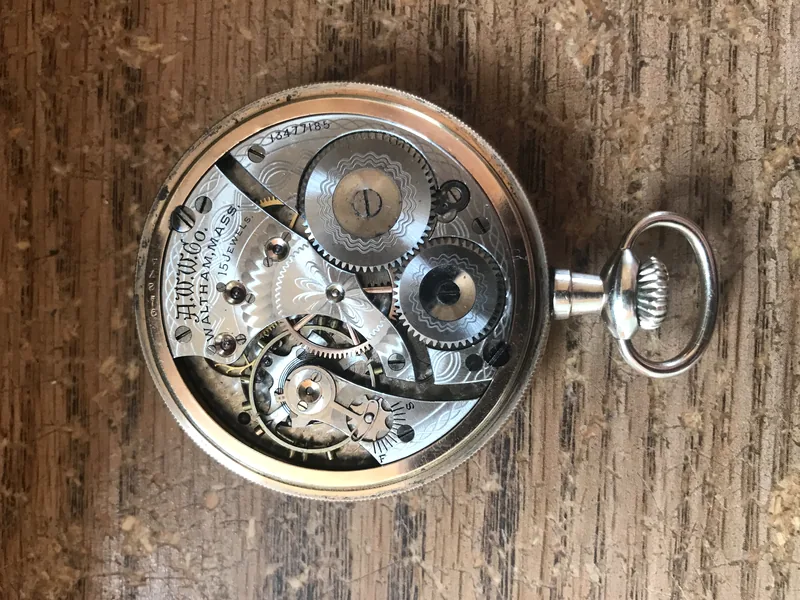
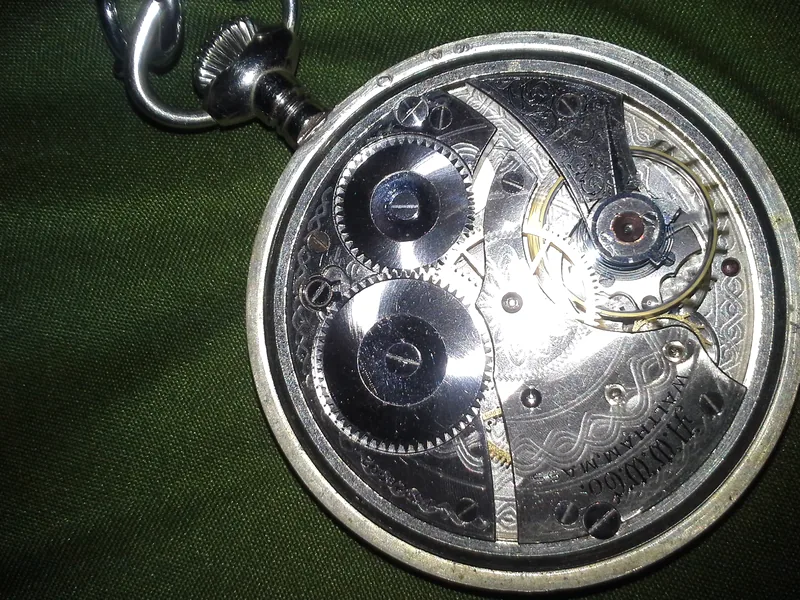
To successfully execute a waltham 12L pocket watch to wrist conversion, a watchmaker must thoroughly comprehend the structural architecture of the movement. Under the traditional Lancashire gauge system used by American manufacturers, a 12-size movement measures precisely 1.575 inches in diameter, which equates to roughly 39.62 millimeters across the pillar plate. This dimensional scale provides an ideal canvas for custom wristwatch conversions: large enough to display intricate American damaskeening and open gear trains, yet compact enough to fit comfortably inside a modern wrist case without overwhelming the wearer's forearm.
Architecturally, Waltham 12-size movements were produced in both open-face (Lépine) and hunting-case layouts, featuring three-quarter plate or bridge construction. The gear train is constructed with high-grade brass or gold-flashed train wheels driving a steel escape wheel. The escapement relies on a cut bimetallic compensation balance, often equipped with gold timing screws, paired with a blued steel Breguet overcoil hairspring. Regulating systems on higher-grade 12L movements frequently employ Star or Reed micro-metric adjustments, allowing for micro-fine tuning of the daily rate. The jeweling across 12-size calibers varies, but high-grade variants feature olive-drilled ruby and sapphire jewels set in raised gold chatons fastened with micro-screws.
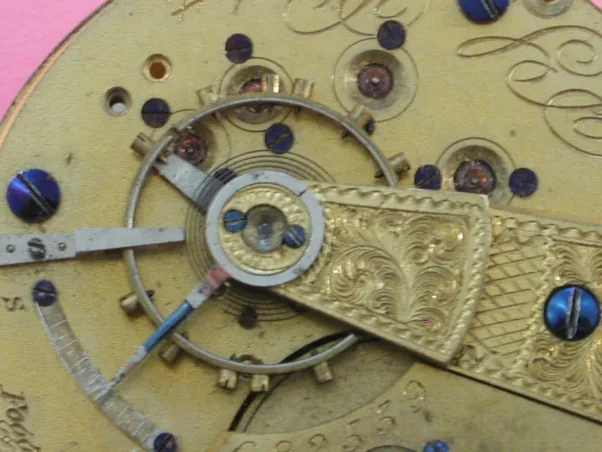
A crucial technical nuance lies in the winding and setting system. American pocket watches of this era, including the Waltham 12L, predominantly utilize a sleeve-type negative setting mechanism. Unlike modern wristwatch movements—where the setting mechanism (yoke, setting lever, and detent) is contained entirely within the movement architecture—American pocket movements rely on a spring-loaded sleeve embedded inside the pocket watch case neck. When attempting to convert waltham 12L pocket watch into wristwatch configurations, the horologist must carefully address this interface to ensure proper switching between winding and hand-setting modes.
3. Challenges of Converting Waltham 12L to Wristwatch
Converting a century-old pocket watch movement into a functional wristwatch presents numerous engineering challenges that go far beyond simple recasing. The initial challenge stems from orientation and sub-dial geometry. In an open-face (12L) pocket watch movement, the winding stem is positioned at the 12 o'clock position, with the running seconds sub-dial located directly opposite at 6 o'clock. When rotating the movement 90 degrees inside a wristwatch case to place the crown at the traditional 3 o'clock position, the seconds sub-dial moves to the 9 o'clock position. While this creates a striking asymmetric layout favored by modern collectors, it requires precise custom dial reorientation or acceptance of non-traditional aesthetics.
The second primary technical hurdle is shock resistance. Pocket watch movements were designed to rest vertically in a vest pocket or horizontally on a nightstand; they were never engineered to withstand the dynamic torsional forces, accidental impacts, and vibration associated with modern daily wrist wear. The delicate balance pivots on a Waltham 12L measure only hundredths of a millimeter in diameter and lack modern Incabloc or Novodiac shock-absorbing spring settings. Dropping a converted wristwatch or banging it against a hard doorframe can easily snap an un-jeweled balance staff pivot. Watchmakers must counsel clients on the inherent fragility of antique balance assemblies and recommend careful wear.
Finally, environmental isolation poses a serious threat to antique movement longevity. Original Waltham pocket watch cases relied on threaded screw-backs or tight snap-cases, but lacked synthetic rubber O-rings, crown gaskets, and modern crystal bezels. Moisture vapor, sweat, atmospheric pollution, and dust can rapidly penetrate an improperly sealed conversion case, causing balance springs to rust and oil to dry up or emulsify. Achieving modern dust and water resistance without distorting the vintage charm of the movement requires precision tolerances when fabricating or selecting conversion cases.
4. Lug Welding and Case Selection
Selecting the correct housing is perhaps the most critical aesthetic and structural decision in any custom project. Bench watchmakers debating the best case size for waltham 12L conversion generally agree that an overall outer case diameter between 42mm and 44mm yields the ideal balance. Because the bare Waltham 12L pillar plate measures roughly 39.62mm, a 42mm outer case provides a sleek, low-profile frame with thin wall margins, whereas a 43mm or 44mm case allows ample room for a robust movement adapter ring, internal rubber gaskets, and front-and-back sapphire crystals to showcase the hand-finished movement plates.
When creating a custom wristwatch, watchmakers generally choose between two core casing philosophies: retrofitting an original vintage pocket watch case by adding welded lugs, or housing the movement inside a modern CNC-machined 316L stainless steel pilot case. In traditional custom work often highlighted in historic antique pocket watch conversions, artisans preserve the original gold-filled, silver, or nickel pocket watch case, carefully machining off the top pendant and bow. Wire lugs or solid sculpted lugs are then silver-soldered or laser-welded directly to the side of the case band at 20mm or 22mm spacing to accommodate modern leather straps.
While modifying original cases offers authentic antique patination, utilizing modern stainless steel conversion cases explicitly designed for 12-size movements offers far superior structural protection. Modern cases feature double-domed sapphire crystals with anti-reflective coating on the front and display case-backs on the rear. Internal movement rings custom-milled on a lathe bridge the microscopic gap between the 39.62mm Waltham movement edge and the internal wall of the steel case, locking the movement down securely using steel case clamps and screws tapped directly into the movement perimeter.
5. Crown and Stem Solutions
Engineering a functional crown and winding stem system remains the single most complex mechanical task when you convert waltham 12L pocket watch into wristwatch builds. Because standard American 12-size movements utilize a negative setting mechanism—where the detent mechanism lives in the pendant sleeve rather than on the movement plate—a standard modern wristwatch stem cannot simply be dropped into place. In its native form, the square section of a Waltham winding stem slips into a square hole inside the winding pinion, held in tension by the pocket watch case sleeve.
To overcome this issue when rehousing the movement into a modern positive-setting wristwatch case, watchmakers must employ one of two engineering solutions. The first approach involves installing a conversion setting sleeve directly into the inner neck of the new case tube. This sleeve houses a miniature spring catch that replicates the original pocket watch pendant detent, allowing a modified split stem to snap outward into the hand-setting position and click back inward to engage the winding wheel.
The alternative, highly preferred master-watchmaker method involves converting the movement's setting action to positive setting by installing a custom-designed conversion yoke or modifying the setting winding arbor directly. The stem itself must be turned down on a watchmaker’s lathe, cut to the exact thread pitch (typically Tap 9 or Tap 10), and carefully trimmed to ensure correct stem length. The crown must feature internal rubber gaskets that slide smoothly over an external case tube, preventing dust and moisture ingress while maintaining the tactile feedback necessary when winding a thick, mainspring-driven pocket watch assembly by hand.
6. Dial and Hand Considerations
The visual signature of a Waltham timepiece lies heavily in its dial and hands. Original 12-size Waltham dials are often masterpieces of craftsmanship—featuring double-sunk or single-sunk vitreous enamel (porcelain) with hand-painted Roman or Arabic numerals, or intricate engine-turned metal dials with silver and gold two-tone plating. Vitreous enamel dials are virtually immune to fading or UV degradation, but they are extremely brittle. When disassembling and transferring an original porcelain dial, extreme care must be taken with the copper dial feet, as flexing them can crack the delicate glass layer across the front surface.
Hand fitting presents its own set of dimensional challenges. Antique Waltham 12-size hour wheels and cannon pinions do not conform to modern Swiss horological standards (such as ETA 6497/6498 dimensions). The hole diameters for vintage Waltham 12L hands are unique to American production standards of the period. If the original blued-steel hands (such as Spade, Diamond, or Cathedral styles) are preserved, they must be meticulously polished, thermal-blued over a brass-filing pan, and carefully friction-fitted back onto the center arbors using custom hand-punches on a staking set.
If modern luminescent hands or custom dials are requested for a modernized conversion, the watchmaker must custom-ream the hand mounting holes using micro-broaches or install custom friction bushings to fit the original Waltham hand post dimensions. Furthermore, custom dial plates must have specialized dial feet soldered to their undersides at precise angles using a soft-solder dial-foot soldering machine to align correctly with the set-screw locations on the edge of the Waltham 12L pillar plate.
7. Why 12L is More Common for Conversion
Among the vast universe of antique American pocket watches, watchmakers and collectors consistently point to the 12L movement as the ideal sweet spot for modern wristwatch adaptation. The primary reason for this preference comes down to wearable wrist proportions. Standard 18-size movements (measuring roughly 44.8mm bare) require wristwatch cases exceeding 48mm to 50mm in diameter—resulting in an oversized timepiece that feels cumbersome on the wrist. Similarly, 16-size movements (measuring ~43.1mm) yield cases in the 46mm to 48mm range, which remain too bulky for daily wear under dress shirts.
In contrast, the 12L caliber's 39.62mm footprint allows for final cased dimensions of 42mm to 44mm. This spatial proportion mirrors legendary modern manual-wind wristwatches, such as those powered by the Unitas/ETA 6497 or historic vintage Rolex wristwatches utilizing large pocket-watch-derived calibers from the 1930s. The 12-size scale sits comfortably on a standard male wrist, maintaining modern mechanical presence without sacrificing ergonomic wearability or proportion.
Furthermore, abundance and component quality make the 12L platform highly attractive to restorers. During the early-to-mid 20th century, millions of solid gold and gold-filled 12-size pocket watch cases were sold to refineries and melted down for scrap value during economic downturns, leaving behind vast numbers of orphaned, high-grade 12S and 12L movements in pristine mechanical condition. Converting these loose, orphaned Waltham movements back into wearable wristwatches honors the original craftsmen and saves historically important American mechanical engineering from permanent destruction.
8. Final Thoughts on Waltham 12L Conversions
Undertaking a waltham 12L pocket watch to wrist conversion is both a master-level technical challenge and a tribute to American horological history. When executed with mechanical precision, a converted Waltham 12L transcends being a mere novelty; it becomes an heirloom wrist instrument that bridges two distinct eras of craftsmanship. The mesmerising slow beat of an antique balance wheel beating at 18,000 vibrations per hour (2.5 Hz), combined with intricate nickel damaskeening visible through a modern sapphire display back, offers a visual and tactile experience that modern mass-produced timepieces simply cannot replicate.
For collectors looking to convert waltham 12L pocket watch movements into wearable art, success relies entirely on respecting the original tolerances and structural limitations of the caliber. Ensuring proper stem-and-sleeve geometry, choosing the best case size for waltham 12L conversion projects (42mm–44mm), shielding the delicate non-shock balance assembly, and preserving original porcelain or metal dials are paramount steps in the process.
Ultimately, when you convert waltham 12L pocket watch into wristwatch configurations through proper horological methods, you help safeguard America’s rich industrial heritage. You transform a forgotten vest-pocket relic into an operational piece of living history—one that continues to tick reliably on the wrist, measuring time for another generation of mechanical watch enthusiasts.