1. Historical Background of Waltham 13L Movements
The American Waltham Watch Company, established in Waltham, Massachusetts, stood at the forefront of industrial horology from the mid-19th century through the mid-20th century. Among their vast portfolio of precision movements, the 13-Ligne (13L) caliber holds a unique place in the transition from pocket-borne timekeeping to wrist-worn instrumentation. Originally categorized under American sizing standards as a 3/0s or 0s size movement depending on exact plate dimensions, the movement translates in Swiss horological terms to approximately 13 Lignes (29.33mm). Introduced during an era when pocket watches dominated the market, the 13L was engineered to provide robust timekeeping in a relatively compact footprint compared to standard 16-size or 18-size railroad grade movements.
As the conflict of World War I escalated, the practical demands of military officers necessitated a shift away from retrieving pocket watches from tunic pockets under fire. Watchmakers began adapting small pocket movements like the Waltham 13L into transitional military pieces, laying the groundwork for authentic WW1 trench watches. The 13L movement, with its refined wheel train, durable mainspring barrel, and resilient balance architecture, quickly proved itself adaptable to the harsh environments of battlefield duty. This historical crossover makes the movement an extraordinary artifact of early 20th-century American engineering.
In modern horology, horologists and custom builders frequently seek to convert waltham 13L pocket watch into wristwatch configurations. Doing so preserves a functional piece of American industrial heritage while giving it a second life on the wrist. Understanding the historical context of the movement helps modern watchmakers appreciate why specific structural design choices—such as negative stem setting and movement mounting configurations—were implemented by Waltham during its initial production runs.
2. Technical Specifications and Movement Architecture
Analyzing the mechanical layout of the Waltham 13L reveals a classical American layout built for high accuracy and longevity. The movement features an overall diameter of approximately 29.33 mm to 30.00 mm, with a plate thickness ranging between 4.2 mm and 4.8 mm depending on the grade and production run. Operating at a standard frequency of 18,000 vibrations per hour (2.5 Hz), the movement utilizes a traditional lateral lever escapement, paired with a bimetallic compensation balance wheel and a Breguet overcoil hairspring on higher-grade variants. These technical attributes granted the 13L exceptional rate stability under varied thermal conditions.
The movement architecture features split-bridge or three-quarter plate construction, crafted from nickel-silver (German silver) or gilded brass. Finely executed damaskeening—a signature decorative pattern applied by American manufacturers—adorns the top bridges. Depending on the jewel count (typically ranging from 7 jewels in base grades up to 15, 17, or even 19 jewels in high-grade Riverside offerings), the movement incorporates ruby or sapphire bearings set in friction-fit settings or screwed gold chatons. The center wheel wheel train drives a standard motion work, while the fourth wheel pivot extends through the dial to operate a sub-seconds hand at the 6 o'clock or 9 o'clock position depending on case layout.
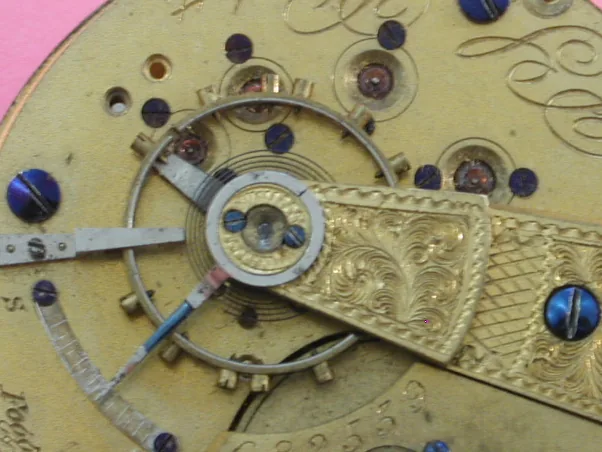
A crucial technical element when preparing to convert waltham 13L pocket watch movements is recognizing the winding and setting system architecture. Waltham overwhelmingly utilized a "negative setting" mechanism (also known as pendant setting) for these movements. Unlike modern wristwatches where the keyless works (detent, setting lever, and yoke) reside entirely inside the movement plate, a negative set Waltham 13L relies on a spring-loaded sleeve housed inside the pocket watch case neck (pendant). The movement stem is essentially a square arbor with no internal detent mechanism. When executing a waltham 13L pocket watch to wrist conversion, this mechanical quirk requires precise conversion solutions to operate correctly inside a standard wristwatch case.
3. Challenges of Converting Waltham 13L to Wristwatch
Transforming an antique pocket movement into a wrist-worn timepiece presents several horological hurdles. The primary challenge involves shock resistance. Movements like the Waltham 13L were manufactured decades before the invention of modern shock protection systems such as Incabloc or Novodiac. The delicate balance staff pivots—often measuring under 0.10 mm in diameter—run directly inside rigid jewel bearings capped by flat endstones. On a pocket watch, shock exposure was relatively mild, but on a wristwatch, everyday impacts can easily snap an unshielded balance pivot, requiring micro-lathe turns to repivot or source rare original replacement staffs.
Another prominent issue involves dust and moisture isolation. Vintage pocket watch cases were designed for pocket transport and possessed minimal protection against environmental ingress. When re-casing a 13L for wrist wear, the watchmaker must ensure that the new case provides adequate gaskets around the crystal, case back, and winding stem. Without modern O-ring sealing, humidity will rapidly oxidize the carbon steel balance spring, mainspring, and steel winding wheels, degrading movement performance and staining the damaskeened bridge surfaces.
Finally, positional timing variations present an ongoing tuning challenge. Pocket watches were traditionally adjusted to 2 to 5 positions (typically dial up, dial down, and pendant up). Modern wristwatches undergo dynamic rotational movement throughout the day, exposing the balance assembly to dial left, dial right, and pendant down orientations that the original movement factory adjustments may not have optimized. The watchmaker must painstakingly poise the balance wheel and adjust the hairspring collet to achieve acceptable daily rate consistency across all six positions.
4. Lug Welding and Case Selection
Selecting or fabricating the proper enclosure is crucial to a successful build. Watchmakers generally choose between two distinct restoration methodologies: modifying an original silver or gold-filled vintage case by attaching custom lugs, or housing the movement inside a purpose-built, modern stainless steel conversion case. Determining the best case size for waltham 13L conversion project depends heavily on wrist ergonomics and aesthetic preferences. Because the raw movement plate measures roughly 29.5 mm, the optimal finished case outer diameter falls between 36 mm and 39 mm, with a lug-to-lug dimension of 44 mm to 48 mm. This creates a balanced proportion reminiscent of mid-century timepieces or early vintage military pieces without appearing overly bulky.
If the watchmaker opts to preserve an original period pocket watch case and convert it into a wrist-worn case, silver brazing or laser welding wire lugs is required. Soft soldering with lead-based alloys must be avoided due to low mechanical tensile strength. Wire lugs—fabricated from 1.5 mm to 2.0 mm sterling silver or stainless steel wire—are shaped, contoured to match the case bezel curve, and welded to the 12 o'clock and 6 o'clock positions. Extreme heat management is vital during hard soldering; all movement components, crystals, and gaskets must be fully dismounted to prevent thermal warping of the case shell.
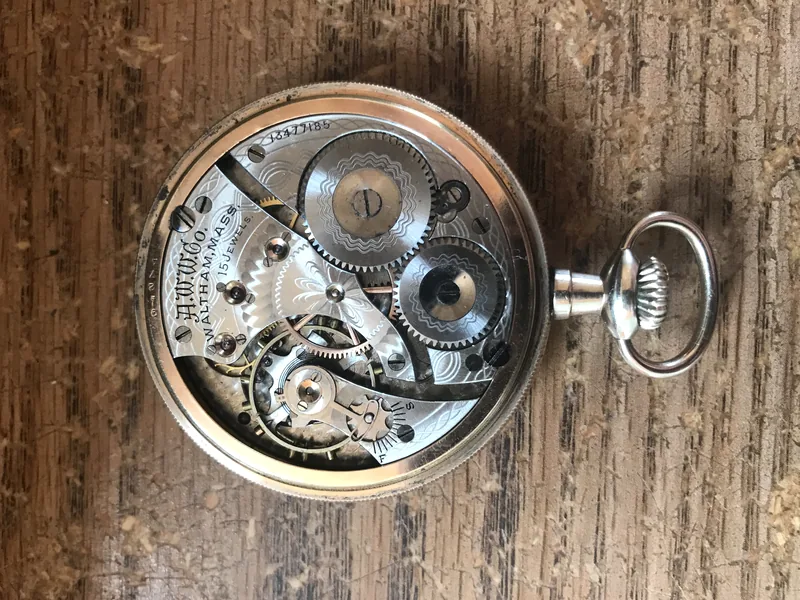
For those seeking superior water resistance and modern structural integrity, precision CNC-machined stainless steel conversion cases are the preferred route. These cases utilize an internal movement holding ring—typically machined from brass or stainless steel—that bridges the clearance between the 29.5 mm 13L pillar plate and the inner case wall. The movement ring is secured using case clamps and screws, ensuring zero lateral or axial movement when the watch experiences kinetic force on the wrist. Modern conversion cases often feature scratch-resistant sapphire crystals fitted with I-ring gaskets to protect the historic dial beneath.
5. Crown and Stem Solutions
The winding and setting infrastructure represents the most technically complex aspect of a 13L conversion. As established, Waltham's native negative-set architecture relies on an external sleeve located in the pendant to push down on the movement's setting clutch shaft. In a modern wristwatch case designed for positive-set mechanisms (where pulling the crown out shifts the keyless works internally), the native 13L movement will remain stuck in wind mode or fail to engage the setting wheels entirely.
To overcome this, watchmakers utilize two specialized engineering solutions:
- Installing a Custom Sleeve Conversion Adapter: A micro-machined threaded sleeve containing a spring detent mechanism is installed into the pendant tube of the modern conversion case. This sleeve holds the stem in positive tension, mimicking the spring action of the original pocket watch pendant.
- Converting the Keyless Works to Positive Setting: Advanced horologists modify the original internal winding sleeve on the mainplate by installing a custom setting lever and click spring mechanism. This converts the movement into a true positive-setting system that accepts a standard split or solid threaded stem (typically Tap 10 or Tap 9).
The image below illustrates the mechanical relationship between stem alignment and case securing rings when executing these conversions within custom horological projects similar to custom antique pocket watch conversions.
Crown selection must complement both function and period accuracy. Large onion crowns or oversized fluted crowns are preferred because they provide adequate tactile leverage when winding the stiff mainspring of a vintage pocket watch movement. The crown stem interface must be precisely trimmed to depth; even a 0.10 mm error in stem length can result in failure to click into the setting position or exert excessive lateral pressure on the winding pinion arbor.
6. Dial and Hand Considerations
The visual signature of a Waltham 13L conversion resides in its dial and hand assembly. Most original 13L pocket watches featured fired vitreous enamel dials over copper plates, or metal dials with painted numerals. Vitreous enamel dials offer timeless beauty and immunity to UV fading, but they are exceptionally fragile. When dismounting or mounting an enamel dial, extreme caution must be exercised around the dial feet. Bending a dial foot on a 100-year-old enamel dial will instantly crack the surface glaze, producing hairline fractures across the face.
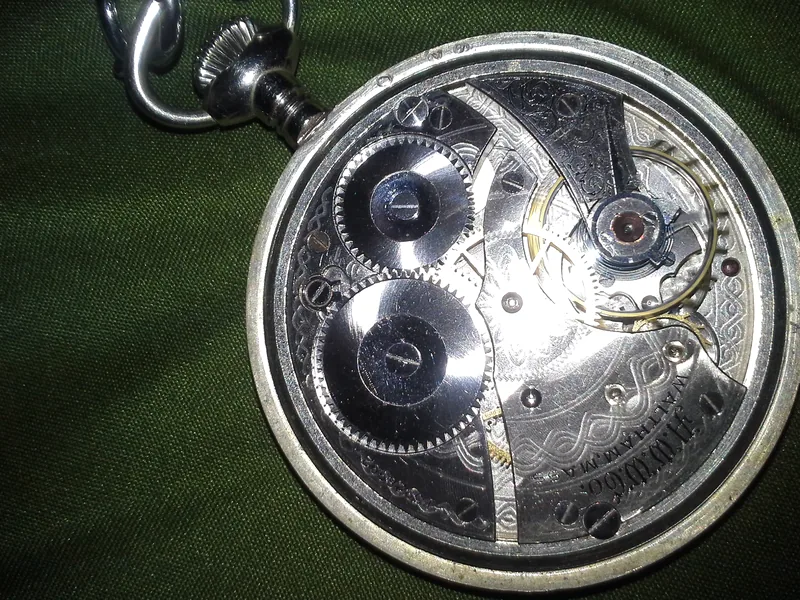
Dial layout selection directly impacts wrist usability. Pocket watch movements were designed as either "open-face" (stem at 12 o'clock, sub-seconds dial at 6 o'clock) or "hunter layout" (stem at 3 o'clock, sub-seconds dial at 9 o'clock). When housing an open-face 13L movement in a wristwatch case where the crown sits at the standard 3 o'clock position, the sub-seconds register shifts to the 9 o'clock position unless a custom dial is fabricated or a hunter-configured movement plate is selected. Watchmakers working on a modern waltham 13L pocket watch to wrist conversion must carefully verify wheel positioning to ensure the sub-seconds hand clears the minute wheel bridge correctly.
Hand fitting presents another micro-mechanical challenge. Vintage hand hole sizes for Waltham 3/0s / 13L movements typically do not conform to modern ETA standard hand dimensions. Standard Waltham stem sizes, hour wheel pipe diameters, and cannon pinion dimensions often require custom hand sizing:
| Component | Typical Dimension (13L / 3/0s) | Fitting Considerations |
|---|---|---|
| Hour Hand Pipe | 1.30 mm – 1.45 mm | May require slight broaching or closing with a stake set. |
| Minute Hand Hole | 0.75 mm – 0.85 mm | Requires careful friction fitting to the square or tapered cannon pinion shaft. |
| Second Hand Pivot | 0.18 mm – 0.22 mm | Extremely delicate; requires specialized sub-seconds hands with precise pipe depth. |
Original blued-steel spade, cathedral, or poire hands are heat-treated to an intense cobalt blue through thermal oxidation. If original hands are damaged or missing, watchmakers must source NOS (new old stock) hands or heat-blue custom steel replacements on a brass shaving pan over a heat source to achieve an authentic historical finish.
7. Why 13L is More Common for Conversion
Among the vast array of American pocket watch calibers—ranging from tiny 10/0s cocktail movements to massive 18-size railroad grade pocket watches—the Waltham 13L remains one of the most widely chosen choices for wrist conversions. The primary driver behind this popularity is modern wrist wearability. An 18-size movement (approx. 44.8 mm diameter) yields a final converted watch that spans 48 mm to 52 mm across the wrist—an uncomfortably large size for daily wear. Conversely, a 13L movement results in a conversion watch with a 37 mm to 39 mm case diameter, placing it squarely within the modern sweet spot for classic dress and field watches.
When compared to historic Swiss trench conversions—such as early Aegler or vintage Rolex wristwatches built on Rebberg calibers—the Waltham 13L offers superior structural durability and parts availability. American mass-production techniques achieved remarkable interchangeability for movement components produced between 1890 and 1930. A skilled watchmaker can easily source replacement staffs, mainsprings, click springs, and jewel settings from donor movements, making long-term maintenance practical compared to rare, bespoke European movements of the same era.
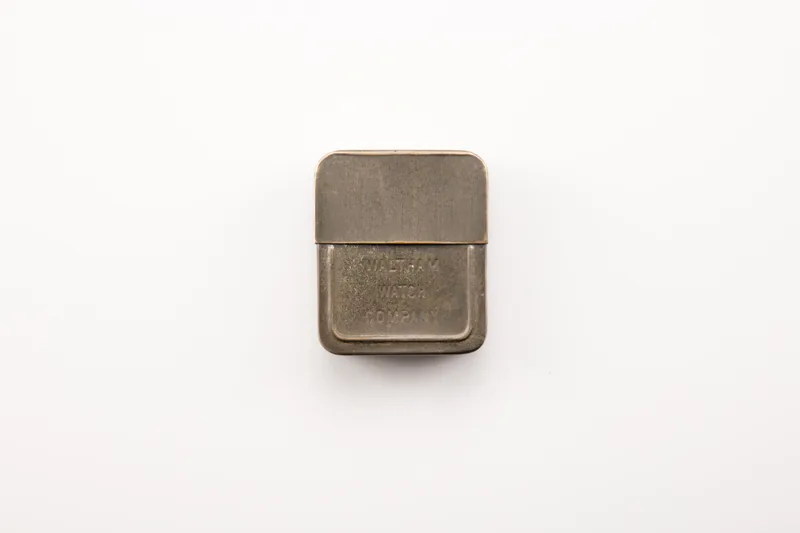
Furthermore, the 13L strike a perfect balance between mechanical elegance and physical robustness. Its plate geometry allows ample room for clear visual presentation of the damaskeening and jewel chatons through an exhibition case back. The gear train teeth are sufficiently thick to withstand decades of winding torque, and the mainspring barrel generates optimal amplitude to keep the heavy balance wheel swinging smoothly. These attributes make the 13L an ideal canvas for custom watchmakers who wish to create reliable, wearable, hand-wound mechanical timepieces.
8. Final Thoughts on Waltham 13L Conversions
The process to convert waltham 13L pocket watch into wristwatch form is a blend of mechanical preservation and custom horological crafting. It bridges the gap between historical bench skills and contemporary design, transforming pocket timepieces into functional modern wristwatches. By navigating the technical nuances of negative-set stem mechanics, case sizing, dial protection, and hand fitting, watchmakers ensure that the artistry of early American watchmaking continues to tick vibrant life on the wrist rather than sitting forgotten in a drawer.
For collectors and enthusiasts contemplating a conversion project, selecting a high-grade 13L caliber—preferably 15 or 17 jewels with adjusted positions and screwed chatons—yields the finest results. Working alongside an experienced watchmaker who understands vintage American stem modifications and shock prevention ensures that the resulting wristwatch will perform reliably for generations to come. Ultimately, a properly converted Waltham 13L stands as a lasting homage to industrial horology—a wearable bridge connecting early 20th-century craftsmanship with 21st-century appreciation.