1. Historical Background of Waltham 14s Movements
The American Waltham Watch Company, founded in Waltham, Massachusetts, stands as a titan in the history of industrial horology. Pioneering the concept of interchangeable, machine-manufactured high-precision components, Waltham transformed watchmaking from a localized artisanal trade into a standardized, mass-production science. Throughout the late 19th and early 20th centuries, the manufacturer produced millions of mechanical movements spanning various standard American sizes. Among these, the 14-size (14s) movement occupied a unique, transitional position within Waltham's historical catalog, bridges the gap between massive pocket timepieces and the nascent era of personal wrist-worn instruments.
Introduced during a period when pocket watches were the primary standard for personal timekeeping, the 14s movement was designed to offer a slightly more streamlined profile than the dominant 18-size railroad standards and the widely popular 16-size models. Waltham produced several iconic 14s movement models—most notably the Model 1884 and Model 1894 series—available in various jewel counts and finishing grades. These movements were encased in elaborate gold-filled, sterling silver, or solid gold hunting and open-face cases, representing the height of American middle- and high-grade consumer horology.
As the First World War catalyzed a practical shift toward wrist-worn timepieces—giving rise to the early "trench watches"—many watchmakers and jewelers began re-purposing smaller pocket watch movements for wrist wear. While early official trench watches often utilized smaller 0-size or 3/0-size movements, the 14s movement retained its standing as a robust, incredibly accurate platform. Today, as contemporary horology embraces vintage mechanical artistry and larger case aesthetics, modern craftsmen frequently seek to convert Waltham 14s pocket watch into wristwatch configurations, granting these century-old mechanical marvels a vibrant second life on the wrist.
2. Technical Specifications and Movement Architecture
Understanding the architectural blueprint of a Waltham 14s movement is fundamental before attempting any mechanical modification or re-casing operation. Under the standard Lancashire gauge system utilized by American watch manufacturers, a 14-size movement features a pillar plate diameter measuring approximately 1.5 inches plus (14 x 1/30 inch), which translates to a bare movement diameter of roughly 38.1 millimeters (1.5 inches). This substantial footprint provides ample surface area for intricate bridge layouts, robust gear trains, and highly legible balance assembly configurations, making it an ideal candidate for high-end conversion projects.
The movement architecture typically features a traditional three-quarter plate or broken-bridge layout, finished with exquisite nickel or damaskeened gilded plates. High-grade Waltham 14s calibers were produced with jewel counts ranging from 7 jewels in basic civilian models up to 15, 17, 19, or even 21-jewel configurations. These higher-grade iterations featured raised gold screw-set jewels, micro-metric regulator assemblies (such as the Star regulator or Reed spring regulator), cut bimetallic compensation balance wheels with gold poising screws, and hand-bent Breguet overcoil hairsprings designed to minimize isochronal error across varied positions.
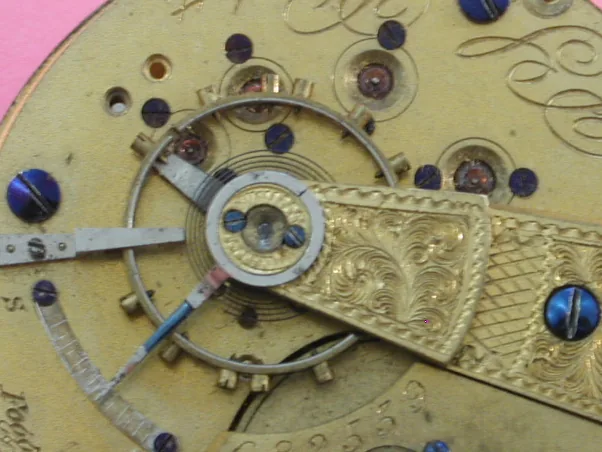
From an operational standpoint, the escapement is typically a traditional Swiss-style lever design driven by an inverted or standard mainspring barrel. The train wheels are fabricated from high-tensile brass or solid gold, running on polished steel pivots. The sheer precision of Waltham's automated milling tools during the 1890s and 1900s means that despite being well over a century old, these movements demonstrate remarkable dimensional consistency. However, their physical geometry—specifically plate thickness, crown stem positioning height, and dial foot locations—presents precise technical parameters that must be respected when designing or selecting a conversion apparatus.
3. Challenges of Converting Waltham 14s to Wristwatch
When enthusiasts ask, "can you convert waltham 14s pocket watch units into fully functional wristwatches?", the short answer is yes, but the long answer involves solving complex engineering and horological challenges. The primary obstacle revolves around shock resistance. Vintage pocket watch movements were engineered to sit vertically in a vest pocket or lie flat on a nightstand; they were never designed to withstand the rapid, multi-directional impacts, vibrations, and g-forces experienced by a modern wrist. A basic Waltham 14s balance staff features extremely fine pivots resting in rigid jewel settings without shock-absorbing spring mechanisms (like modern Incabloc or Novodiac systems). A sudden drop or violent arm motion can easily bend or snap an original balance pivot.
A second major structural challenge involves movement orientation and crown location. Pocket watches come in two fundamental configurations: open-face (Lépine) and hunting case (Savonnette). In an open-face movement, the winding stem sits at 12 o'clock, with the running sub-seconds dial situated directly opposite at 6 o'clock. When re-cased into a wristwatch format with the crown positioned conventionally at 3 o'clock, an open-face dial shifts, placing the sub-seconds counter awkwardly at 9 o'clock. Conversely, a hunting-case movement features the winding stem at 3 o'clock and the sub-seconds at 6 o'clock—ideal for a standard wristwatch orientation—but finding pristine hunting-style 14s dials and matching hand sets requires extensive sourcing.
Finally, environmental sealing presents an ongoing threat to vintage movement survival. Original pocket watch cases relied on snap-fit or threaded bezel configurations that offered zero protection against moisture, sweat, humidity, and dust ingress. Converting a 14s movement requires integrating modern rubber gaskets, tight-tolerance O-rings, and sapphire crystals to protect the exposed carbon steel springs, delicate steel pinions, and unsealed enamel dials from ambient moisture that can cause rust and irreversible deterioration within days of active wear.
4. Lug Welding and Case Selection
To successfully transition a 14s movement to the wrist, a watchmaker must decide between two primary structural methodologies: modifying an existing antique pocket watch case by soldering lugs onto it, or utilizing a modern, purpose-built standard waltham 14s pocket watch to wrist conversion case. Historical "trench watch" conversions often involved silver-soldering or brazing bent wire lugs directly onto silver or nickel pocket cases. While authentic to early 20th-century field conversions, lug welding requires delicate thermal management. Excessive heat can warp the original casing ring, ruin internal thread pitches, anneal original hinge springs, or scorch decorative engraving.
For modern custom conversions, specialized watchmakers overwhelmingly prefer utilizing modern CNC-machined conversion cases specifically designed for American 14s calibers. These cases are typically turned from 316L surgical-grade stainless steel or marine-grade bronze. They feature built-in, integrated solid lugs (either straight, contoured, or vintage-styled wire lugs) designed to accept heavy-duty spring bars or threaded screw-pins. A well-engineered conversion case maintains outer dimensions around 42mm to 44mm, keeping the overall footprint surprisingly wearable while housing the ~38.1mm internal caliber.
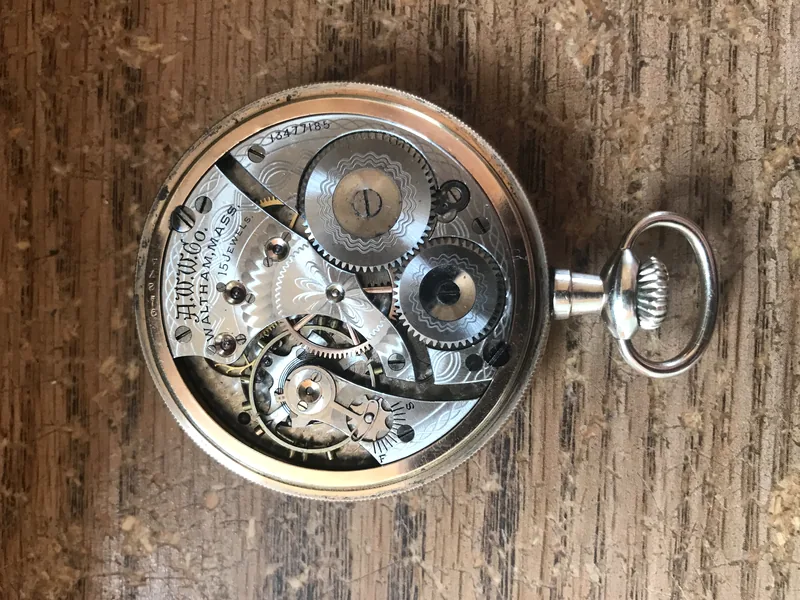
Securing the Waltham 14s caliber inside a modern conversion case requires high-precision movement rings and custom casing clamps. Because pocket watch movements vary slightly in flange height and pillar plate perimeter lips depending on the specific model year (e.g., Model 1884 vs. Model 1894), the internal aluminum or brass spacing ring must be custom-lathed to secure the movement laterally and vertically without applying excessive distortion force to the mainplate. The movement is then anchored into place using tempered steel casing screws and clamps that lock directly into the existing outer perimeter notches of the Waltham mainplate.
5. Crown and Stem Solutions
Solving the winding and setting mechanics is arguably the most technically demanding phase when you convert waltham 14s pocket watch into wristwatch builds. Vintage pocket watches utilize two main methods for setting time: pendant setting (where pulling the crown upward engages the setting wheels via an internal sleeve) and lever setting (where a small manual lever near the dial perimeter must be pulled outward to drop the keyless works into setting mode). Lever-set movements require a conversion case equipped with a functional slot or sliding notch near the bezel edge, allowing the craftsman to pull the lever without completely removing the movement from the case.
Furthermore, the physical construction of original Waltham stems differs radically from modern threaded wristwatch stems. Pocket watch stems were often multi-piece square-shanked shafts or sleeve-actuated square keys designed to stay captive within the pocket watch case neck rather than remaining permanently attached to the movement. When fitting a 14s movement into a modern wristwatch housing, a custom winding stem must be machined on a precision watchmaker’s lathe (such as a Levin or Bergeon lathe) or adapted using custom-threaded stem extenders and adapters that bridge the vintage square winding hub with a modern threaded crown stem (typically Tap 9 or Tap 10 thread pitch).
The crown itself must balance vintage aesthetics with modern utility. An onion, pumpkin, or oversized cabochon crown styled after WWI era military timepieces fits the aesthetic scale of a 14s conversion exceptionally well. Internally, the crown must incorporate an integrated internal O-ring seal that fits smoothly over the steel case tube. This ensures smooth, tactile winding of the heavy-gauge 14s mainspring while effectively sealing the case interior from external dust, moisture, and skin oils during daily hand-winding.
6. Dial and Hand Considerations
The visual soul of a converted timepiece lies in its dial and hand configuration. Most original Waltham 14s timepieces were equipped with genuine double-sunk or single-sunk vitreous enamel dials (often called porcelain dials). These dials feature extraordinary depth, rich black or red typography, and a brilliant glossy surface that never fades over time. However, enamel dials are exceptionally fragile; decades of tension, temperature changes, and vibration can leave them susceptible to severe hairline cracking or edge chipping if handled improperly during the conversion process.
When placing an open-face 14s enamel dial into a wristwatch case with the stem at 3 o'clock, the main dial orientation shifts 90 degrees clockwise. This places the sub-seconds counter at the 9 o'clock position—a layout familiar to enthusiasts of modern chronograph and offset small-seconds designs. If a traditional 6 o'clock sub-seconds layout is required, the watchmaker must source a rare hunting-case version of the dial, or commission a custom-designed, hand-printed metal conversion dial. Custom metal dials also allow for the installation of modern luminous materials (such as Super-LumiNova) on the numerals and indices.
Hand fitting presents another micro-mechanical challenge. Vintage Waltham 14s post sizes—the diameters of the hour wheel pipe, cannon pinion, and fourth wheel pivot—are non-standard when compared to modern ETA or Seiko hand dimensions. Hand pipe hole sizes must be meticulously adjusted using hand-broaches or closed down using a staking set to achieve an exact friction fit. The hands themselves—often classic blued-steel Spade, Cathedral, or Breguet hands—must be perfectly leveled across their sweep. Given the shallow clearance inside modern flat or domed sapphire crystals, even a fraction of a millimeter tilt in the long minute hand can cause it to drag against the inner glass surface or catch on the hour hand, causing the movement to bind and stop.
7. Why 14s is More Common for Conversion
Within the world of antique movement re-casing, watchmakers and collectors frequently debate which American pocket watch size yields the ultimate wearable outcome. Sizes range from massive 18s railroad pocket watches down to delicate 0s and 3/0s ladies' pendant watches. However, the 14-size caliber consistently emerges as the sweet spot for custom conversions. To understand why modern customizers frequently convert waltham 14s pocket watch units over other sizes, one must compare the resulting wrist proportions and mechanical durability across sizes.
An 18-size movement features a massive bare movement diameter of roughly 44.86 mm. When housed in a modern conversion case with adequate wall thickness and gasket channels, the resulting wristwatch measures 48mm to 52mm in diameter (excluding the crown). For all but the largest wrists, an 18s conversion feels cumbersome, top-heavy, and visually unproportioned for daily wear. A 16-size movement is slightly better, yielding a 45mm to 47mm case, but still borders on modern oversized limits. On the other end of the spectrum, 12-size (~39.78mm) and smaller movements suffer from exceptionally delicate stems, thin balance staffs, and lower power reserve capacities, making them fragile on the wrist.
The 14s caliber strikes the ultimate balance. With a plate diameter of ~38.1mm, a finished custom waltham 14s pocket watch to wrist conversion case measures right at 42mm to 43mm. This aligns perfectly with modern horological preferences for sport and heritage wristwatches (such as modern pilot watches and oversized dress pieces). Furthermore, 14s movements retain the massive mainspring barrels, heavy balance wheels, and high structural rigidity of larger industrial pocket watches, providing superior timekeeping stability, easy serviceability, and robust gear train longevity compared to smaller dress movements.
8. Final Thoughts on Waltham 14s Conversions
Converting a century-old Waltham 14s pocket watch into a wearable wristwatch is far more than a simple re-casing exercise; it is an act of mechanical preservation and historical storytelling. By taking an extraordinary piece of 19th or early 20th-century American engineering—a movement that may have spent decades hidden away in a drawer inside a damaged or melted gold case—and restoring it to active daily utility, modern watchmakers honor the brilliant industrial legacy of the American Waltham Watch Company.
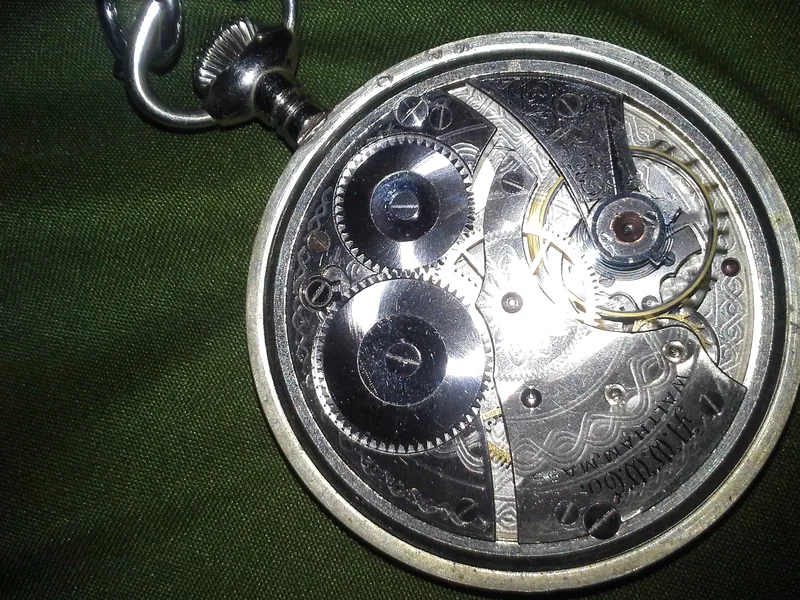
For the owner, wearing a 14s conversion offers a deeply tactile horological experience that no modern mass-produced automatic watch can replicate. The slow, authoritative 18,000 beats-per-hour tick of a hand-adjusted balance wheel, the mechanical resistance of a thick mainspring winding through hand-cut ratchet wheels, and the mesmerizing view of hand-damaskeened nickel plates through a transparent sapphire display case back create a unique bond between the wearer and the history on their wrist.
When executed with technical rigor—utilizing precision-engineered conversion cases, properly fitted custom stems, robust movement dampening, and preserved dials—a Waltham 14s conversion transforms a forgotten artifact into an heirloom-grade timepiece. It bridges the golden age of American industrial watchmaking with contemporary wrist culture, allowing these historic American timekeepers to tick proudly for another hundred years.