Historical Background of Waltham 16s Movements
The American Waltham Watch Company, established in Waltham, Massachusetts, stands as one of the most significant pillars in modern horological engineering. Operating from the mid-19th century through the mid-20th century, Waltham pioneered the "American System" of watch manufacturing. This revolutionary methodology shifted watchmaking away from labor-intensive, hand-fitted guild practices toward standardized, interchangeable precision parts. Among the vast array of sizes produced by the factory, the 16-size (16s) platform emerged during the late Victorian era and became the undisputed workhorse of North American personal timekeeping.
Measuring precisely 1.7 inches (43.18 mm) in movement diameter based on the traditional American Lancashire gauge system, the 16s movement occupied a vital niche. As railway transport expanded at blistering speeds across North America, the need for stringent timekeeping standards gave rise to the General Railroad Timekeeping Standards of 1893. Waltham responded with legendary 16s grades such as the Vanguard, Crescent St., Riverside, and Model 1899 and 1908 iterations. These movements were engineered to keep time within seconds per week under extreme temperature variations and multi-position stresses.
In contemporary horology, an increasing number of collectors and artisans seek to convert waltham 16s pocket watch into wristwatch configurations. Over the decades, vast numbers of solid gold and sterling silver pocket watch cases were stripped down and melted during economic downturns, leaving behind pristine, high-grade movements without home cases. Transforming these orphaned 16s mechanical masterpieces into custom wristwatches—often called "marriage watches"—allows watchmakers to rescue historically significant American engineering and wear it comfortably on the wrist today.
Technical Specifications and Movement Architecture
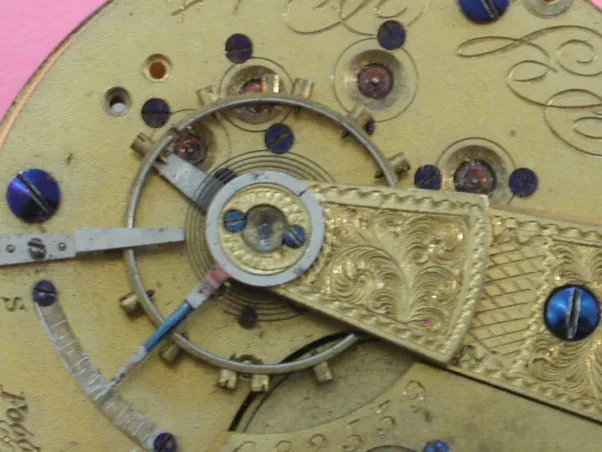
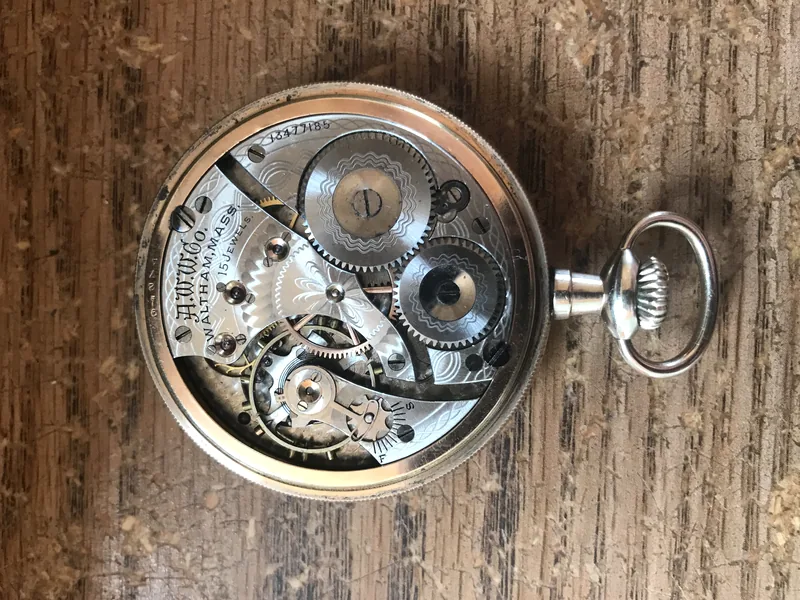
To successfully undertake a custom conversion, a watchmaker must thoroughly understand the internal architecture of the Waltham 16s movement. Across various production runs, Waltham manufactured 16s movements in full-plate, three-quarter plate, and bridge plate configurations. High-grade models typically feature 19, 21, or 23 fine ruby and sapphire jewels, frequently set in solid gold screwed chatons. The train wheels are typically forged from high-karat gold or hardened brass, driving a high-grade escapement designed for maximum energy efficiency and stability.
The heart of a high-grade Waltham 16s movement resides in its regulating organ. The balance assembly usually features a cut bimetallic expansion balance wheel paired with gold timing screws, designed to auto-compensate for thermal expansion and contraction. This is coupled with a Breguet overcoil hairspring, manipulated by a fine micrometer regulator—such as the Star wheel regulator or Reed's patented spring regulator—allowing for ultra-precise daily rate adjustments. The balance operates at a traditional frequency of 18,000 vibrations per hour (2.5 Hz), producing a distinct, resonant, and deliberate tick.
Another major structural detail involves the setting mechanism. Waltham 16s movements were manufactured in two distinct operational styles: lever-set and pendant-set (friction or negative setting). Lever-set movements require a setting lever—located under the bezel at the edge of the dial—to be pulled outward before the crown can adjust the hands. Pendant-set movements, by contrast, operate similarly to modern wristwatches, shifting into setting mode by pulling the crown outward. Identifying these setting mechanics is essential, as it dictates how the movement interacts with a prospective modern watch case.
Challenges of Converting Waltham 16s to Wristwatch
A frequent question asked by watch enthusiasts is: can you convert waltham 16s pocket watch movements into reliable wristwatches without damaging their structural integrity? The short answer is yes, but the endeavor presents significant engineering hurdles that require specialized watchmaking equipment, micro-lathes, and advanced structural adaptation.
The foremost technical hurdle is shock absorption. Pocket watches were originally carried upright inside a vest pocket, subjecting them to relatively static accelerations and mild environmental motion. In contrast, a wristwatch experiences sudden wrist impacts, rapid rotational movements, and violent decelerations. Because classic Waltham 16s movements lack modern shock-protection systems (such as Incabloc or KIF spring settings on the balance jewels), a severe impact can easily snap or bend the balance staff pivots, which are mere fractions of a millimeter in diameter. Operating a converted 16s wristwatch requires mindful wear or retrofitting customized, cushioned casing rings to mitigate mechanical shocks.
The second major hurdle relates to movement orientation and dial geometry. Open-face 16s pocket watches feature the winding stem at 12 o'clock and the sub-seconds register at 6 o'clock. If you mount an open-face movement into a standard wristwatch case with the crown positioned at 3 o'clock, the entire dial rotates 90 degrees clockwise—placing the 12 o'clock marker at 3 o'clock and the sub-seconds dial at 9 o'clock. Conversely, hunting-case (hunter) movements have the winding stem at 3 o'clock and sub-seconds at 6 o'clock, making them naturally oriented for standard wristwatch conversion layout. Resolving these orientation dilemmas requires either sourcing hunter movements or executing complex custom dial remounting techniques.
Lug Welding and Case Selection
When selecting a housing, artisans typically choose between two paths: modifying an original vintage pocket watch case by adding welded lugs, or purchasing a modern, purpose-built waltham 16s pocket watch to wrist conversion case crafted from stainless steel or titanium.
Modifying an original vintage case requires advanced metallurgy skills. Watchmakers must silversmith or TIG-weld wire lugs or contoured horn lugs directly onto the brass, sterling silver, or solid gold pocket watch frame. Extreme care must be exercised during welding to avoid warping the case geometry or ruining the hinge tolerances. The original case must then be polished, fitted with modern spring bar holes, and fitted with high-transparency mineral or sapphire crystals. While this retains the historic metal housing, antique pocket watch cases generally lack water resistance and dust gaskets, making them vulnerable to humidity.
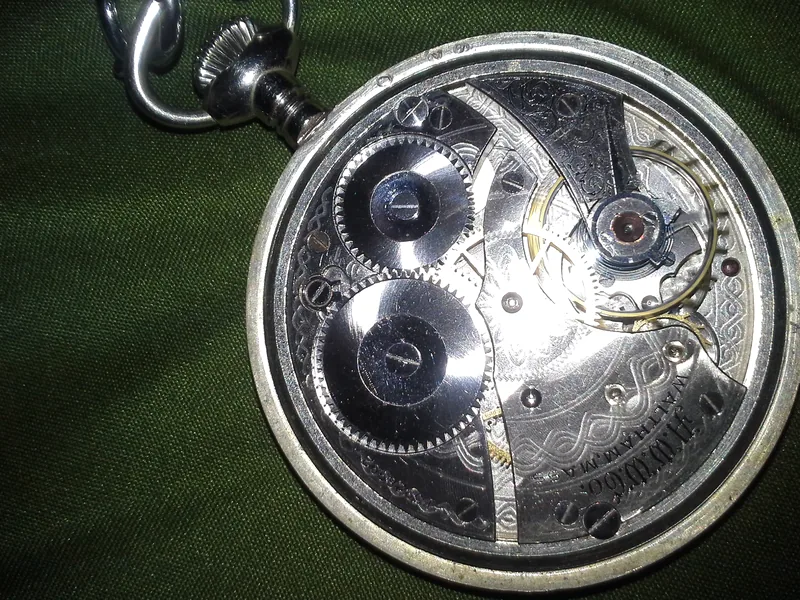
Modern aftermarket conversion cases offer superior durability and daily practicality. These cases are engineered using CNC machining, primarily from marine-grade 316L stainless steel. They are designed specifically to accommodate the 43.18 mm diameter of the 16s movement, resulting in a finished wristwatch diameter of approximately 48 mm to 52 mm. The inclusion of front and rear sapphire crystals with anti-reflective coatings allows the intricate, damaskeened steel plates and polished screw heads of the Waltham movement to be viewed in full detail. Furthermore, modern cases incorporate rubber O-ring stem gaskets and threaded display backs to safeguard the historic movement against atmospheric moisture and ambient dust.
Crown and Stem Solutions
Re-engineering the winding and setting mechanics is one of the most exacting phases when you convert waltham 16s pocket watch into wristwatch hardware. Pocket watch stem systems differ fundamentally from modern wristwatch tap-stem systems. Antique Waltham stems often used square-profile coupling sleeves, negative-draw detents, or specialized thread pitches unique to turn-of-the-century American manufacturing standards.
In a standard modern wristwatch case, the winding stem must pass through a waterproof case tube and connect seamlessly with the movement's winding pinion and sliding clutch. When retrofitting a Waltham 16s movement into a modern conversion case, the watchmaker must turn a custom stem on a micro-lathe or fit a specialized stem adapter. The stem length must be calculated down to hundredths of a millimeter: if the stem is too long, the crown will sit away from the case wall; if it is too short, the movement will fail to engage the winding train or bind the setting wheels.
Crown design also plays an essential role in maintaining historical visual harmony. Large pocket watch movements demand substantial crown torque to wind their heavy-duty mainsprings. Small, sleek modern crowns do not provide sufficient leverage, making winding uncomfortable and applying unnecessary lateral stress to the stem tube. Watchmakers typically select vintage-styled onion crowns, pumpkin crowns, or large diamond-profile crowns. These designs provide ample surface grip while honoring the authentic late-19th-century aesthetics of the Waltham movement.
Dial and Hand Considerations
Preserving or modifying the dial of a Waltham 16s requires delicate hands-on techniques. Most high-grade 16s Waltham pocket watches feature single-sunk or double-sunk vitreous enamel dials fired over copper baseplates. While enamel dials offer vibrant depth and never fade or oxidize over time, they are extremely brittle. Attempting to bend, drill, or adjust the mounting legs of an antique enamel dial can cause irreparable spiderweb cracking across the glass-like enamel surface.
If an artisan decides to reorient an open-face movement so that the stem sits at 3 o'clock, the original dial feet must be carefully clipped, filed flat, and new copper feet soft-soldered onto the copper backing without overheating the face. Alternatively, watchmakers use specialized precision dial-adhesives (dial dots) to secure the dial onto the movement ring. Another approach is to commission a custom-designed modern metal dial, which can be custom-printed with modern hour markers while maintaining correct clearances for the center cannon pinion, hour wheel, and sub-seconds hand arbor.
Hand fitting presents its own set of precision challenges. The post diameters for the cannon pinion, hour wheel pipe, and fourth wheel sub-seconds pivot on a Waltham 16s are significantly larger than those of modern wrist movements (such as the ETA 6497 or Unitas 6498). Modern hands will not fit without custom broaching or sleeve fitting. Watchmakers often restore and reuse the original blued-steel spade, pear, or Louis XIV style hands. These hands are carefully stripped of rust, thermal-blued in a hot brass-shavings pan to a deep royal blue, and fitted carefully onto the original arbors to ensure proper dial clearance.
Why 16s is More Common for Conversion
Within custom horological engineering, the 16s movement is widely recognized as the ideal platform for wrist conversions. While other American pocket watch sizes exist—such as the massive 18-size (18s) or the smaller 12-size (12s) and 10-size (10s)—the 16s balances physical scale, mechanical durability, and visual impact better than any alternative.
An 18-size movement measures roughly 44.86 mm in diameter. When installed into a protective wrist case, the resulting watch reaches an imposing 54 mm to 58 mm across, making it impractical and uncomfortable for standard wrist wear. On the opposite end of the spectrum, smaller sizes like 12s or 10s movements are easier to wear, but they are far less abundant in high-grade, railroad-approved specifications. Furthermore, their smaller gear trains and delicate balance shafts are more fragile, rendering them less suitable for the mechanical stresses of a wristwatch environment.
The 16s size sits perfectly in the middle. With a movement diameter of 43.18 mm, it fits cleanly inside a modern statement-sized 48 mm conversion case. This scale matches contemporary visual trends toward bold, oversized horological pieces while leaving enough internal wall clearance for protective casing rings and seal gaskets. Additionally, because millions of 16s Waltham watches were produced during the golden age of American railroading, high-grade parts, replacement balance staffs, mainsprings, and donor movements remain widely available to watchmakers around the globe.
Final Thoughts on Waltham 16s Conversions
Transforming a vintage Waltham 16s pocket watch into a modern wristwatch is a delicate blend of historical preservation and custom manufacturing. By taking a movement engineered over a century ago and rehousing it in a modern, wearable casing, watchmakers bridging the gap between antique craft and contemporary style. The brilliant damaskeened nickel plates, hand-engraved gold lettering, screwed chatons, and smooth 18,000 vph beat rate of a Waltham 16s offer a tactile horological experience that modern mass-produced watches rarely match.
When approaching a conversion, honoring the integrity of the original movement should remain the watchmaker's top priority. Utilizing non-destructive mounting techniques, selecting an appropriate waltham 16s pocket watch to wrist conversion case, and sourcing high-grade custom stems ensures that the mechanical heart of the movement remains undamaged. When executed correctly, a converted Waltham 16s transitions from an idle heirloom stored in a drawer into a functional, eye-catching wrist piece designed to keep time for another generation.
Ultimately, the enduring popularity of converting these historic American timepieces demonstrates the timeless quality of Waltham engineering. Whether you are an experienced watchmaker looking to undertake a custom conversion or a collector eager to wear a piece of railroad history on your wrist, the Waltham 16s conversion remains one of the most rewarding endeavors in custom horology.