1. Historical Background of Waltham 6s Movements
The American Waltham Watch Company, operating out of Waltham, Massachusetts, stood at the absolute pinnacle of industrial horology throughout the late 19th and early 20th centuries. Pioneering the concept of mass-producing watches with fully interchangeable, high-precision parts, Waltham transformed horology from a bespoke craft into a scalable art form. While large pocket watch platforms like the 18-size and 16-size dominated men’s work vests and railway service, there arose a distinct market demand for more compact, elegant timepieces. To fill this gap, Waltham developed the 6-size (6s) caliber platform, aimed primarily at gentlemen's fine dress pocket watches and high-grade ladies' pendant watches.
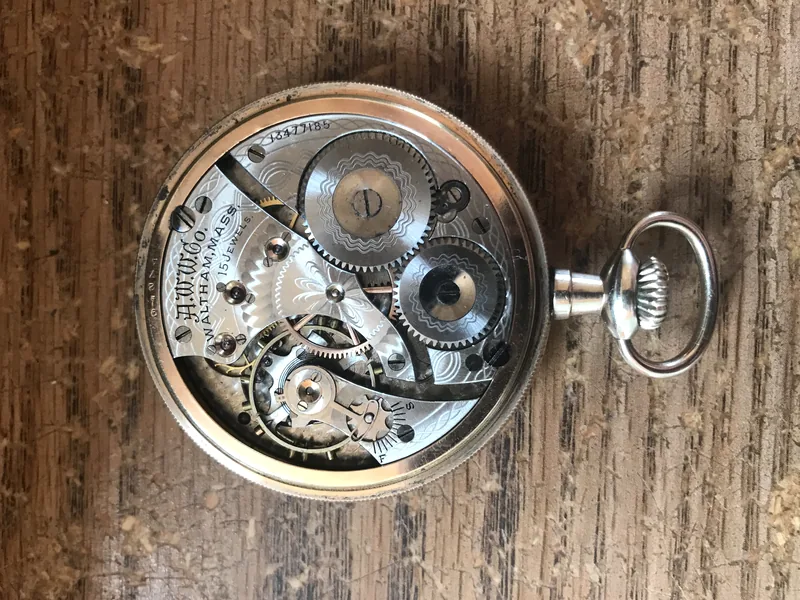
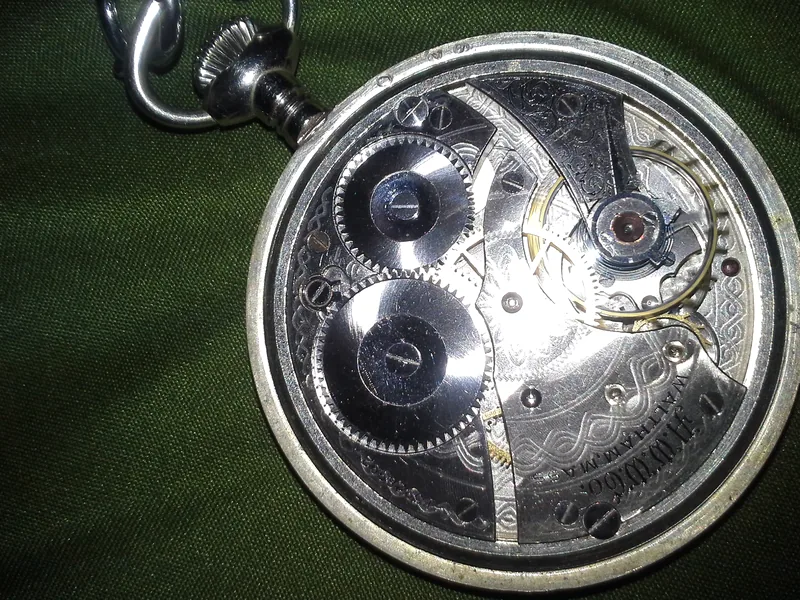
First introduced in popular variants such as the Model 1890 and later refined through the Model 1898 and Model 1908 iterations, the 6s movement represented a technical triumph in miniaturization without compromising accuracy. These calibers were manufactured across a broad spectrum of finishing grades—ranging from everyday 7-jewel utilitarian movements to breathtaking 15, 17, and 19-jewel masterworks like the Royal and Riverside lines. These upper-tier grades featured raised gold jewel settings, exquisite nickel damaskeening patterns, micrometric regulator assemblies, and compensation balances adjusted for heat, cold, and positions.
Today, as pocket vest culture resides firmly in history, hundreds of thousands of these brilliant 6s mechanical engines remain in immaculate functional condition. Watchmakers and collectors now seek to breathe second lives into these historic artifacts. Choosing to convert waltham 6s pocket watch into wristwatch configurations allows horology enthusiasts to preserve genuine pieces of American industrial heritage while creating deeply personal, wearably functional modern wristwatches.
2. Technical Specifications and Movement Architecture
Understanding the physical and mechanical architecture of the Waltham 6s platform is vital before attempting any custom watchmaking work. Based on the traditional American Lancashire gauge standard, a "6-size" movement measures approximately 1.35 inches in diameter, or precisely 34.29 millimeters across the pillar plate. This dimensional footprint is critical: it places the 6s right in the ergonomic sweet spot for modern wristwear, yielding finished wristwatch case diameters between 38mm and 41mm depending on wall thickness and bezel design.
Mechanically, Waltham 6s movements were produced in both full-plate, three-quarter plate, and bridge-style layouts, with the three-quarter plate being the most prevalent. They utilize a traditional side-lever escapement paired with a cut bimetallic expansion balance wheel designed to offset temperature fluctuations. Higher grade 6s calibers feature Breguet overcoil hairsprings to maintain concentric breathing and superior isochronism across varying states of wind. The gear train is driven by a going mainspring barrel housing a high-carbon steel spring, which modern watchmakers typically replace with a custom mainspring forged from modern non-magnetic alloys like Nivaflex to prevent breakage and stabilize power delivery.
Crucially, watchmakers must evaluate whether their candidate movement is an open-face (Lépine) or hunting-case (Savonnette) architecture. Open-face movements position the stem winding mechanism at the 12 o'clock position in direct alignment with the small sub-seconds dial at 6 o'clock. Hunting-case movements position the winding stem at 3 o'clock, with the sub-seconds dial placed at 90 degrees relative to the stem (at 6 o'clock). This architectural variance fundamentally dictates the final dial orientation and ergonomics when housing the caliber inside a custom wristwatch case structure.
3. Challenges of Converting Waltham 6s to Wristwatch
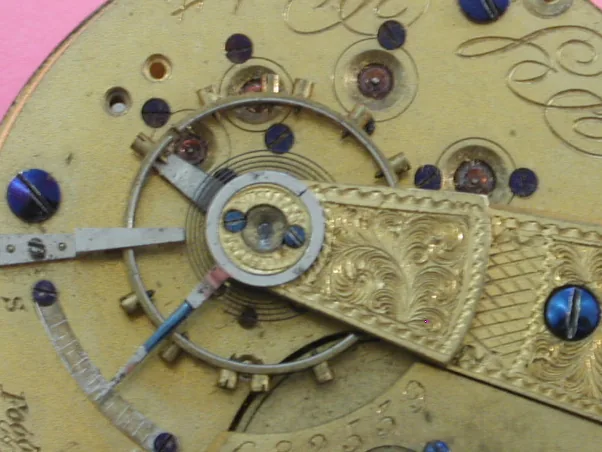
A common inquiry among vintage horology enthusiasts is: can you convert waltham 6s pocket watch movements safely and effectively without ruining their mechanical integrity? The answer is an emphatic yes, provided you possess the requisite technical expertise and thoroughly understand the mechanical vulnerabilities inherent to adapting 19th-century movements to 21st-century wrist wear. The principal vulnerability is the complete lack of modern shock absorption systems. Pocket watches were designed to sit static inside protective vest pockets, meaning their balance staff pivots are extremely thin and unyielding. Wearing a 6s movement on a wrist subjects the balance balance pivots—measuring mere fractions of a millimeter—to lateral forces that can instantly snap un-shock-protected staff pivots upon minor impact.
Another profound challenge lies in dial orientation and hand geometry. If you take an open-face (Lépine) 6s movement and position the crown at the standard 3 o'clock position on a wristwatch, the entire dial rotates 90 degrees clockwise. This shifts the 12 o'clock position to where 3 o'clock normally sits, and pushes the small sub-seconds register to the 9 o'clock position. While this layout yields an intriguing "destro" or asymmetrical aesthetic favored by many collectors, achieving a conventional 12 o'clock top orientation with the crown at 3 o'clock requires starting with a hunting-case movement or sourcing a custom-fabricated dial that relocates the hour markers accordingly.
Finally, environmental sealing presents an ongoing battle. Pocket watch movements were never intended to encounter significant atmospheric humidity, sweat, or dust intrusion. Unlike modern wristwatches equipped with screw-down casebacks and synthetic rubber O-rings, historic 6s movements lack native moisture protection. Watchmakers converting these engines must engineer specialized internal casing rings, dust-proof stem tubes, and gasketed case assemblies to shield the delicate steel screws, click springs, and carbon steel balance springs from ambient humidity and environmental degradation.
4. Lug Welding and Case Selection
When approaching the outer housing of your conversion, you generally face two distinct paths: modifying an original vintage pocket watch enclosure or utilizing a purpose-built waltham 6s pocket watch to wrist conversion case. The traditional artisan approach involves taking an original 6s silver, gold-filled, or nickel pocket watch case, carefully removing the pocket chain bow and pendant, and micro-welding custom wire lugs directly to the exterior body. To achieve structural stability, watchmakers utilize TIG (Tungsten Inert Gas) welding or micro-laser welding setups with silver or gold solder alloys. Extreme thermal control is vital during this process; excessive heat will warp the thin case body, discolor fine silver plating, or heat-damage intact enamel dials if the movement isn't fully gutted prior to torch exposure.
Alternatively, the modern horological standard leans heavily toward precision CNC-machined conversion cases fabricated from 316L stainless steel or titanium. Sourcing a dedicated waltham 6s pocket watch to wrist conversion case provides significant benefits, including anti-reflective sapphire crystals on both the dial side and display caseback, integrated spring bar lugs, and high-performance synthetic rubber gaskets. Because pocket watch movements do not feature standardized external mounting grooves, fitting a 6s caliber into a modern stainless case requires turning a custom brass or aluminum movement spacer ring on a watchmaker's lathe. This ring bridges the internal diameter of the new case with the 34.29mm outer edge of the Waltham pillar plate, holding the caliber dead-center and preventing any vertical or lateral movement under wrist acceleration.
Securing the movement inside the case structure requires meticulous attention to movement clamps (casing screws). Waltham 6s plates feature specific tapped holes for casing clamps around their perimeter. Watchmakers must fabricate custom-curved steel casing tabs that align with these original tapped holes, locking the movement edge firmly against the front case bezel lip. Correct spacing prevents the dial surface from pressing directly against the underside of the front crystal, preserving hand clearances and ensuring that radial winding forces do not shift the internal assembly.
5. Crown and Stem Solutions
Bridging the gap between a vintage pocket watch winding mechanism and a modern wristwatch case requires solving complex stem geometry problems. Waltham 6s pocket watches utilize what watchmakers refer to as a "negative setting mechanism" or sleeve-wrench system. Unlike modern wristwatch movements where the keyless works (yoke, setting lever, sliding pinion) reside inside the movement plates, vintage Waltham pocket watch setting mechanisms rely on a split steel sleeve housed inside the pocket watch case neck. When you pull the pocket watch crown up, the sleeve expands and engages the winding arbor to transition the movement from winding mode to hand-setting mode.
To convert waltham 6s pocket watch into wristwatch configurations inside modern cases, watchmakers must either adapt the internal movement to a "positive setting" system or engineer a custom stem assembly containing an internal friction sleeve. Sourcing or turning a new winding stem on a precision lathe (such as a Levin or Lorch watchmaking lathe) is almost always mandatory. The square arbor portion of the stem must fit the internal square hole of the Waltham winding pinion with zero play, while the outer threaded section must match the thread pitch (typically Tap 9 or Tap 10) of modern gasketed crowns.
The crown choice itself must balance historical visual harmony with modern functional ergonomics. Oversized "onion" or "pumpkin" style crowns are favored for 6s conversions because they complement the vintage, turn-of-the-century typography of Waltham dials while offering ample surface grip for manual winding. Because 6s movements do not feature automatic rotor winding, the watch owner will wind the mainspring manually every single day. Therefore, the crown stem tube must be fitted with lubricated internal O-rings that permit smooth, friction-free daily rotation without tearing the rubber seals or allowing dust migration into the keyless works.
6. Dial and Hand Considerations
The visual soul of any Waltham conversion lies in its dial and hand assembly. Most original Waltham 6s movements were paired with high-fired vitreous enamel dials (often called porcelain dials) or etched metal dials. Vitreous enamel dials are exceptionally beautiful and impervious to UV fading, but they are incredibly brittle. When disassembling or remounting an original 6s enamel dial, extreme caution is required. Applying uneven pressure with dial hand removers can instantly produce microscopic spider-web cracks across the fired glass surface, permanently ruining a museum-grade piece of art.
Dial feet placement poses another technical obstacle during re-casing. Vintage 6s dial feet are positioned to lock into side-set screws along the Waltham pillar plate. If the original dial is damaged or if you choose to install a modern custom dial, new copper dial feet must be soft-soldered or micro-spot welded onto the backing plate at the precise angular coordinates of the 6s plate holes. Furthermore, hand hole clearances must be held to exact tolerances: the hour wheel neck, center wheel arbor, and sub-seconds pinion post must pass through the dial center without touching the edges of the painted numeral tracks.
Hand fitting on a Waltham 6s requires classic hand-broaching skill. Original Waltham hand holes often do not conform to modern standardized hand tube dimensions. Vintage blued-steel hands—such as classic Spade, Poire, or Cathedral styles—must be carefully resized. Watchmakers use fine diamond broaches to enlarge the center holes of hand hubs by fractions of a hundredth of a millimeter, or conversely, use a staking set to gently close hand tubes down if fitting smaller arbors. Achieving perfect flat parallelism among the hour, minute, and second hands is critical; with minimal clearance between the dial surface and the underside of the crystal, even a fractional tilt on a minute hand will cause it to bind against the hour hand or graze the inner crystal face, stopping the movement dead.
7. Why 6s is more common for conversion
In the world of vintage watch modification, the Waltham 6s platform has emerged as arguably the most widely preferred caliber family for custom conversions. The fundamental reason behind this popularity is pure physical scale. Pocket watch calibers are notoriously large; popular men's railroad pocket watch sizes, such as 16s (43.18mm movement diameter) and 18s (44.86mm movement diameter), require massive modern cases that routinely exceed 48mm to 52mm in total diameter. On the human wrist, these 16s/18s conversions look disproportionately large, top-heavy, and uncomfortable for daily wear.
On the opposite end of the spectrum, smaller pocket watch sizes like 0s and 3/0s (frequently used in early trench watch conversions) present extreme mechanical fragility. Their balance staffs are microscopic, making them intensely prone to breakage under daily wear, and spare parts for these tiny vintage calibers are increasingly scarce. The 6s format hits the absolute sweet spot: its 34.29mm raw diameter allows watchmakers to craft a finished, well-armored wristwatch that measures between 38mm and 40mm in diameter—the universally recognized gold standard for modern dress and field watch proportions.
Beyond ergonomic dimensions, the decision to convert waltham 6s pocket watch into wristwatch builds is driven by component availability and mechanical quality. Waltham manufactured millions of 6s movements throughout its decades of operation, creating a vast pool of potential donor movements and affordable replacement parts. Whether a watchmaker needs a replacement click spring, an escape wheel, a balance staff, or a winding arbor, original 6s parts are readily obtainable across watchmaking supply networks. Coupled with the breathtaking hand-finishing, damaskeening, and high jewel counts found on mid-to-high grade 6s calibers, this platform delivers unmatched horological value per dollar spent.
8. Final Thoughts on Waltham 6s Conversions
Converting a Waltham 6s pocket watch into a custom wristwatch is far more than a simple re-casing project; it is an act of historical conservation and high-level micro-engineering. By taking a movement manufactured over a century ago in Massachusetts and carefully adapting it into a modern wrist-worn form factor, watchmakers honor the brilliant engineers, toolmakers, and craftspeople who built the American horological industry. The result of this laborious process is a totally unique, bespoke timepiece that seamlessly blends 19th-century mechanical art with contemporary wearing comfort.
However, owning and maintaining a converted 6s wristwatch requires a mindful approach to daily wear. Owners must remember that despite being housed in robust modern cases, the heart of the watch remains a hundred-year-old mechanical system without shock protection or modern anti-magnetic shielding. Converted watches should be kept clear of high-impact sports, heavy machinery, strong magnetic fields (such as modern laptops or speaker magnets), and water immersion. Routine servicing every three to five years—involving complete movement teardown, ultrasonic cleaning, pivot polishing, and re-lubrication with modern synthetic oils like Moebius 9010 and HP1300—will ensure the engine operates accurately.
For watchmakers and dedicated enthusiasts willing to master the technical nuances of stem cutting, movement clamping, hand broaching, and custom casing, the Waltham 6s platform offers an endlessly rewarding canvas. When executed with precision and respect for original tolerances, a 6s conversion turns a forgotten vest-pocket antique into a breathtaking, conversation-starting centerpiece worn proudly on the wrist for generations to come.