Historical Background of Waltham Riverside Movements
The American Waltham Watch Company (AWWCo), established in Waltham, Massachusetts, stands as a titan in the history of industrial horology. Among their vast catalog of precision timekeeping instruments produced between the mid-19th and mid-20th centuries, the "Riverside" movement grade occupies an esteemed position. Introduced in the late 1870s and refined through legendary movement models such as the Model 1888, Model 1899, and Model 1908, the Riverside was designed specifically to bridge the gap between standard production pocket watches and ultra-high-grade presentation pieces. It represented the pinnacle of American mass-precision manufacturing, incorporating high jewel counts, raised gold jewel chatons, intricate nickel damaskeening, and fine micrometric regulators.
During the golden age of American railroading, exact timekeeping was not merely a matter of convenience; it was a critical safety requirement. Following the catastrophic 1891 train wreck in Kipton, Ohio, formal standards were established by Commission Inspectors like Webb C. Ball. To qualify for railroad service, a pocket watch had to meet rigorous criteria: open-face design, size 16s or 18s, a minimum of 17 to 21 jewels, adjusted to at least 5 positions, temperature, and isochronism, with a bold, legible dial and steel hands. The Waltham Riverside, particularly in its 19-jewel and 21-jewel 16-size configurations, was a mainstay on the railways, engineered to withstand thermal shocks, magnetic interference, and continuous motion while maintaining deviation within seconds per week.
Today, as pocket watches have faded from daily utility, watchmakers and collectors frequently seek to reframe these historic masterworks into wearable modern timepieces. The desire to convert Waltham Riverside 16s pocket watches into wristwatches stems from a profound appreciation for their raw mechanical beauty, historical significance, and superior craftsmanship. Rather than letting these historic American calibers gather dust in velvet display boxes or suffer destruction during precious metal melt-downs, a skilled horologist can perform a technical conversion that transforms a pocket watch movement into a bespoke wristwatch, continuing a tradition of repurposing military and pocket calibers that dates back to authentic WW1 trench watches.
Technical Specifications and Movement Architecture
Understanding the internal architecture of a 16-size Waltham Riverside movement is essential before undertaking any conversion process. In American horological sizing, a "16-size" (16s) movement features a pillar plate diameter of approximately 1.6 inches (40.64 mm), with an overall movement diameter usually measuring around 43.18 mm depending on the specific model and casing shoulder. The Riverside grade was manufactured across several iterations, with the Model 1899 and Model 1908 being the most suitable candidates for modern custom wrist cases due to their relative structural stability and parts availability.
The architectural blueprint of a 16s Riverside is a masterclass in classical American watchmaking. The mainplate and bridges are crafted from German silver (nickel silver) finished with exquisite rayed or circular damaskeening patterns. The train wheels are solid gold or high-grade brass, driven by a mainspring housed within a safety-barrel or motor-barrel system designed to protect the gear train in the event of a mainspring breakage. The escapement features a cut bimetallic compensation balance wheel fitted with heavy gold timing screws, paired with a Breguet overcoil hairspring. Micro-adjustment is achieved via Reed's patent terminal spring or a Star-wheel micrometric regulator, allowing watchmakers to fine-tune beat and rate with micro-arcsecond precision.
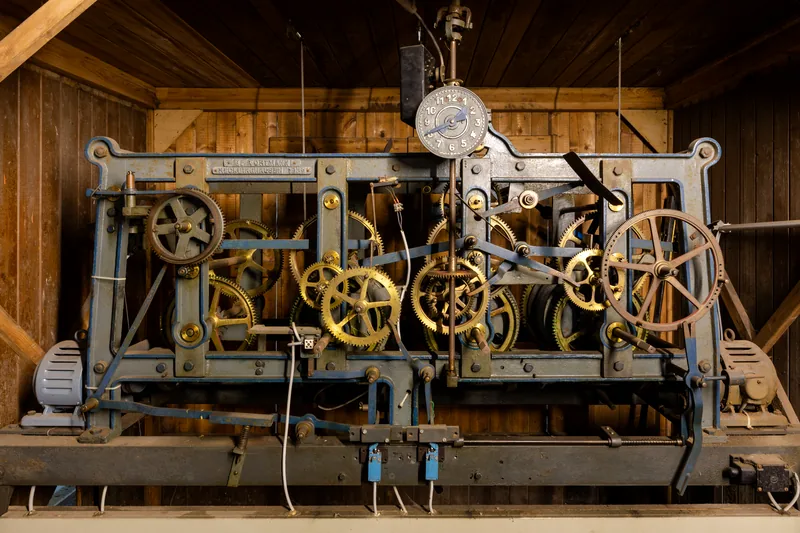
From a jeweling standpoint, a 16s Riverside standardly features 19 or 21 ruby and sapphire jewels, many set in screwed solid-gold chatons. The upper and lower cap jewels on the balance staff, pallet arbor, and escape wheel minimize friction across all operational angles. Below is a technical summary of the typical specifications found in a classic Waltham Riverside 16s Model 1908 movement:
- Pillar Plate Diameter: 40.64 mm (1.6 inches)
- Movement Height/Thickness: ~5.5 mm to 6.2 mm
- Jewel Count: 19 to 21 jewels (raised gold chatons)
- Escapement: Inline lever escapement, bimetallic balance wheel
- Hairspring: Breguet overcoil with micrometric regulator
- Setting Mechanism: Pendant set (negative setting) or Lever set (railroad requirement)
- Frequency: 18,000 vibrations per hour (2.5 Hz)
- Power Reserve: Approximately 36 to 38 hours
Challenges of Converting 16s Waltham Pocket Watch to Wristwatch
Executing a successful waltham railroad watch conversion requires far more than dropping a 100-year-old movement into a modern wristwatch case. The process presents several profound technical obstacles that stem from the fundamental differences between how pocket watches and wristwatches were designed to function. First and foremost is the issue of shock protection. Antique movements, including the high-grade Riverside, were engineered to rest relatively stationary inside a vest pocket. They lack modern shock-absorbing jewel settings (such as Incabloc or KIF systems). The balance staff pivots on a 16s movement measure a mere 0.08 mm to 0.12 mm in diameter; a sudden impact to a wrist-worn watch can instantly snap these delicate steel pivots.
The second major challenge lies in the spatial orientation of the movement components, specifically the relationship between the winding stem, the mainspring barrel, and the sub-seconds dial. Pocket watches were traditionally manufactured in two layouts: Open-Face (Lépine), where the winding stem is positioned at 12 o'clock and the sub-seconds dial is at 6 o'clock; and Hunter-Case (Savonnette), where the stem is at 3 o'clock and sub-seconds are at 6 o'clock. Most standard railroad-grade Riverside watches are open-face movements. When you rotate an open-face movement by 90 degrees inside a wristwatch case to place the winding crown at the traditional 3 o'clock position, the small sub-seconds register moves from 6 o'clock to 9 o'clock. If a builder insists on having the crown at 3 o'clock and sub-seconds at 6 o'clock, they must source a rare hunting-grade movement or custom-re-engineer the dial train.
Finally, environmental sealing presents an ongoing technical issue. Antique pocket watch cases relied on snap-on or threaded bezels and backs without rubber gaskets, and winding stems passed through unsealed case necks. Wristwatches are subjected to rain, wrist perspiration, ambient humidity, and atmospheric dust. To convert waltham riverside 16s movements into reliable daily wear pieces, the watchmaker must ensure that the modern case utilizes high-grade O-ring gaskets at the case back, crystal seat, and winding crown, while maintaining tight internal tolerances so the vintage movement remains perfectly secured without applying distorting stress to the mainplate.
Lug Welding and Case Selection
When approaching a 16s waltham pocket watch to wristwatch project, the builder faces two distinct methodology paths regarding the case construction: modifying an original vintage pocket watch case by adding custom wrist lugs, or manufacturing/sourcing a purpose-built modern stainless steel conversion case. Modifying an original pocket watch case—typically made of sterling silver, gold-filled plate, or solid 14k/18k gold—preserves the original case back engravings and period aesthetics, but requires advanced micro-welding expertise.
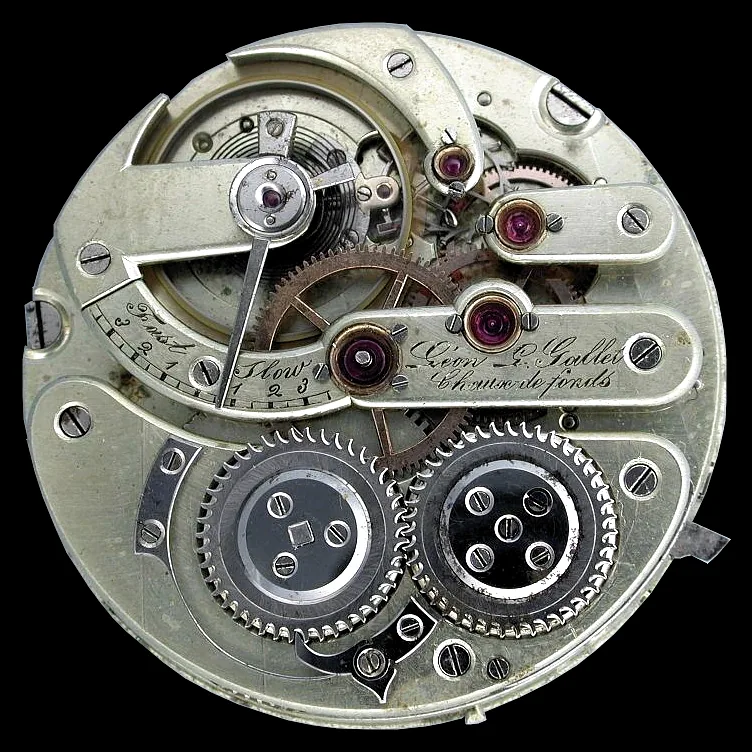
To weld lugs directly to an original vintage pocket watch case, the watchmaker must first strip all movement components, crystals, and gaskets. The case rim must be analyzed for metal composition to select the correct filler rod. Using Micro-TIG (Tungsten Inert Gas) or high-precision laser welding equipment, solid wire lugs (typically wire-loop styles reminiscent of early 20th-century trench pieces or sculpted solid lugs) are fused to the 12 o'clock and 6 o'clock perimeters of the case band. Heat sinks and thermal paste must be employed continuously to prevent warping the delicate hinge mechanisms or fine thread pitches of screw-off case rings. After welding, the joints are hand-filed, sanded with progressively finer silicon carbide papers, and mirror-polished to seamlessly blend the lug mounts into the original case body.
Alternatively, the modern horological preference is to utilize modern CNC-machined 316L stainless steel cases built specifically for 16s American movements. These conversion cases feature custom internal retaining rings, flat or domed scratch-resistant sapphire crystals, and exhibition case backs that offer an unobstructed view of the beautifully damaskeened Riverside movement plates. Because a 16s movement measures roughly 43 mm in diameter, the resulting custom wristwatch typically lands at a bold 45 mm to 48 mm overall case diameter. Correct lug architecture—specifically designing downward curved, short lugs—is critical to ensure that a watch of this physical scale sits ergonomically against the human wrist without severe overhang.
Crown and Stem Solutions
The winding and setting mechanics of a Waltham Riverside 16s present unique horological hurdles during a conversion. American pocket watch manufacturers utilized two primary methods for hand setting: Lever Setting (where a small mechanical lever pulled out from under the bezel disengages the winding gear and engages the hand-setting train, mandatory for railroad certification) and Pendant Setting (also known as negative setting, where a spring sleeve located inside the case pendant holds the stem in setting mode until compressed).
In a standard modern wristwatch movement (positive setting), pulling the crown out moves a setting lever inside the movement to engage the setting wheels. In a negative setting American pocket watch movement, the mechanism on the movement plate defaults to the "set hands" position. The stem, pulled outward by an internal split-sleeve in the pocket watch case neck, holds the mechanism in "wind" mode until the crown is pulled. When converting a negative-set 16s Riverside into a modern wristwatch case that lacks an internal sleeve mechanism, the watchmaker must either:
- Install a custom-machined sleeve inside the new case neck that replicates the original pocket watch pendant dynamics.
- Convert the movement's winding/setting mechanism internally to operate as a positive-setting system using custom-turned stem detents and altered setting springs.
- If converting a lever-set railroad movement, retain the sliding setting lever mechanism, requiring the custom wristwatch case to feature a subtle notch or sliding bezel lever at the dial edge to allow setting mode activation.
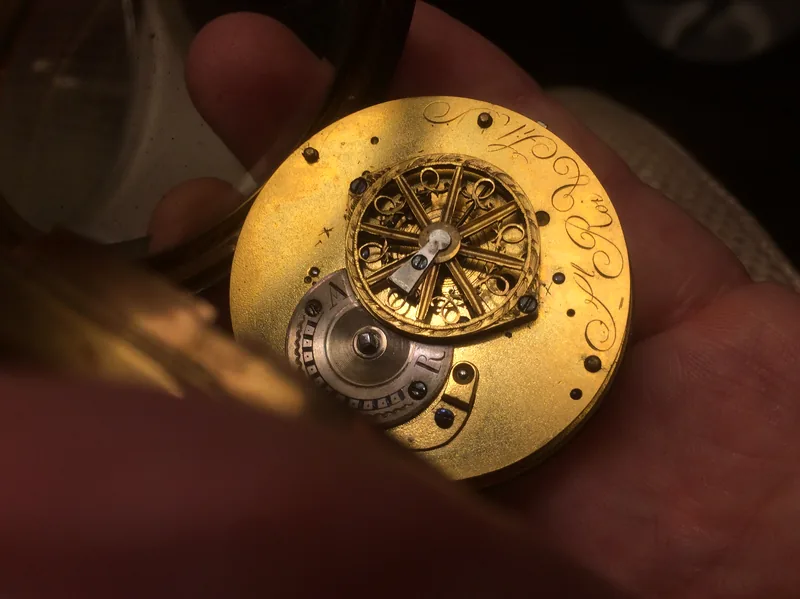
Crafting the winding stem requires precision lathe work. A standard pocket watch stem thread pitch rarely matches modern aftermarket winding crowns. The watchmaker must take a hardened steel stem blank, turn the square-shank profile to match the Waltham clutch wheel center, cut the shoulder stop to micro-metric tolerances, and thread the outer end to accept a modern, gasketed wristwatch crown (typically Tap 10 or Tap 9). The finished stem must align perfectly with the movement's height relative to the case neck; even a 0.05 mm axial misalignment will cause binding during winding or uneven stress on the winding pinion bridge.
Dial and Hand Considerations
The visual signature of a Waltham Riverside watch lies largely in its dial and hand set. Original Riverside dials were constructed using vitreous enamel (fired glass on copper baseplates), featuring crisp, hand-painted Montgomery safety numerical scales, red margin numbers, or double-sunk structures. Double-sunk dials feature separate recessed central discs and recessed sub-seconds wells to eliminate optical parallax errors when reading the time. However, vitreous enamel is extremely brittle; decades of thermal expansion and contraction often leave micro-hairlines around the dial feet solder joints.
When executing a waltham riverside 16s conversion, handling the enamel dial requires extreme caution. If the movement position is rotated relative to the crown (e.g., placing the stem at 3 o'clock on an open-face movement), the dial feet will no longer line up with the original mainplate mounting holes. Watchmakers must choose between two solutions: relocating the copper dial feet using micro-spot soldering/conductive epoxy techniques (risking heat damage to the enamel surface), or utilizing thin brass dial-clamping rings that hold the dial periphery via friction without altering the feet. For those wishing to preserve museum-grade original dials intact, custom-manufactured aftermarket metal dials tailored to the rotated train dimensions are often preferred.
Hand fitment requires equally meticulous attention. Pocket watch hands from the late 1800s and early 1900s were crafted from high-carbon steel, blued over heat to a deep peacock-blue shade. The mounting hole diameters for 16s pocket watch hand posts differ significantly from modern Swiss wristwatch standards:
| Component | Waltham 16s Standard Dimension | Modern ETA 6497 Reference Dimension |
|---|---|---|
| Hour Hand Hole | ~2.18 mm to 2.25 mm | 1.50 mm |
| Minute Hand Hole | ~1.15 mm to 1.22 mm | 0.90 mm |
| Sub-Seconds Pivot | ~0.28 mm to 0.32 mm | 0.20 mm |
Because original pocket watch hands are substantially long and heavy, the hour and minute tubes must be carefully closed or opened on a staking set to friction-fit securely onto the Waltham hour wheel and cannon pinion. Heavier steel hands place greater inertial loads on the movement train, so the watchmaker must ensure that the balance wheel exhibits sufficient amplitude (ideally 270° to 300° in horizontal positions) to drive the hand weight without losing timing accuracy.
Why 16s Pocket Watches Are Preferred for Wristwatch Conversions
In the realm of horological conversions, watchmakers frequently debate the merits of various American movement sizes, particularly comparing 18-size (18s) movements against 16-size (16s) movements. While early conversion efforts during the mid-20th century often utilized 18s movements due to their sheer abundance, modern artisans and collectors overwhelmingly favor the 16s footprint for custom wristwatch builds.
The primary reason for this preference comes down to wrist ergonomics and wearability. An 18s pocket watch movement features a plate diameter of roughly 44.86 mm. When housed within a protective wristwatch case possessing adequate wall thickness and crystal seating, the resulting timepiece easily exceeds 50 mm to 52 mm in diameter, excluding the crown. On all but the largest wrists, a 50mm+ timepiece is unwieldy, top-heavy, and highly prone to striking door frames and furniture. In contrast, a 16s movement (40.64 mm plate) allows for a final cased diameter of 44 mm to 46 mm—a size range widely accepted in modern horological culture, comparable to contemporary sports watches and oversized pilot watches.
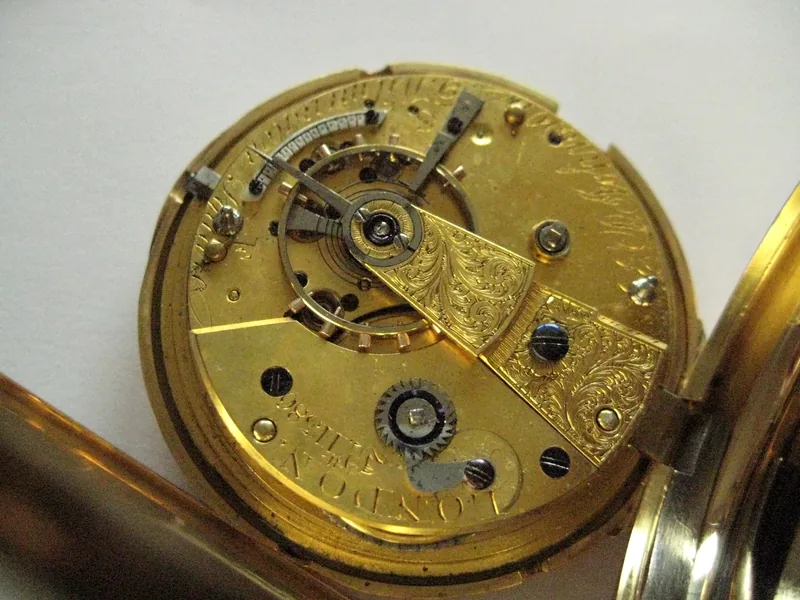
Furthermore, the 16s movement era (roughly 1895–1940) coincided with the absolute zenith of American pocket watch manufacturing technology. By the time the 16s Riverside Model 1899 and 1908 were in full production, metallurgic standards had advanced significantly beyond the earlier 18s era. Movements featured superior steel alloy balances, non-magnetic hairsprings, standardized interchangeable parts, and highly refined friction-jeweling setups. For collectors seeking to explore a wide range of historic repurposed timepieces across different horological traditions, browsing curated collections of antique pocket watch conversions illustrates how the 16s profile consistently strikes the ideal balance between mechanical presence and practical daily wearability.
Final Thoughts on Waltham Riverside Conversions
Converting a Waltham Riverside 16s pocket watch into a high-grade custom wristwatch is a process that blends historical preservation with precise modern micro-engineering. It is not a task to be rushed or executed with crude, off-the-shelf parts; it requires a deep respect for late 19th and early 20th-century American horology. When undertaken by a master watchmaker who understands proper stem alignment, structural case clearance, friction adjustments, and dynamic poising, the result is a breathtaking, one-of-a-kind wearable masterpiece.
The finished conversion exposes the mesmerizing dance of a 21-jewel Riverside movement—complete with its gold chatons, radiant damaskeened nickel bridges, and oversized compensating balance wheel—to daily appreciation. Every tick of its slow, deliberate 18,000 vph beat serves as a tactile connection to the golden age of American industrial dominance and railroad precision. By re-housing these majestic Riverside calibers for the wrist, watchmakers ensure that the technical brilliance of Waltham’s master artisans continues to measure time accurately for generations to come.