In horological archival research, few periods present as intricate a diagnostic challenge—or as rich a historical yield—as the dawn of Rolex. Before the crown emblem, the Oyster case, or the Perpetual rotor became global icons of luxury watchmaking, the foundation of the brand was laid in London in 1905 by Hans Wilsdorf and his brother-in-law Alfred Davis. Performing accurate vintage rolex dating 1905-1915 requires an archivist to step away from modern serial number charts and look closely at the physical evidence left by metallurgy and legal regulation: the official British assay hallmarks, sponsor marks, and Swiss caliber architectures of the early Wilsdorf era.
During this foundational decade, Wilsdorf & Davis operated predominantly as importers and horological purveyors rather than unified manufacture case makers. They sourced raw movement ebauches from Aegler in Bienne, commissioned high-grade precious metal cases from specialized casing houses in Switzerland and England, and submitted these components to official British assay offices to meet strict statutory purity laws. The physical hallmarks stamped into these early inner casebacks provide precise 12-month dating accuracy that outperforms modern estimation tables.
What is the Hallmark?
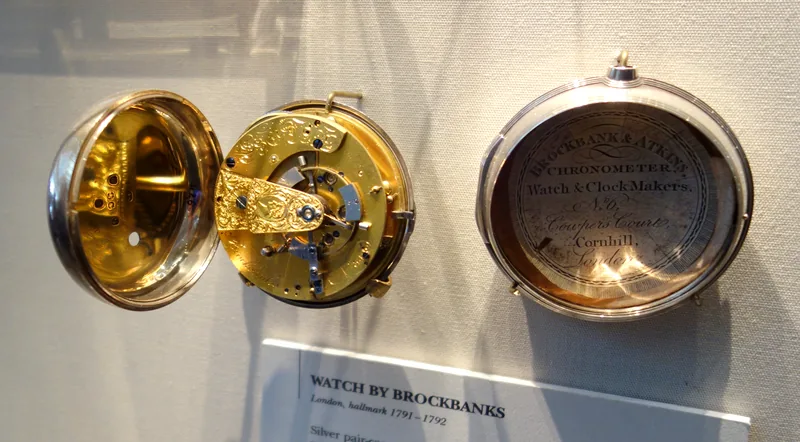
To the modern vintage horologist, the hallmark on a 1905–1915 timepiece is a legal and material record of authenticity. Unlike later factory-struck serial numbers or internal reference codes, early 20th-century hallmarks were mandatory official stamps applied by independent statutory assay bodies. They guarantee that a precious metal case—whether sterling silver, gold, or platinum—conformed strictly to statutory purity standards before being legally offered for commercial sale in the United Kingdom.
In early Wilsdorf-era timepieces, a complete hallmark cluster comprises four distinct punch marks stamped onto the internal surface of the caseback or cuvette (dust cover):
- The Sponsor's Mark: The registered punch identifying the importing firm or maker responsible for submitting the piece. For Hans Wilsdorf and Alfred Davis, this was registered as "W&D" within an oval, shield, or rectangular punch shape.
- The Assay Office Mark: The symbol indicating which government office tested and verified the metal purity (e.g., London, Glasgow, or Birmingham).
- The Standard Mark / Fineness Code: The symbol or numerical stamp certifying metal purity, such as ".925" for sterling silver or "15" / ".625" for 15-karat gold.
- The Date Letter: A specific typeface letter enclosed within a distinct shield shape that corresponds to a precise 12-month calendar window used by that specific assay office.
Understanding this four-part system allows archivists to confirm authentic early pieces from our vintage Rolex wristwatch collection, separating original fabrications from later recased assemblies or counterfeit fabrications.
Historical Origins and Assay Office
When Hans Wilsdorf arrived in London at the turn of the 20th century, Great Britain was the center of global wealth and maritime commerce. Wilsdorf recognized that establishing a brand identity in London required strict adherence to British metallurgical laws. In 1905, Wilsdorf & Davis registered their primary sponsor mark—"W&D"—at the London Assay Office located at Goldsmiths' Hall, followed shortly by registrations in Glasgow and Birmingham.
The regulatory landscape shifted dramatically on June 1, 1907, with the enforcement of the Assay of Imported Watch Cases Act 1906 (6 Edw. 7 c. 44). Prior to June 1907, imported foreign watchcases were often hallmarked using the same traditional stamps as native British cases, creating consumer confusion regarding their country of origin. The 1906 Act created new, mandatory "Import Marks" for foreign-made precious metal watchcases submitted to British assay offices:
London Import Mark (Post-June 1907)
Replaced the traditional Leopard's Head with the astrological sign of Saturn (a cross above an arch, or ♄). Silver received a decimal fineness mark alongside standard purity stamps.
Glasgow Import Mark (Post-June 1907)
Replaced the iconic City Arms (Tree, Fish, Bird, and Bell) with the astrological sign of Gemini (the Twins, ♊) for imported gold and silver watchcases.
Birmingham Import Mark (Post-June 1907)
Replaced the Anchor mark with the sign of Equator/Transit (an equilateral triangle) on foreign plate.
Hans Wilsdorf heavily utilized the Glasgow Assay Office during this period due to its efficient processing times and close commercial links to Scottish maritime trade networks. As a result, a significant percentage of 1908–1915 Wilsdorf-imported timepieces feature the Glasgow Gemini import mark rather than London stamps.
Metal Purity and Standards
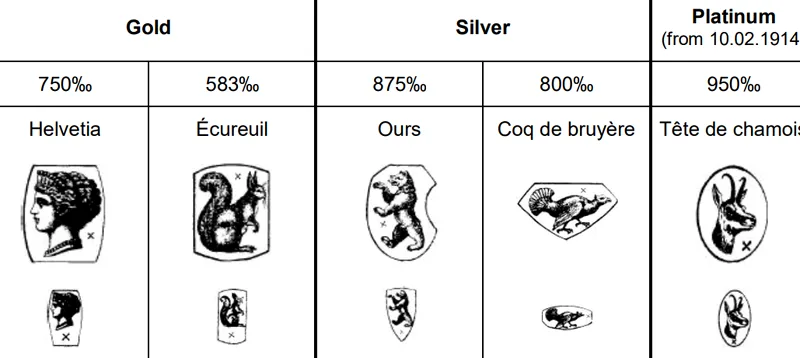
During the 1905–1915 period, Wilsdorf & Davis catered to diverse consumer tiers by utilizing multiple precious metal alloys. In silver, the dominant standard was Sterling Silver (.925 purity), though occasional Swiss-cased exports destined for continental Europe utilized .935 or .800 silver fineness standards. For gold cases, British regulation permitted a wider variety of gold alloys than are common today.
Gold watchcases of this era were stamped in 9-karat (.375), 12-karat (.500), 15-karat (.625), and 18-karat (.750) alloys. The 12-karat and 15-karat options were particularly popular in early 20th-century British horology before being abolished by the British Hallmarking Council in 1932 in favor of 14-karat (.585) standards. Finding a 15ct stamp on a early gold Wilsdorf piece offers immediate structural verification of pre-1932 manufacture.
The table below summarizes the archival assay specifications used during the peak Wilsdorf & Davis period (1905–1915):
| Feature / Specification | Historical Archival Standard | Collector Verification Note |
|---|---|---|
| Primary Sponsor Punch | "W&D" in punch shield variations | Must show clear incuse or relief impression; verified under 10x magnification against Goldsmiths' Hall records. |
| Pre-June 1907 Silver Mark | Lion Passant (London native mark) | Extremely rare; indicates the earliest Wilsdorf & Davis imports prior to foreign plate law changes. |
| Post-June 1907 Import Mark | Sign of Saturn (London) / Sign of Gemini (Glasgow) | Definitive proof of foreign manufacture (Swiss ebauche/case) imported through British customs. |
| Gold Fineness Options | 9ct (.375), 12ct (.500), 15ct (.625), 18ct (.750) | 12ct and 15ct hallmarks confirm pre-1932 casing; highly sought after by early Rolex specialists. |
| Rolex Name Branding | "ROLEX" stamped under W&D punch (c. 1910–1915) | Early transition phase; dials were often plain/unsigned while internal casebacks bore dual markings. |
| Caliber Architecture | Aegler Rebberg 11''' or 13''' Hunter/Lépine | 15-jewel lever movements with bi-metallic compensation balances, signed or unsigned on bridges. |
How to Identify on Vintage Watch Cases
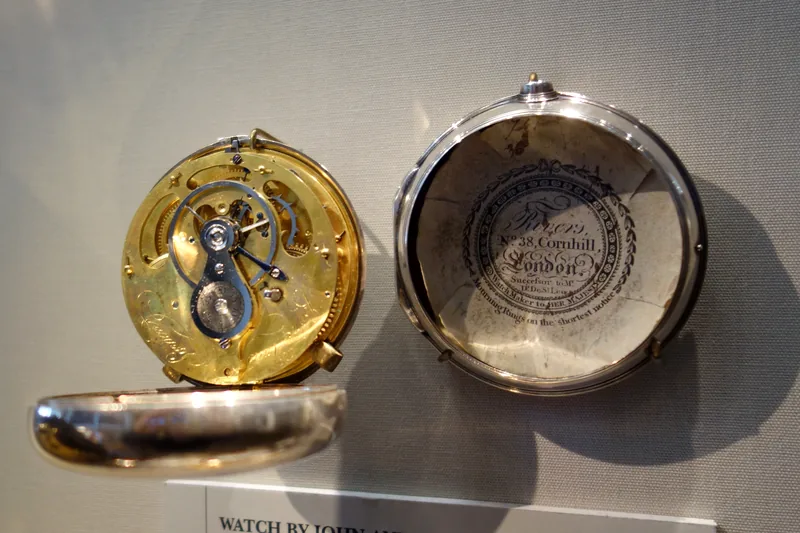
Locating and deciphering these historical stamps requires systematic microscopic examination. Open the caseback of the watch using appropriate horological tools—taking care with hinged or screw-down cases like those made by François Borgel—to expose the inner metal surface.
In authentic 1905–1915 Wilsdorf timepieces, the upper half of the inner caseback contains the primary identification group. Look for the "W&D" punch. Surrounding or directly below this sponsor mark, you will locate the assay hallmarks. For example, a 1912 silver piece imported through Glasgow will reveal the "W&D" punch, followed by the Gemini symbol (♊), the decimal purity mark ".925", and the Glasgow date letter "N" rendered in lower-case Gothic typography enclosed in a pointed shield.
By 1908, Hans Wilsdorf registered the trademark word "Rolex" in La Chaux-de-Fonds, Switzerland. However, adoption of the name on watch components was gradual. From 1910 to 1915, you will often find cases displaying both the top "W&D" sponsor mark and an early, linearly aligned "ROLEX" stamp underneath it. During this era, retail jewelers often resisted putting manufacturer names on the dial, preferring to sell timepieces unbranded or with their own storefront logo. Consequently, authenticating these original WW1 trench watches relies almost entirely on the internal caseback hallmarks rather than dial printing.
Dating and Authentication Value
The primary advantage of hallmark dating over serial number tables is chronological precision. Serial number records from early Swiss watchmaking can feature gaps, duplicated ranges, or approximate production ranges. British Assay Office date letters, by contrast, were altered systematically every year during the annual election of assay wardens (typically occurring in May for London and July for Glasgow).
To accurately perform vintage rolex dating 1905-1915, consult the official date-letter tables of the corresponding Assay Office:
London Import Date Letter System (1906–1915)
- 1906: Lowercase 'k' in pointed shield
- 1907: Lowercase 'l' in pointed shield (Transition to Saturn import mark on June 1)
- 1908: Lowercase 'm' in pointed shield
- 1910: Lowercase 'o' in pointed shield
- 1912: Lowercase 'q' in pointed shield
- 1914: Lowercase 's' in pointed shield
- 1915: Lowercase 't' in pointed shield
Glasgow Import Date Letter System (1906–1915)
- 1906: Lowercase 'g' in rounded shield
- 1908: Lowercase 'i' in rounded shield
- 1910: Lowercase 'l' in rounded shield
- 1912: Lowercase 'n' in rounded shield
- 1914: Lowercase 'p' in rounded shield
- 1915: Lowercase 'q' in rounded shield
When authenticating, examine the depth, crispness, and punch boundaries of these hallmarks under a stereomicroscope. Genuine historical hallmarks show natural metal displacement and minor localized deformation consistent with hand-struck steel dies applied to a raw case shell before final assembly. Cast counterfeits or modern laser-etched reproductions display flat, uniform floors without the characteristic displaced metal ridges of a striking punch.
Furthermore, ensure the movement caliber matches the case period. Timepieces from this decade should house an Aegler Rebberg movement—typically an 11-ligne or 13-ligne movement with a straight-line lever escapement, 15 jewels, and cut bimetallic balance wheels. If you encounter a late 1920s Hunter movement cased inside a 1911 W&D hallmarked case, you are looking at a later marriage or replacement rather than an original factory timepiece. Collectors interested in exploring broader historical movement conversions can consult our catalog of restored vintage timepieces and conversions.
Collector Significance
Timepieces surviving from the 1905–1915 Wilsdorf era represent the origin of the modern wristwatch. During this historical window, Hans Wilsdorf accomplished what the traditional horological establishment believed impossible: transforming the small, fragile wristlet from a women's fashion novelty into a precise, reliable tool watch for military officers, explorers, and modern men.
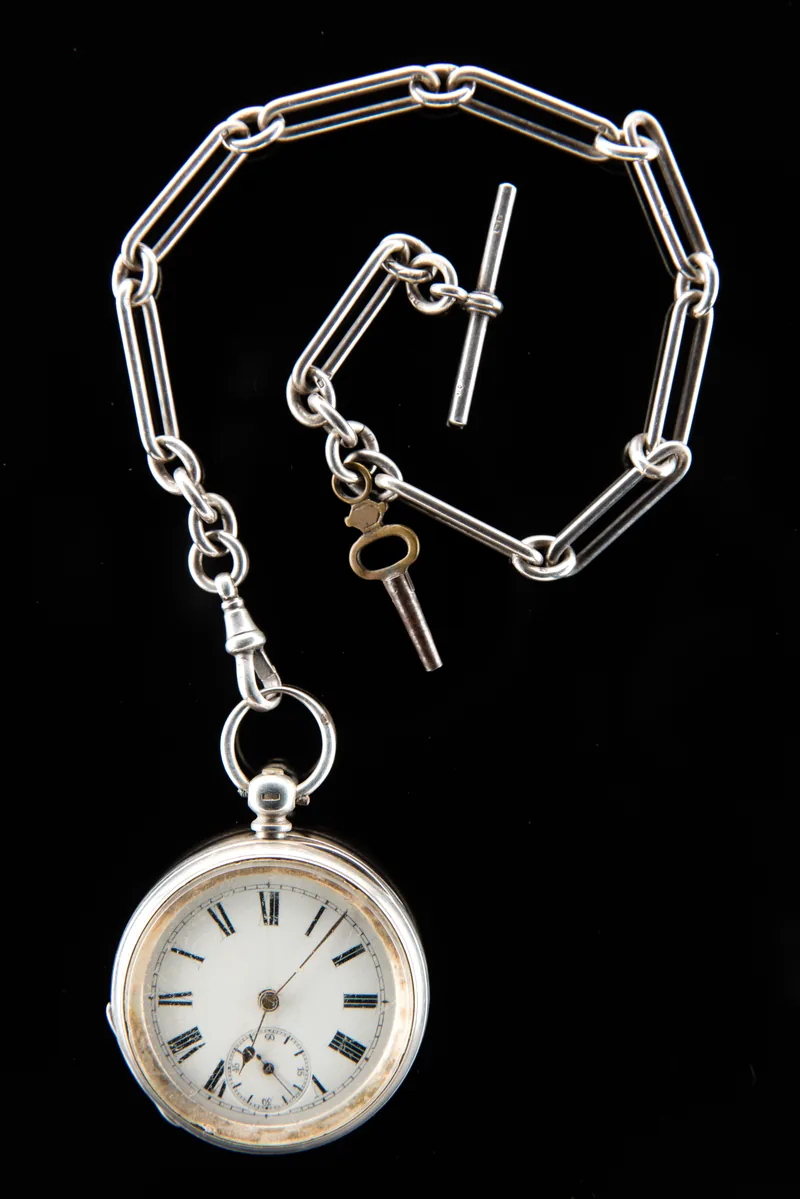
In 1910, a small Wilsdorf-supplied wristlet movement obtained the world's first Official Swiss Chronometer Rating Certificate for a wristwatch from the Official Watch Rating Centre at Bienne. In 1914, a similar watch achieved a Class "A" Precision Certificate from the prestigious Kew Observatory in England—a distinction previously reserved exclusively for large marine chronometers. The physical proof of this transformative decade remains embedded inside the casebacks of these early models.
For high-level collectors, a verified 1905–1915 Wilsdorf & Davis timepiece with complete, legible British hallmarks represents an indispensable piece of horological history. Beyond financial value, these pieces preserve the physical transition of a small Hatton Garden import business into the world's most famous watch manufacture. Proper preservation is paramount: conservators must never over-polish or abrasively clean the interior surfaces of these casebacks, as preserving every micron of the struck hallmark is essential to maintaining its historical integrity and market value.
Frequently Asked Questions
How do I accurately date a vintage Rolex watch from the 1905-1915 Wilsdorf era?
To accurately date a 1905–1915 Wilsdorf era Rolex, examine the internal hallmarks stamped on the caseback and cross-reference the Assay Office date letter with official British hallmark tables. Look for the "W&D" sponsor punch alongside London (Saturn symbol) or Glasgow (Gemini symbol) import marks, where the specific letter code provides exact 12-month dating precision.
What does the "W&D" mark inside an early Rolex caseback signify?
The "W&D" mark stands for Wilsdorf & Davis, the founding partnership established in London in 1905 by Hans Wilsdorf and Alfred Davis before the adoption of the Rolex name. It represents the official sponsor punch registered at British assay offices to certify ownership and compliance with metal purity laws for imported watchcases.
Why do 1905-1915 Rolex watches feature British assay hallmarks instead of Swiss marks?
During the 1905–1915 era, Hans Wilsdorf operated his primary distribution hub in London and imported Swiss movement components and cases into the United Kingdom. Under the British Foreign Plate Act of 1906, all imported foreign precious metal watchcases were required by law to be officially hallmarked at a British assay office prior to commercial sale.