The decade spanning 1925 to 1935 represents one of the most transformative eras in horological history. During this prolific Art Deco period, Rolex transitioned from a fledgling assembly firm into an undisputed innovator in wristlet engineering. Marked by Hans Wilsdorf’s registration of the waterproof "Oyster" case in 1926 and the release of the iconic rectangular "Prince" in 1928, timepieces from this era display an extraordinary synthesis of geometric art and precision mechanical design. However, determining exact production dates for early Rolex watches remains a challenge for horologists because standardized case serial numbers were not systematically applied across all production facilities until the late 1930s. Master archivists rely instead on official precious metal assay stamps and official assay office date letters—the definitive key to vintage rolex dating 1925-1935.
What is the Hallmark?
In high-grade horology and archivism, a hallmark is not a mere brand logo, maker's trademark, or reference number. It is an official mark punched into a precious metal object by an independent, government-sanctioned assay office. These legal imprints certify metal purity, verify origin, and record the exact calendar year the component was tested. During the 1920s and 1930s, as precious metal watch cases were imported into lucrative markets across Europe and the British Commonwealth, strict statutory laws dictated that every gold, silver, or platinum case undergo destructive chemical testing (assaying) prior to commercial sale.
For the collector evaluating a vintage Rolex from the Art Deco period, these hallmarks provide an unalterable chronological record. While dial typography, hand styles, and even movement components can be replaced or modified over a century of servicing, internal and external hallmarks remain permanently struck into the gold, silver, or platinum chassis. A master horologist examines these miniature cartouches under high magnification to verify authenticity, isolate the year of casing, and detect any potential case tampering or modern reproduction.
Historical Origins and Assay Office
To understand why British and European hallmarks appear inside Rolex cases from 1925–1935, one must examine Hans Wilsdorf’s international commerce strategy. Although Wilsdorf moved Rolex’s operational headquarters from London to Geneva in 1919—establishing Montres Rolex S.A. in 1920—Great Britain remained the brand's primary commercial stronghold. British law mandated that all foreign-manufactured gold and silver watch cases imported into the United Kingdom be subjected to assaying under strict Customs and Inland Revenue statutes.
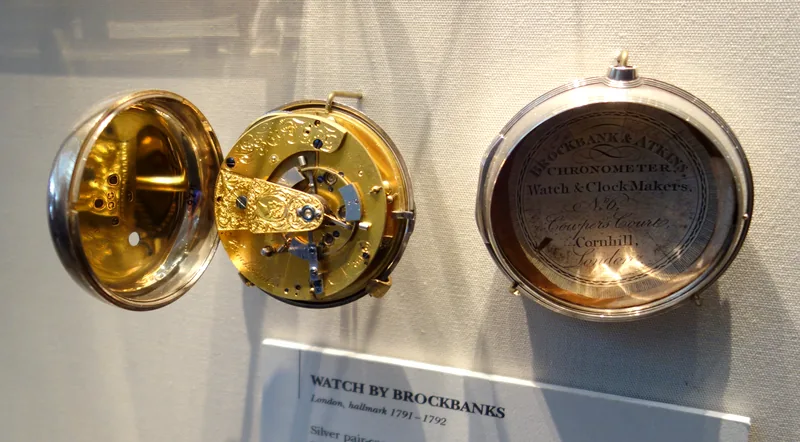
To streamline this distribution network, Rolex dispatched large quantities of uncased movements and Swiss-fabricated cases to British assay offices. Chief among these was the Glasgow Assay Office, alongside the Assay Office of London (Goldsmiths' Hall). Glasgow became the preferred facility for high-volume imports of Rolex cases during the Art Deco era. Foreign imports were struck with specific "import marks" to distinguish them from domestically minted items. For Glasgow, this mark featured a stylized double-headed 'F' mark alongside the traditional city crest (the tree, bird, bell, and ring emblem). London applied an equal-armed cross within an oval surround or a sun symbol, paired with numerical metal standards.
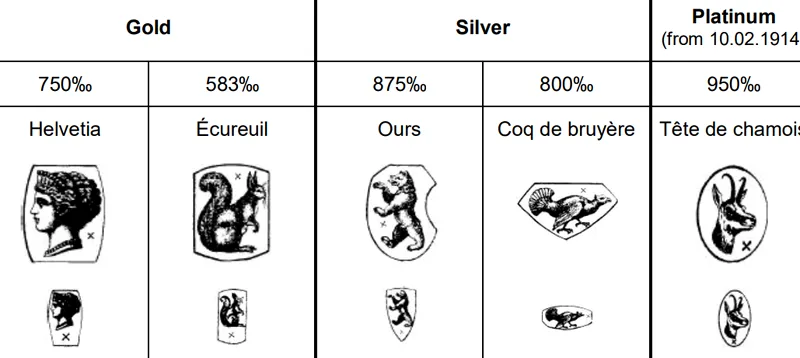
Concurrently, watches cased completely within Switzerland for non-British markets bore Swiss federal hallmarks mandated by the Federal Act of 1880. These included the head of Helvetia for 18-carat gold, the Grouse (Auerhahn) for 14-carat gold, the Mourning Dove for 9-carat gold, the Bear for sterling silver, and the Duck mark introduced later for platinum. Tracing these marks back to their native assay offices allows archivists to chart the precise trade route and destination market of an early Rolex timepiece.
Metal Purity and Standards
The Art Deco era rejected the monochrome utilitarianism of wartime trench watches in favor of striking metallic tones, multi-colored gold alloys, and luxurious finishes. Rolex cases from 1925 to 1935 were produced in 9-carat (.375), 14-carat (.585), and 18-carat (.750) gold, as well as .925 Sterling Silver, solid Platinum (.950), and occasionally staybrite stainless steel. The choice of metal directly dictated which hallmarks were struck into the metal wall by the assayer.
The British market exhibited a strong preference for 9-carat gold due to its high tensile durability and favorable tax treatment, whereas Continental Europe and South America favored rich 18-carat yellow, rose, and white gold combinations. Dual-tone "tiger stripe" Rolex Prince cases—utilizing alternating strips of white and pink 18K gold—required complex hallmarking protocols where both alloy sections met statutory purity standards. For collectors exploring our vintage Rolex wristwatch collection, analyzing metal purity marks provides critical insight into the original market destination and luxury status of early Aegler Rebberg-powered models.
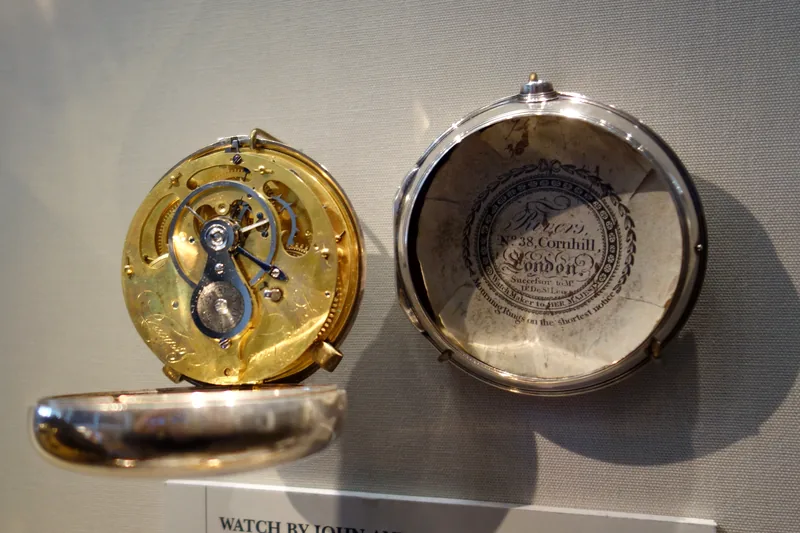
Below is an archival comparison table outlining the primary hallmarking specifications and verification standards encountered on Rolex cases produced between 1925 and 1935:
| Feature / Specification | Historical Archival Standard | Collector Verification Note |
|---|---|---|
| Glasgow Import Stamp (Gold) | Carat decimal (.375, .585, .750) paired with 'F' import mark | Crucial benchmark for 1925–1935 dating; matches specific Scottish date letter cycles (c through m). |
| Swiss Helvetia Punch | Profile of Helvetia in cartouche for 18K (.750) Gold | Standard on Swiss-cased watches; found on inner casebacks and occasionally on lug flanks. |
| R.W.C. Ltd Sponsor's Mark | Rolex Watch Company registered punch within shield/oval | Confirms the case was officially submitted by Wilsdorf’s firm; precedes the modern crown logo. |
| Dennison (ALD) Case Stamps | British case maker mark: "A.L.D." inside rectangular punch | Common on UK-market Rolexes; paired with English Birmingham or Chester assay date letters. |
| Platinum Assay Mark | "PLATINUM" or .950 decimal stamp paired with Duck/Goat punch | Extremely rare on Art Deco Oyster and Prince models; commands top tier archival value. |
How to Identify on Vintage Watch Cases
Locating and correctly interpreting hallmarks on an Art Deco Rolex requires careful magnification using a 10x or 20x triplet jeweler's loupe under directional raking light. Because case makers worked with ultra-thin gold sheets and delicate multi-piece case constructions, hallmarks were struck with hand punches, resulting in micro-scale impressions that often measure less than one millimeter across.
Primary Hallmark Placement Locations
- Inner Caseback Center: The vast majority of Swiss and British hallmarks are struck on the inside of the caseback, directly beneath the central Rolex Watch Company trademark (R.W.C. Ltd) or model reference numbers.
- Outer Caseback Rim: On early 1926–1931 screw-down Oyster cases (Ref. 1543, Ref. 2081), hallmarks were occasionally struck along the outer rim or thread base to allow external inspection without breaking the waterproof seal.
- Underside of the Lugs: On rectangular Art Deco models, including the iconic Rolex Prince "Brancard" (Ref. 971 and Ref. 1490), mini assay punches were struck onto the lower flank or reverse face of the corner lugs.
- Inner Case Wall & Bezel Step: Multi-tiered step-cases and flared "Doctor’s Watches" often display tiny hallmarks along the vertical inner sidewall or inside the bezel step frame.
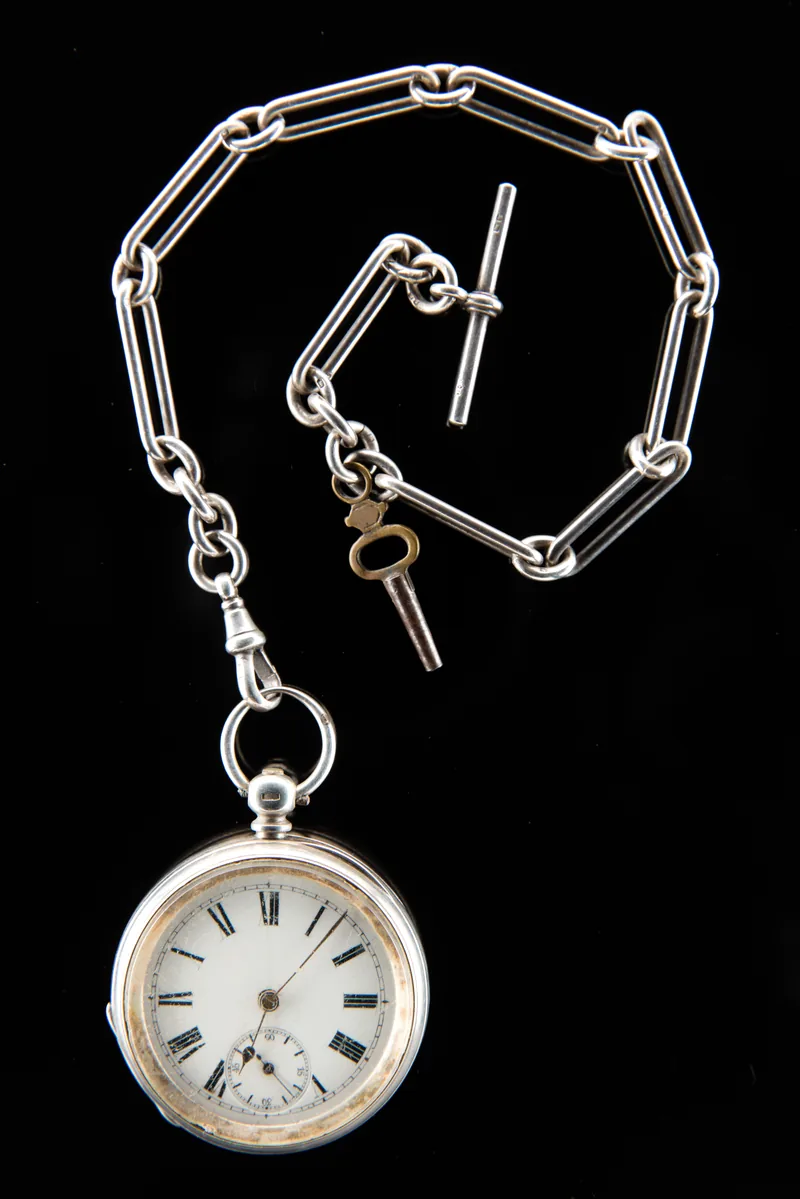
When identifying authentic markings, horologists cross-reference the hallmark with official case supplier trademarks. Rolex collaborated with premier independent casemakers during this period, including C.R. Spillmann SA (pioneers of early waterproof Oyster architecture), Genex (Rolex's internal specialty case department), and Dennison Watch Case Company (ALD) in England. Identifying both the casemaker's mark and the assay hallmark helps differentiate genuine factory executions from later recased movements or modified restored vintage timepieces and conversions.
Dating and Authentication Value
The primary advantage of utilizing hallmarks for vintage rolex dating 1925-1935 lies in the absolute mathematical certainty of British assay date letters. Unlike Rolex serial numbers from this era—which were often assigned in non-sequential batches by third-party case suppliers—British assay offices changed their designated year-code letter annually on a strict, statutory schedule.
The Glasgow Assay Office operated on a distinct alphabetical cycle during the Art Deco era. By matching the specific font style, cartouche shape, and lettercase (lowercase versus uppercase) struck inside a Glasgow-imported Rolex case, an archivist can pinpoint the year of assay with complete precision:
- 1925: Lowercase
cin a shield frame - 1926: Lowercase
din a shield frame (Year of the Rolex Oyster Patent) - 1927: Lowercase
ein a shield frame - 1928: Lowercase
fin a shield frame (Launch of the Rolex Prince Caliber 300) - 1929: Lowercase
gin a shield frame - 1930: Lowercase
hin a shield frame - 1931: Lowercase
iin a shield frame - 1932: Lowercase
jin a shield frame - 1933: Lowercase
kin a shield frame - 1934: Lowercase
lin a shield frame - 1935: Lowercase
min a shield frame
Authentication value increases dramatically when the case hallmark date aligns precisely with movement caliber characteristics. For instance, a rectangular Rolex Prince housing an early hand-finished 15-jewel Extra Prima chronometer movement signed "Rebberg" or "Aegler" should display a case date letter between 1928 ('f') and 1935 ('m'). A date mismatch exceeding two to three years between case hallmarks and movement architecture serves as an immediate red flag for horological conservators, indicating a married case or later replacement assembly.
Collector Significance
In the high-stakes realm of vintage horology collecting, the presence of crisp, unpolished hallmarks is a primary driver of historical importance and market value. Art Deco Rolex watches were subjected to decades of wear, wear-induced friction, and aggressive jeweler polishing. Overzealous buffing quickly obliterates shallow surface hallmarks. Therefore, finding an early Oyster, Brancard Prince, or jump-hour Rolex displaying sharp, raised hallmark cartouches confirms that the case has retained its original geometric proportions and crisp factory edges.
Furthermore, hallmarks offer an unalterable shield against modern counterfeiters. While modern laser-engraving can mimic vintage serial typography, recreating the microscopic, multi-layered metal displacement of an authentic 1920s hand-punched assay mark—complete with microscopic aging artifacts inside the recess—is nearly impossible. For the discerning archivist, these official stamps serve as immutable proof of provenance, connecting a century-old masterpiece directly to the bench of Hans Wilsdorf’s historic artisans.
Frequently Asked Questions
How do you date a vintage Rolex watch from 1925 to 1935 without a serial number chart?
To date a 1925–1935 Rolex accurately without serial numbers, inspect the internal caseback for British import date letters (such as the Glasgow Assay Office letter cycle 'c' through 'm') or Swiss precious metal hallmark stamps. These official assay stamps reflect the exact calendar year the raw watch case was tested and approved before retail distribution.
What does the 'F' mark inside an early Rolex case mean?
The 'F' mark—frequently shaped as two back-to-back letter Fs or an F within an oval cartouche—is the official British import mark applied by the Glasgow Assay Office. It signifies that the precious metal watch case was manufactured internationally (in Switzerland by Rolex or its case makers) and legally imported into the United Kingdom after passing gold or silver purity testing.
Why are some Art Deco Rolex hallmarks stamped inside the caseback while others are on the lugs?
Hallmarks were stamped inside the caseback primarily to protect the official marks from environmental wear and preserve external aesthetics. However, on complex multi-piece Art Deco cases or slim rectangular models like the Rolex Prince Brancard, assay laws required visible stamps on primary structural components, leading assayers to strike micro-hallmarks onto the undersides of lugs or outer bezel steps.