Navigating the realm of vintage rolex dating 1935-1945 requires an archivist's eye and a master horologist's precision. The decade spanning the mid-1930s through the end of the Second World War represents a transformative golden age for Rolex S.A. During this pre-war and wartime period, the manufacture transitioned from early exploratory wristlets to the definitive mechanical architecture that established its modern legacy—most notably the maturation of the self-winding "Bubbleback" (Oyster Perpetual), the iconic water-resistant Oyster case, and precision chronographs like the Reference 3525 "Monoblocco."
For horological historians and serious collectors, authenticating and dating timepieces from this era relies heavily on analyzing case stamps, serial numbers, movement calibers, and official assay hallmarks. Unlike modern references with computerized laser engravings between the lugs, timepieces produced between 1935 and 1945 feature hand-stamped, deep-punch hallmarks and exterior case back serial numbers. Understanding these micro-markings is essential for establishing provenance and verifying originality.
What is the Pre-War Rolex Hallmark System?
The hallmark system utilized by Rolex between 1935 and 1945 is a multi-tiered metallurgical and legal signature stamped directly into the precious metal or stainless steel of a watch case. During this period, Swiss federal law and international trade regulations mandated that every watch constructed from precious metals (gold, silver, platinum) receive official assay office inspection marks before commercial distribution. In addition to state-mandated purity marks, Rolex and its specialized case makers—such as Genex, Spillmann, and C.R. Spillmann SA—applied their own proprietary signatures, reference numbers, and production sequence serials.
Unlike post-1953 references where serial numbers migrated exclusively to the space between the 6 o'clock lugs, pre-war and wartime Rolex cases feature serial numbers stamped directly on the exterior center or perimeter of the case back. These numbers were applied using heavy mechanical counter-sunk punches, resulting in deep, slightly irregular numeric impressions ranging from approximately 30,000 (c. 1935) to over 350,000 (c. 1945).
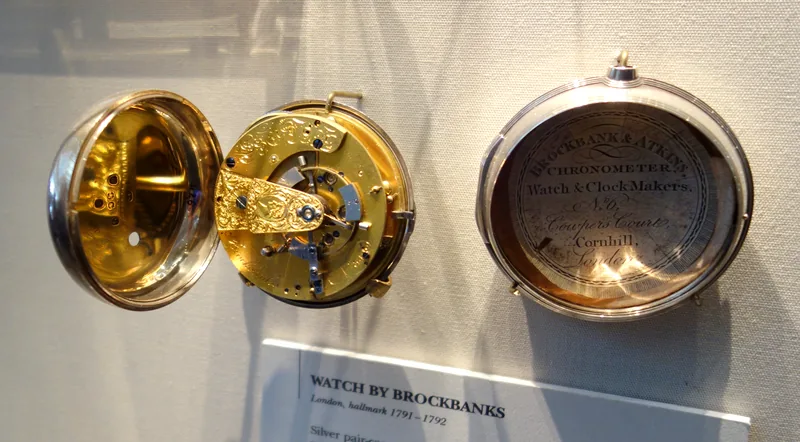
To fully comprehend the hallmark structure of this era, one must examine three distinct categories of stamps found inside and outside the case back:
- Federal Swiss Assay Marks: Official symbols indicating gold or silver purity, authorized by the Central Bureau for Precious Metals Control (Bureau Central du Contrôle des Métaux Précieux).
- Poinçons de Maître (Responsibility Marks): Enclosed symbols (such as a key, hammer head, or tree) containing a number that identifies the specific casemaker who fabricated the raw housing for Rolex.
- Import and Export Marks: Specialized hallmarks applied by foreign assay offices—most notably the Glasgow and London Assay Offices—when cases were imported into the United Kingdom or Commonwealth territories.
Historical Origins and Assay Office
The historical architecture of Rolex’s hallmarking system grew directly out of Hans Wilsdorf's dual-headquarters strategy. While administrative operations were grounded in Geneva (Rolex S.A.) and movement production was centered at Aegler S.A. in Bienne, case manufacturing was contracted to elite specialized workshops across Switzerland. This evolutionary arc traces back to the early era of original WW1 trench watches, where sterling silver and solid gold cases were hallmarked predominantly in London or Glasgow to satisfy British trade standards.
By 1935, Switzerland had standardized its national precious metal hallmarking under strict federal oversight. The principal assay offices responsible for certifying Rolex production during the pre-war period were located in Geneva (represented by the official hallmark stamp), La Chaux-de-Fonds, and Biel/Bienne. Precious metal cases produced for export to the British Empire were shipped to the Glasgow Assay Office, which utilized a distinct import symbol consisting of a double tree, bird, bell, and fish enclosed within an oval shield, accompanied by a dedicated date letter.
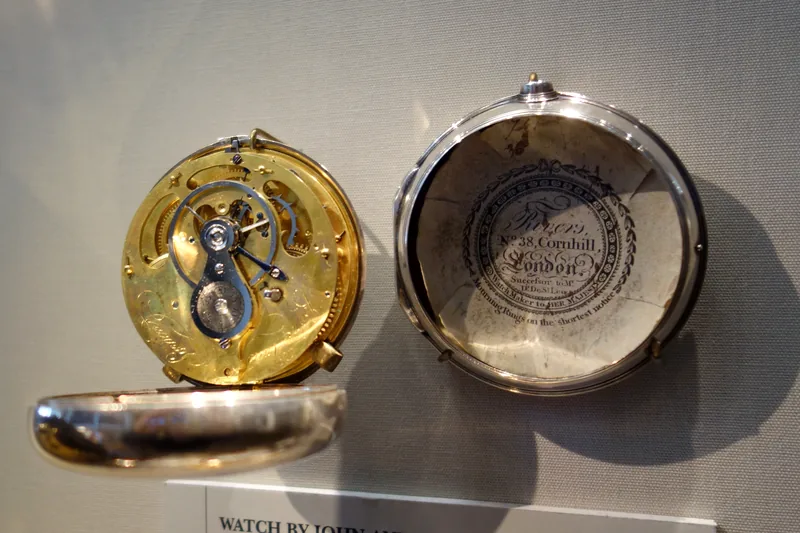
During the onset of World War II (1939–1945), global supply lines shifted dramatically. Swiss neutrality allowed Rolex to continue manufacturing, but metal allocations—particularly high-purity gold and imported stainless steel alloys—were strictly regulated. As a result, timepieces from 1940 to 1945 exhibit fascinating regional variations. Stainless steel, marketed under the proprietary trade name "Staybrite," gained immense popularity due to its corrosion resistance and wartime durability, requiring its own specialized non-precious metal stamping conventions.
Metal Purity and Standards
In the pre-war Precision era, Rolex employed several distinct precious metal alloys and high-grade industrial steels. Swiss federal law mandated specific symbolic stamps for each grade of purity, creating a foolproof visual code for modern authentication:
18 Karat Gold (.750 Purity)
Represented by the official Swiss federal hallmark of the Helvetia head (the national personification of Switzerland). Stamped on 18K yellow, rose, and white gold cases, this hallmark is typically accompanied by the decimal fraction "0.750" inside a cartouche. The profile of Helvetia often features micro-letters near her neck line indicating the specific assay office (e.g., "G" for Geneva).
14 Karat Gold (.585 Purity)
Signified by the Swiss federal stamp of a Squirrel (écureuil). Popular in North American and European markets during the late 1930s, 14K gold cases were widely used for early Oyster Perpetual "Bubbleback" references (such as Ref. 2764 and Ref. 3131). The decimal stamp "0.585" accompanies the squirrel symbol.
9 Karat Gold (.375 Purity)
Primarily fabricated for the British market, 9K gold was not historically recognized under Swiss federal purity laws as solid gold (which required a minimum of 14K). Consequently, 9K Rolex cases were typically crafted in England by case makers such as Dennison (D.S.L.) under license, bearing classic British hallmarks (the Chester, Birmingham, or London town marks alongside the "375" decimal stamp) rather than Swiss federal symbols.
0.925 Sterling Silver
Identified by the Swiss federal hallmark of a Duck (canard) or, for older stocks, a Bear. Silver Oyster cases from the 1930s often carry the "0.925" stamp inside the case back, alongside the iconic Wilsdorf & Davis (W&D) or Rolex S.A. signatures.
Stainless Steel ("Staybrite" and "Acier Inoxydable")
Rolex was an early pioneer in adopting Firth-Vickers "Staybrite" austenitic chromium-nickel steel. Non-precious steel cases do not carry federal assay hallmarks. Instead, the interior of the case back is stamped with terms such as "SAR" (Société Anonyme Rolex), "GENEVE SUISSE", "ACIER INOX", or "STAYBRITE".
How to Identify on Vintage Watch Cases
Identifying hallmarks and dating serial numbers on a 1935–1945 Rolex requires systematic inspection under a high-power loupe (10x to 20x magnification) or a stereo microscope. The external and internal surfaces of the case back serve as the primary canvas for these historical indicators.
When conducting a technical inspection of a prospective timepiece from our vintage Rolex wristwatch collection or archival reference pieces, examine the physical placement and topography of the markings. On pre-war Oyster cases, the serial number is hand-stamped on the outer perimeter of the screw-down case back. The numeric font features sharp, serifed digits with pronounced variations in strike depth—a hallmark of manual stamping presses used during this era.
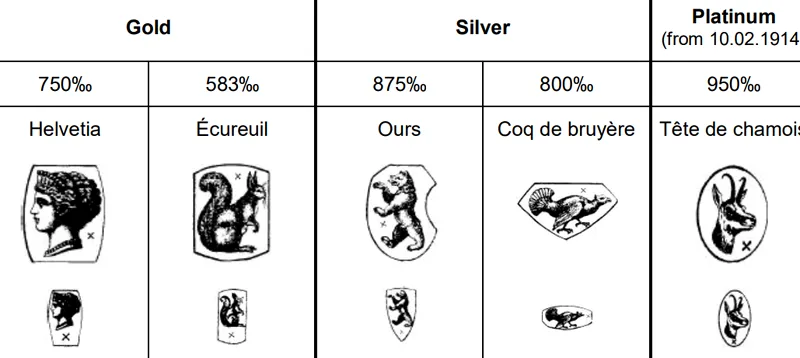
Inside the case back, you will find the reference number (a 3-digit or 4-digit number such as 2508, 3333, 3525, or 3131) positioned above or below the central Rolex trade mark stamp. Surrounding this central cartouche are the small federal assay marks and the Poinçon de Maître. The responsibility mark is usually enclosed within a stylized hammer head (without handle) or a key outline. For instance, Hammer No. 115 identifies cases manufactured by C.R. Spillmann SA, a key supplier of chronograph cases like the iconic Ref. 3525 "Monoblocco."
Technical Specifications & Archival Dating Table (1935–1945)
| Feature / Specification | Historical Archival Standard | Collector Verification Note |
|---|---|---|
| Estimated Serial Range | ~30,000 (1935) to ~350,000 (1945) | Serials are sequential; expect ~20,000 to ~30,000 units produced per year across all lines. |
| Serial Number Location | Exterior surface of case back (center or outer curve) | Must show natural wear consistent with wrist contact; crisp, laser-flat numbers indicate modern recutting. |
| 18K Gold Assay Mark | Helvetia Head stamp + "0.750" cartouche | Look for the microscopic letter beneath the Helvetia chin indicating the specific Swiss assay city. |
| 14K Gold Assay Mark | Squirrel stamp + "0.585" cartouche | Common on early Bubblebacks; check for clear perimeter outlines on the squirrel motif. |
| Case Maker Responsibility Mark | Poinçon de Maître (e.g., Hammer Head or Key with numeric code) | Confirms original case maker provenance (e.g., Key 1 for Genex; Hammer 115 for Spillmann). |
| Steel Alloy Composition | Firth-Vickers Staybrite Austenitic Steel | Stamped "ACIER INOX" or "STAYBRITE"; exhibits a warm, non-magnetic, highly corrosion-resistant luster. |
| Movement Calibers | Aegler Caliber 620/630 (Bubbleback), Caliber 700/710 (Precision 10.5''') | Movements should feature "Super Balance" or "Timed 6 Positions" engravings on the balance bridge. |
Dating and Authentication Value
Accurate dating between 1935 and 1945 is crucial for establishing historical authenticity and monetary value. Because Rolex did not publish official production logs during this turbulent period, horological scholars rely on matrix cross-referencing: matching the exterior case serial number with internal movement calibers, dial signatures, and assay office date codes.
For example, a Rolex chronograph bearing serial number 180,000 dates precisely to circa 1942. At this point in time, the movement housed within should be a 13-ligne Valjoux-based caliber (such as the Caliber 23 or Caliber 72 variant used in Ref. 3525), signed "ROLEX GENEVE" on the bridge with matching period counter-sunk screws. If that same serial number were paired with a much later 1950s Caliber 740 or an unsigned ebauche, the collector immediately recognizes a "married" or non-original assembly.
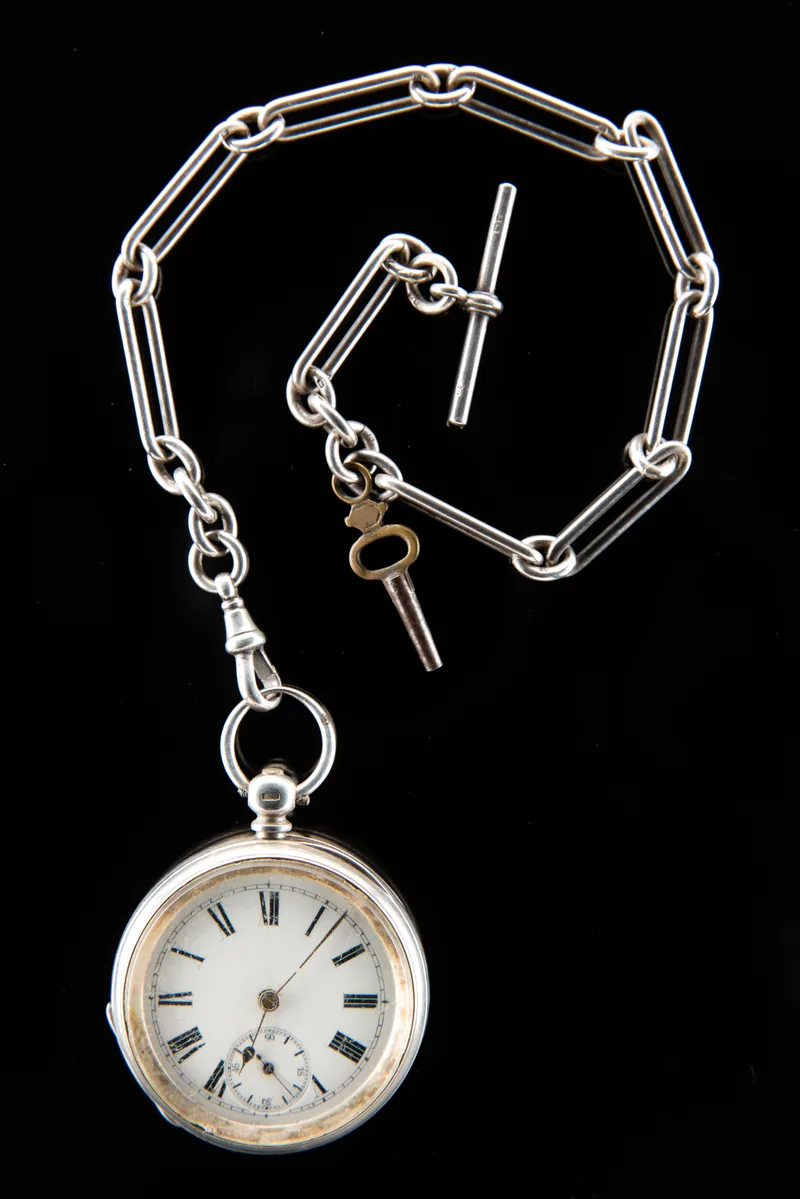
Cross-authenticating through UK import marks provides absolute pinpoint dating accuracy. The Glasgow Assay Office applied specific date letters alongside its double-tree import mark: letter "m" for 1935, "n" for 1936, running sequentially through to "w" for 1945. When an English-market gold Oyster case displays the Glasgow "u" stamp, it offers incontrovertible physical proof that the case was assayed in 1943, serving as a benchmark to verify the surrounding serial number sequence.
During the process of examining historical pieces or restored vintage timepieces and conversions, horologists must also watch for wartime movement modifications. Between 1939 and 1945, Hans Wilsdorf famously offered Rolex timepieces to captured British military officers held in German POW camps—most notably RAF officers involved in the "Great Escape" from Stalag Luft III—on a deferred-payment honor system. These historical Reference 3525 and Reference 3372 watches feature specific serial ranges (~180,000 to ~240,000) and distinct military-spec dial configurations that command immense historic premiums today.
Collector Significance
The pre-war Precision era represents the foundation of Rolex's modern identity. Collecting watches from the 1935–1945 timeframe offers an unparalleled tangibility: these instruments were produced during an era of tremendous global turmoil, serving as functional military equipment, navigational timing devices, and pioneering engineering triumphs.
Understanding hallmark geography protects collectors against the widespread pitfalls of the vintage market, such as converted pocket watch movements, recased movements, fake serial engravings, or heavily polished cases where precious hallmarks have been obliterated. A crisp, deep Helvetia stamp or an intact Spillmann hammer mark dramatically increases the intrinsic and commercial value of a pre-war reference.
Ultimately, master knowledge of vintage rolex dating 1935-1945 allows the archivist to read a watch case like a historical manuscript. Every micro-punch, every federal purity mark, and every serial digit tells the authentic story of a manufacture refining its craft to dominate the world of fine mechanical horology.
Frequently Asked Questions
Where is the serial number located on a 1935-1945 vintage Rolex?
On Rolex watches produced between 1935 and 1945, the serial number is stamped directly on the exterior center or outer curvature of the case back. Serial numbers did not move to the lug area between the 6 o'clock position until the early-to-mid 1950s.
What does the Helvetia stamp inside a pre-war Rolex case mean?
The Helvetia head is the official Swiss federal hallmark used to certify 18 karat gold (0.750 purity). Its presence inside a Rolex case back guarantees that the metal was inspected and officially certified for purity by an authorized Swiss federal assay office.
How can I differentiate a 1930s Rolex Staybrite steel case from modern stainless steel?
Pre-war Staybrite steel cases feature interior stamps such as "STAYBRITE" or "ACIER INOX" alongside a warm, slightly darker grey patina typical of early austenitic chromium-nickel alloys. Modern stainless steel cases use 904L or 316L alloys, feature sharp laser-etched markings between the lugs, and lack historical hand-punched cartouche signatures.