In the decade following the conclusion of World War II, Montres Rolex S.A. entered what horological scholars recognize as its golden age of mechanical refinement and case architecture evolution. Between 1945 and 1955, the Geneva manufacturer perfected its self-winding Oyster Perpetual series—affectionately dubbed "Bubblebacks" by modern collectors due to their deep, convex casebacks designed to clear the thick, early auto-rotor mechanisms. Conducting precise vintage rolex dating 1945-1955 requires a forensic examination of precious metal hallmarks, case maker symbols, serial number sequences, and internal quarterly caseback stampings. This archival guide analyzes the material standards, assay signatures, and structural indicators that define post-war Bubblebacks and their transition into the "Big Bubbleback" (Ovettone) era.
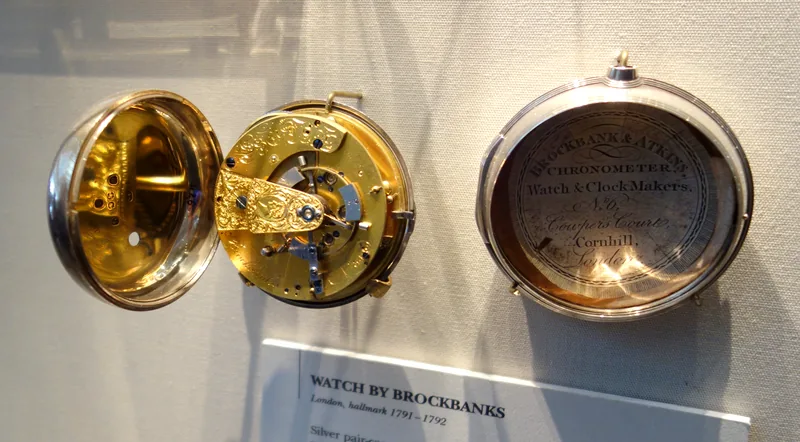
What is the Hallmark?
In the context of vintage Rolex horology, a hallmark is an official, state-sanctioned mark struck into a precious metal watch case by an independent assay office. Unlike internal manufacturer branding, serial numbers, or reference designations, a true hallmark serves as a legal guarantee of metal purity, legal origin, and regulatory compliance under Swiss federal law or destination country import regulations.
State Control Stamps vs. Factory Marks
For mid-century Rolex timepieces, collectors must distinguish between three distinct classifications of case markings:
- Official State Assay Hallmarks: Symbols struck by Swiss regional assay offices (such as the Helvetia head for 18K gold or the Squirrel for 14K gold) or foreign import customs (such as British hallmark duties stamped at London or Birmingham).
- Poinçon de Maître (Responsibility Marks): Symbolic collective trademarks (e.g., a hammerhead or key symbol enclosing a specific number) that identify the independent master casemaker contracted by Rolex, such as C.R. Spillmann SA or Genex.
- Rolex Internal Factory Stamps: The manufacturer's signatures, including the five-pointed coronet, Geneva Key hallmarks, model reference numbers, chronological serial numbers, and internal quarterly production date codes.
When examining pieces within a curated vintage Rolex wristwatch collection, identifying these microscopic impressions provides absolute proof of structural authenticity and guards against re-cased movements or modern aftermarket fabrications.
Historical Origins and Assay Office
The legal framework governing Swiss watch case hallmarking during the post-war era was codified under the Swiss Precious Metals Control Act (Loi Fédérale du 20 Juin 1933 sur le Contrôle du Commerce des Matières Précieuses). Following WWII, as global trade resumed, Rolex expanded its distribution across Europe, the Americas, and the British Commonwealth, subjecting its gold and platinum cases to stringent national testing.
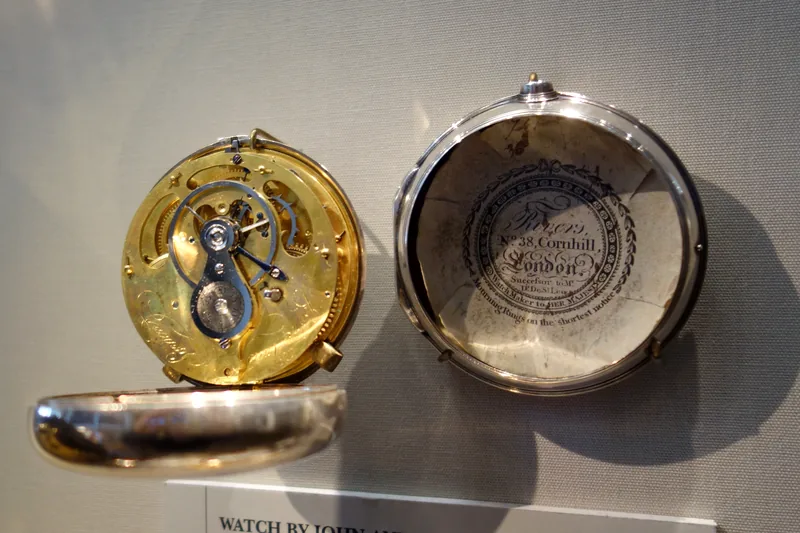
Regional Swiss Bureau Control Offices
Swiss state hallmarks struck on post-war Rolex cases feature minute city identifier letters embedded within the animal symbol. These letters indicate the specific regional Swiss Bureau de Contrôle where the raw gold case was assayed prior to final assembly in Geneva:
- 'G' (Geneva): Found on high-end 18K gold Oyster cases and integrated bracelets, assayed at the central Geneva office.
- 'C' (La Chaux-de-Fonds): Frequently observed on cases crafted by specialized external case manufacturers operating within the Neuchâtel mountains.
- 'B' (Bienne): Common on cases produced in proximity to the Aegler movement production facilities.
- 'L' (Le Locle): Associated with specialized precious metal casing facilities serving mid-century luxury manufacturers.
Export Regulations and Overseas Import Marks
This rigorous Swiss control system evolved directly from early 20th-century export requirements, similar to those found on original WW1 trench watches fitted with London, Glasgow, or Edinburgh import marks. During the 1945–1955 period, Rolex cases destined for Great Britain were required to undergo British hallmarking at offices like Goldsmiths' Hall in London, adding town marks (e.g., Leopard's Head for London) and date letter codes that run parallel to Swiss state stamps. Cases exported to the United States frequently bypassed raw Swiss gold duties through local casing arrangements or bore the US import code "ROW" stamped directly on the movement balance bridge.
Metal Purity and Standards
During the post-war Bubbleback era, Rolex employed several precious and semi-precious metal configurations, each designated by precise state hallmarking standards:
18K Gold (0.750 Fine Gold)
The standard of excellence for post-war dress Oyster Perpetuals (such as Ref. 3131, 6084, and the early Datejust Ref. 4467). Under Swiss law, 18-karat gold cases (containing 750 parts pure gold per 1000) were stamped with the official head of Helvetia. High-magnification analysis reveals the regional office letter stamped beneath Helvetia's chin.
14K Gold (0.585 Fine Gold)
Targeted primarily at the North American market to comply with domestic tariff classifications. Swiss 14-karat gold cases were stamped with the hallmark of a Squirrel (Écureuil). These pieces exhibit a slightly lighter hue than their 18K counterparts and are particularly prominent in semi-bubbleback references produced between 1950 and 1955.
990 Platinum (0.950 Pure Platinum)
Extremely rare within post-war Oyster production. Platinum Bubbleback cases were struck with the hallmark of a Goat's Head (Chèvre). Given their extreme scarcity, these cases undergo severe archival scrutiny during museum cataloging.
Stainless Steel Alloys (Staybrite / Steelinox)
Non-precious steel Bubbleback cases (such as the famous Ref. 2940 and Ref. 6085) do not receive state assay hallmarks. Instead, Rolex stamped the interior caseback with legal alloy declarations: "STAINLESS STEEL", "STEELINOX", or early metallurgical trade designations such as "STAYBRITE". These stamps were accompanied by the Rolex crest and reference numbers.
How to Identify on Vintage Watch Cases
Deciphering hallmarks on post-war Rolex cases requires a 10x or 20x loupe and raking direct light. Over decades of wear and sympathetic polishing, these micro-stamps can become shallow or partially obliterated. Master archivists look in specific physical locations across the Oyster architecture.
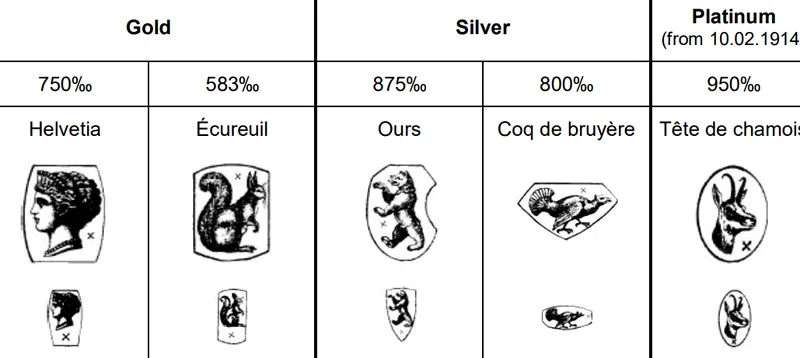
Primary Marking Locations
- Underside of the Lugs: Swiss state hallmarks (Helvetia or Squirrel) were routinely struck on the reverse side of the upper-left or lower-right lugs. On unpolished cases, these marks remain crisp and deeply impressed.
- Outer Case Mid-Section (Between Lugs): Positioned at 12 o'clock (reference number) and 6 o'clock (serial number). During the 1945–1955 transition, these numbers moved from the exterior caseback to between the lugs.
- Internal Caseback Wall: The inside of the screw-down back contains the primary concentration of archival markings: the Rolex crown, corporate name variations (*Montres Rolex S.A.* or *Rolex Auto-Rotor*), metal purity stamp, case reference number, and quarterly date code.
- Poinçon de Maître (Hammerhead / Key): Located inside the caseback or under a lug, this small outline of a hammer or key encloses a number identifying the case maker (e.g., Hammerhead No. 115 for C.R. Spillmann SA).
Archival Specifications and Marking Matrix
| Feature / Specification | Historical Archival Standard | Collector Verification Note |
|---|---|---|
| 18K Gold State Stamp | Helvetia Head (Swiss Bureau) | Inspect chin area for city letter ('G' for Geneva, 'C' for La Chaux-de-Fonds). |
| 14K Gold State Stamp | Squirrel Symbol (Écureuil) | Dominant on North American export Bubblebacks and semi-bubblebacks (1945–1955). |
| Case Date Code Format | Roman Numeral + 2-digit Year (e.g., "IV.52") | Stamped inside caseback; indicates 4th Quarter of 1952. Introduced c. 1946. |
| Poinçon de Maître | Hammerhead or Key with Number | Verifies third-party casemaker contracted by Rolex (e.g., Key No. 1 = Genex). |
| Serial Number Placement | Outer Caseback (1945–1950) / Between Lugs at 6 o'clock (1950–1955) | Relocated to between the 6 o'clock lugs around serial range ~650,000. |
| Reference Number Placement | Outer Caseback (1945–1950) / Between Lugs at 12 o'clock (1950–1955) | Relocated to between 12 o'clock lugs alongside "REGISTERED DESIGN" text. |
Dating and Authentication Value
Dating a vintage Rolex produced between 1945 and 1955 requires cross-referencing three independent data points: the case serial number sequence, the quarterly caseback stamp, and movement caliber evolutions. Relying on serial numbers alone can lead to errors due to historical sequence anomalies.
Serial Number Chronology (1945–1955)
In the immediate post-war period, Rolex serial numbers progressed logically from approximately 350,000 in 1945 to nearly 950,000 by late 1953. However, in 1954, upon reaching approximately 999,999, Rolex reset its serial numbering system back to 5-digit and early 6-digit numbers (~100,000 range). Accurate vintage rolex dating 1945-1955 relies on matching these numbers against known historical ranges:
- 1945: ~340,000 – ~380,000
- 1947: ~500,000 – ~550,000
- 1950: ~650,000 – ~700,000 (Transition period: numbers move to between the lugs)
- 1952: ~800,000 – ~870,000
- 1953: ~900,000 – ~950,000
- 1954: Serial sequence resets (~100,000 to ~130,000)
- 1955: ~130,000 – ~180,000 (Introduction of Caliber 1030 and modern case profiles)
Quarterly Caseback Stamps
Beginning around 1946, Rolex introduced an internal date coding system stamped directly onto the interior floor of the Oyster caseback. This stamp consists of a Roman numeral (I, II, III, or IV) representing the quarter of manufacture, followed by two digits representing the year. For example, "I.48" indicates production in the 1st quarter of 1948, while "III.53" signifies the 3rd quarter of 1953. This feature provides an absolute anchor date for case manufacturing, against which dial typography and movement execution must be cross-examined.
Movement Caliber Progression
The post-war decade witnessed the transition from early "Hunter" self-winding movements to modern, high-efficiency calibers:
- Caliber 620 / 630 (NA series): The quintessential early Bubbleback engine, featuring a thick, rounded auto-rotor that dictated the bulbous caseback design.
- Caliber A.260 / A.295 / A.296: Introduced late 1940s and early 1950s. The A.295 and A.296 powered larger Oyster Perpetuals and early Datejusts (Ref. 5030, 6075, 6305), leading to the flatter "Semi-Bubbleback" profile.
- Super-Oyster Crown (1951–1953): A short-lived non-screw-down crown experiment marked "SUPER-OYSTER" or "ROLEX SUPER-OYSTER" on the crown face. Its presence specifically dates case production to this narrow three-year window.
Collector Significance
The post-war era represents a major turning point in Rolex's modern brand identity. It was during this decade that the company transitioned from small-diameter, heavy-domed Bubblebacks (typically 32mm to 34mm) to larger "Big Bubbleback" Ovettoni references (36mm) and early tool-watch prototypes like the Ref. 62