To the discerning horological scholar and archivist, the decade spanning 1955 through 1965 represents the undisputed "Golden Age" of Rolex tool watch development. During this fertile eleven-year epoch, Geneva’s most famed manufacture transitioned from utilitarian instrument makers to architects of modern wristwear icons. It was within this exact window that legendary references—including the Submariner (refs. 6536, 6538, 5508, 5512, 5513), GMT-Master (refs. 6542, 1675), Explorer (refs. 6610, 1016), and early Pre-Daytona Chronographs (ref. 6238)—crystallized their design language. However, evaluating and validating these historic timepieces requires precise knowledge of case architecture, official markings, and serial taxonomy. Mastering vintage rolex dating 1955-1965 relies on deciphering the physical stamps, assay hallmarks, caseback cartouilles, and dial cues left behind by mid-century Swiss craftsmen.
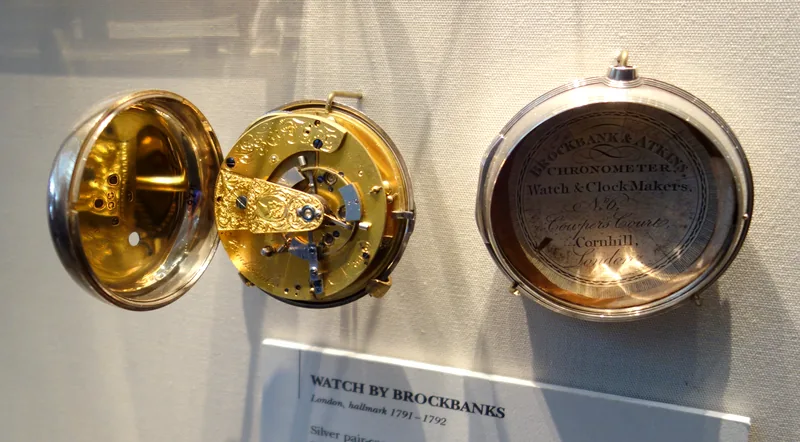
What is the Hallmark?
In classical horology, a true "hallmark" refers strictly to an official stamp applied by an independent assay office to guarantee the purity of precious metals such as gold, silver, or platinum. However, in the context of mid-century Rolex scholarship, collectors and archivists use the term more broadly to encompass the complete suite of physical struck marks that establish a watch's origin, maker, casing fabricator, and date of production. When examining our vintage Rolex wristwatch collection, these marks serve as an immutable forensic record of manufacture.
During the 1955–1965 era, Rolex employed a multi-layered identification system across its Oyster cases. This system comprised four distinct types of physical strikes:
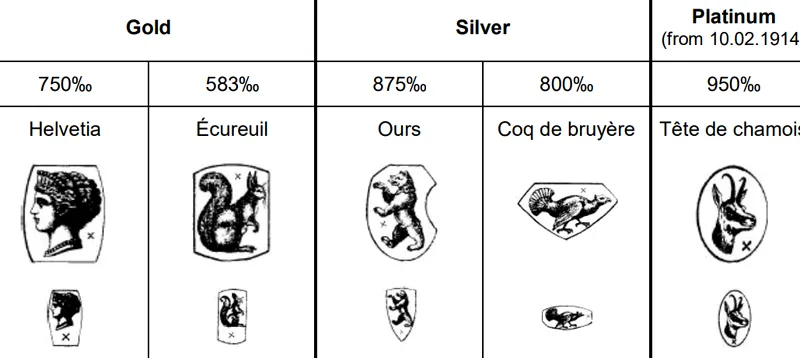
- Federal Assay Marks: Official Swiss government stamps (such as the Helvetia head or Squirrel) verifying gold purity on precious metal sport models.
- Poinçon de Maître (Sponsor's/Maker's Marks): Encased symbols (e.g., a key or hammerhead containing a number) that identify the specialized third-party case fabricator (such as C.R. Spillmann or Genex) contracted by Rolex.
- Serial and Reference Numbers: Alpha-numeric codes deeply engraved between the lugs at the 6 o'clock and 12 o'clock positions.
- Internal Caseback Date Stamps: Struck Roman numerals paired with two-digit year designations (e.g., "IV.58" or "II.62") indicating the financial quarter and year of case production.
Understanding these distinct physical impressions is essential for verifying structural integrity, identifying period-correct components, and preventing exposure to counterfeit or assembled "Franken" timepieces.
Historical Origins and Assay Office
The rigorous standard of Swiss watch hallmarking governing 1955–1965 Rolex production stems directly from the Swiss Federal Act on Precious Metal Control of 1933 (implemented in 1934). This law mandated that all precious metal watch cases produced within Switzerland be tested and stamped by a centralized, state-sanctioned Bureau Control office (*Bureau Officiel de Contrôle des Ouvrages en Métaux Précieux*). This legislative framework evolved from centuries of European goldsmithing traditions, which originally took root in early horology with original WW1 trench watches, where British and Swiss import hallmarks provided the primary method of dating cases prior to standard serial numbering.
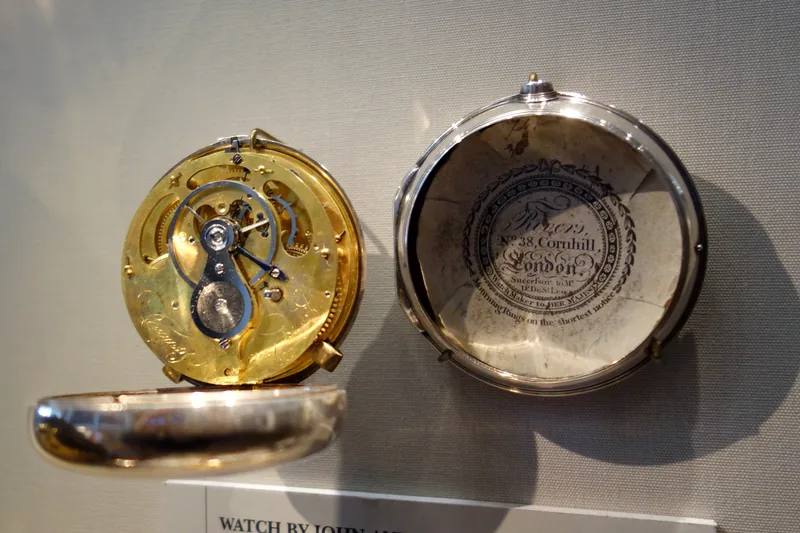
For Rolex sports models crafted in 18K or 14K gold during the Golden Age (such as the early solid-gold GMT-Master ref. 1675 or gold Submariner variants), cases were sent to regional cantonal assay offices. The principal assay offices handling Rolex production included:
- Geneva (Bureau de Genève): Identified by a small city mark integrated into the official hallmark, Geneva assayed the majority of high-end Rolex cases assembled at the Montres Rolex S.A. headquarters in Acacias.
- La Chaux-de-Fonds & Le Locle: Key regional offices servicing specialized sub-contracted case makers located throughout the Neuchâtel mountains.
- Bienne: Heavily utilized for movement and case coordination due to Rolex's primary movement manufacturing facility (*Manufacture des Montres Rolex S.A.*, historically Aegler) being located in Bienne.
Each assay office held unique responsibility marks and town symbols, allowing modern archivists to trace not only when a watch case was hallmarked, but precisely which regional Swiss laboratory tested the metal prior to final assembly.
Metal Purity and Standards
The 1955–1965 period predates Rolex's adoption of 904L superalloy stainless steel (which occurred in 1985). During this golden decade, Rolex sport models were constructed predominantly from surgical-grade **316L stainless steel**, internally stamped by case fabricators as *Acier Inoxydable*. For precious metal variants, Rolex adhered strictly to legal Swiss metal purity standards, marked by specific symbolic strikes:
- 18-Karat Gold (750 Fine Gold): Stamped with the official Swiss national hallmark of the **Helvetia Head** (the official national personification of Switzerland). Found on solid gold sport models, this mark confirmed a minimum purity of 750 parts per thousand gold.
- 14-Karat Gold (585 Fine Gold): Stamped with the image of a **Squirrel**. 14K gold variants were produced primarily for the North American market to bypass prohibitive import tariffs placed on 18K goods during the post-war era.
- Platinum (950 Purity): Marked with the head of a **Goat** (*Chèvre*), reserved for ultra-rare custom executions and high-complication dress references.
- Sterling Silver (925 Purity): Stamped with a **Duck**, rarely utilized for sports models but seen in specialized pocket instruments and early desk timers.
Inside the caseback of every authentic Golden Age Oyster case, these precious metal hallmarks were accompanied by standard manufacturer cartouilles containing the text: "MONTRES ROLEX S.A. / GENEVA SWITZERLAND / PATENTED" alongside the specific steel or gold metal designation.
How to Identify on Vintage Watch Cases
Accurate identification and vintage rolex dating 1955-1965 requires a systematic physical examination of the watch case using a 10x horological loupe and specialized case-opening equipment. When inspecting a Rolex sport case from this era, five primary focal points must be analyzed:
1. Serial Number Location (6 O'Clock Lugs)
Remove the bracelet to inspect the vertical surface between the lugs at 6 o'clock. Between 1955 and 1965, serial numbers were deeply hand-engraved or machine-struck with distinct, serifed typography. Serial numbers during this decade span approximately 100,000 (mid-1955) to 1,200,000 (late 1965).
2. Reference Number Location (12 O'Clock Lugs)
Directly opposite, between the lugs at 12 o'clock, sits the model reference number (e.g., "6538", "5512", or "1675"). Above or below this reference number, Rolex stamped the phrase "REGISTERED DESIGN" or "ORIG ROLEX DESIGN".
3. Caseback Date Cartouille (Internal)
Unscrewing the Oyster caseback reveals the most precise dating tool of the Golden Age: the internal quarter-date stamp. Rolex stamped the inside base of the caseback with a Roman numeral (I, II, III, or IV) representing the quarter of manufacture, followed by a two-digit year. For example, "III.61" indicates production during the third quarter (July–September) of 1961.
4. Lug Hallmarks on Precious Metals
On gold sport models (such as ref. 1675 in 18K), assay hallmarks were struck directly into the outer or underside surfaces of the lugs. Due to decades of wear and polishing, these stamps may appear softened; however, clean examples will show crisp silhouettes of the Helvetia or Squirrel head alongside the "750" or "585" purity stamp.
5. Case Fabricator Marks (Poinçon de Maître)
Inside the caseback or on the inner wall, look for a small outline of a key or hammerhead. A **Key mark** (representing Geneva-based case makers like Genex, Key #1) or a **Hammerhead** (such as Hammerhead #136 representing C.R. Spillmann) reveals the specialized workshop that built the raw case blank for Rolex.
Archival Specifications & Verification Table
To assist collectors in verifying physical characteristics against archival standards, the following table details the core technical metrics for Rolex sport cases produced between 1955 and 1965:
| Feature / Specification | Historical Archival Standard (1955–1965) | Collector Verification Note |
|---|---|---|
| Serial Number Range | ~100,000 (1955) to ~1,250,000 (1965) | Serial reset occurred in 1954/1955 after reaching 999,999. Do not confuse 1955 100k serials with mid-1930s 100k serials. |
| Caseback Date Stamp Syntax | Roman Numeral (I–IV) + Two-digit Year (e.g., "II.58", "IV.63") | Stamped centrally inside caseback. Stamping ceased entirely around 1972/1973. |
| Luminous Material Science | Radium (1955–1960/61) → Low-Rad / Tritium (1962–1965) | Look for "Exclamation Point" (1961–1962) or "Underline" (1963–1964) dials marking radiation safety compliance transitions. |
| Precious Metal Assay Stamp | Helvetia Head (18K / 0.750) or Squirrel (14K / 0.585) | Struck on reverse side of lugs and inside caseback. Must match case alloy identically. |
| Steel Composition | Austenitic 316L Stainless Steel (*Acier Inoxydable*) | Non-magnetic, highly resistant to vintage corrosion, distinct greyish hue compared to modern 904L steel. |
| Crown & Tube Threading | Twinlock system (6mm) / Brevet Big Crown (8mm ref. 6538) | Early crowns featured a cross (+ symbol) or "BREVET" mark below the coronet prior to the standard triple-dot Triplock introduction. |
Dating and Authentication Value
The primary challenge in vintage rolex dating 1955-1965 stems from the historic **1954/1955 Serial Number Reset**. Near the end of 1954, as Rolex approached serial number 1,000,000, management elected to reset the serial system back to 100,000 rather than moving to a 7-digit sequence. Consequently, a Rolex bearing a 100,000 serial number could theoretically have been manufactured in 1939 or in mid-1955.
To distinguish between these eras, archivists utilize holistic cross-referencing:
- Case Geometry: Pre-war 1930s cases feature small proportions, fixed lug bars, or early bubbleback contours. 1955 sports models feature robust 37mm–40mm Oyster cases with thick lugs and removable spring bars.
- Internal Movements: Golden Age sport models housed automatic movements from the **1030 caliber family** (introduced 1950, dominant in the mid-50s) or the **1530 / 1560 / 1570 caliber series** (introduced 1957–1959), featuring butterfly rotors and free-sprung Microstella balance wheels.
- Dial Evolution & Radiation Standards: Dials from 1955 to 1965 present a distinct progression. Early 1950s dials featured high-radiation Radium luminous paint with deep glossy gilt-galvanic printing. Following AEC (Atomic Energy Commission) regulations in 1960–1961, Rolex added a small luminous dot below the 6 o'clock marker—known as the **"Exclamation Point"**—to signal lower radiation levels. By 1963–1964, Rolex introduced a small silver or gold line—the **"Underline"**—signifying the transition to safe, low-radiation **Tritium** paint (marked as *SWISS - T < 25* or *T SWISS T* at the dial base).
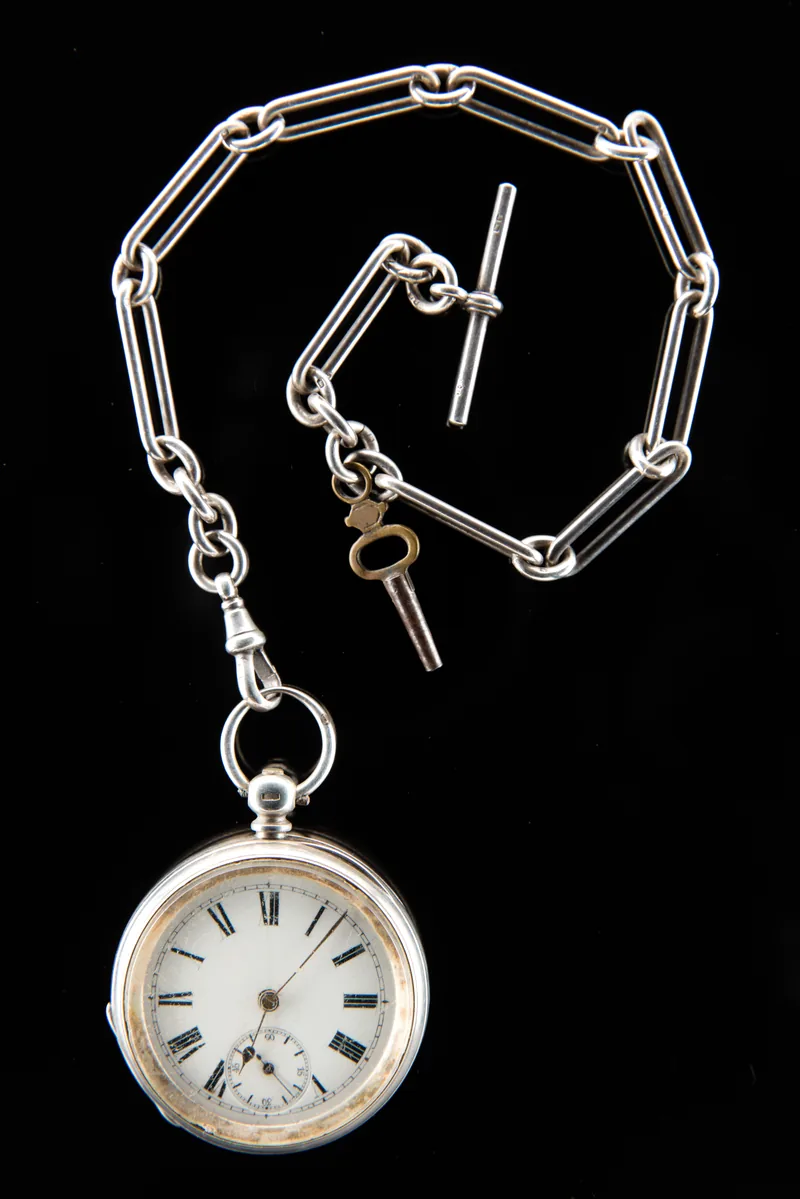
When assessing overall horological integrity, cross-referencing case hallmarks with dial execution and movement numbers is paramount. Serious archivists frequently consult our catalog of restored vintage timepieces and conversions to study period-correct hand profiles, dial patinas, and correct caseback stampings.
Collector Significance
Why do collectors assign such immense commercial and historical value to 1955–1965 Rolex sport timepieces? This decade represents the absolute pinnacle of functional design purity. Before wristwatches became luxury status symbols, Rolex sport models were true life-preservation tools used by professional divers (COMEX, Royal Navy), commercial pilots (Pan Am), polar explorers, and motor racing pioneers.
The presence of crisp, unpolished hallmarks and clear serial/date stamps exponentially impacts value. An unpolished GMT-Master ref. 1675 or Submariner ref. 5512 with razor-sharp lug bevels (chamfers), intact lug hallmarks, and a fully legible "IV.60" caseback stamp can command multiples over an example whose hallmarks have been erased by aggressive polishing wheels.
Furthermore, this decade contains some of the rarest micro-variations in horological history, including "Pointed Crown Guard" (PCG or *Cornino*) cases, tropical dial color shifts, single-line red depth ratings, and Bakelite bezel inserts. Deciphering these hallmarks provides collectors with absolute proof of historical authenticity, ensuring the watch left the Geneva manufacture in the exact configuration presented.
Frequently Asked Questions
How do I date a Rolex watch manufactured between 1955 and 1965?
To accurately date a 1955–1965 Rolex, remove the bracelet to read the 6-digit serial number between the 6 o'clock lugs (ranging from ~100,000 in 1955 to ~1,200,000 in 1965). Unscrew the caseback to verify the internal Roman numeral date code (e.g., "II.61" for second quarter of 1961), and confirm that movement caliber and dial lume markings (Radium vs. Tritium) align with that exact timeframe.
Why did Rolex reset its serial number sequence in 1955?
Rolex reset its serial number system back to 100,000 in late 1954/1955 after reaching sequence number 999,999 to avoid moving to a 7-digit serial system. This created duplicate serial ranges between pre-1954 watches and 1955–1965 production, which archivists differentiate by examining modern case size, reference numbers between the 12 o'clock lugs, and movement caliber families like the 1030 or 1530 series.
What is the significance of the "underline" and "exclamation point" on 1955–1965 Rolex dials?
The "exclamation point" (a small dot below the 6 o'clock plot, used 1961–1962) and the "underline" (a small horizontal stroke, used 1963–1964) were transitional factory markings indicating reduced radiation levels. They signaled to regulators and watchmakers that Rolex had transitioned away from highly radioactive Radium luminous paint in favor of safer, low-radiation Tritium formulations.