In the early decades of the twentieth century, the brand identity of the Rolex Watch Company was not expressed through the ubiquitous crown logo or bold dial typography familiar to contemporary collectors. During the formative era spanning 1910 through 1930, Hans Wilsdorf relied on a network of elite Swiss ébauche manufacturers to power his burgeoning wristwatch empire. Chief among these suppliers was Jean Aegler S.A., operating out of the famous Rebberg district of Bienne (Biel), Switzerland. Because retail jewelers of the era aggressively protected their own house brands, Wilsdorf frequently delivered wristwatches with entirely unbranded movement plates. Today, understanding the architectural hallmarks of an early rolex unsigned movement aegler rebberg caliber is vital for horological archivists, restorers, and serious vintage collectors seeking to authenticate the earliest foundations of the Rolex enterprise.
What is the Hallmark?
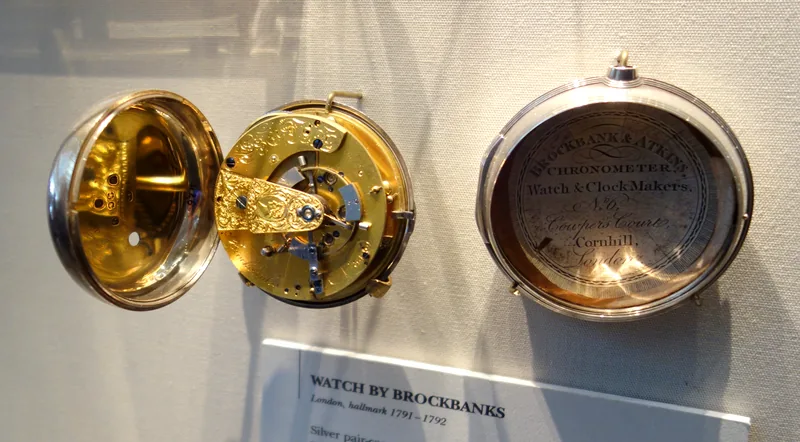
In classical horology and archival terminology, a "hallmark" refers specifically to official, legally mandated stamps applied to precious metal cases by governmental assay offices. However, when vintage collectors discuss the hallmark of an early rolex unsigned movement aegler rebberg assembly, they are referencing both the physical assay cartouches struck inside the caseback and the unmistakable architectural "signature" left by Jean Aegler’s watchmakers on the movement itself.
Between 1910 and the late 1920s, Rolex did not consistently engrave its corporate name on the upper train bridges or winding wheels of its movements. Retailers across the British Empire and North America resisted selling wristwatches bearing a manufacturer’s brand, preferring instead to present the timepiece as their own bespoke creation. Consequently, while the silver, gold, or platinum case bore the official British import hallmarks or Swiss Bureau de Contrôle stamps alongside the "W&D" (Wilsdorf & Davis) sponsor mark, the mechanical caliber inside remained visually anonymous to the casual observer.
For the master horologist, the true "hallmark" of an unsigned Aegler Rebberg caliber lies in its distinct mechanical topography: the precise contouring of its bridge layout, the cut of its click springs, the geometry of its winding wheels, and the execution of its lever escapement. Recognizing these physical traits allows archivists to confirm that an unbranded 11-ligne or 13-ligne movement is indeed an authentic piece of early Rolex production rather than a generic Swiss replacement.
Historical Origins and Assay Office
The strategic alliance between Hans Wilsdorf and Jean Aegler began in earnest shortly after Wilsdorf & Davis was established in London in 1905. Aegler’s manufacture, situated in the Rebberg quarter of Bienne, specialized in small, highly precise lever-escapement wristlet ébauches. Wilsdorf recognized that the future of the wristwatch depended on chronometric precision, and Aegler was one of the few makers capable of producing compact movements that could achieve observatory-grade timekeeping.
This partnership yielded immediate historical success. In 1910, a small Aegler-powered Rolex wristwatch received the world’s first Official Swiss Chronometer Certificate for a wrist-worn timepiece from the Official Watch Rating Centre at Bienne. Four years later, in 1914, Kew Observatory in England awarded a 11-ligne Aegler Rebberg movement a Class "A" Precision Certificate—an accolade previously reserved exclusively for marine chronometers and large pocket watches.
Because Wilsdorf & Davis was headquartered in London during this period, raw uncased movements and complete watches were imported directly into the United Kingdom. Under the British Hallmarking Act of 1907, all imported gold and silver watch cases were legally required to be tested and stamped at a British assay office before commercial sale. Imported cases were submitted to offices in London, Glasgow, Birmingham, or Edinburgh. These pieces were often housed in dust- and moisture-resistant cases such as those found on original WW1 trench watches, which protected the sensitive Aegler mechanics on the battlefields of Europe.
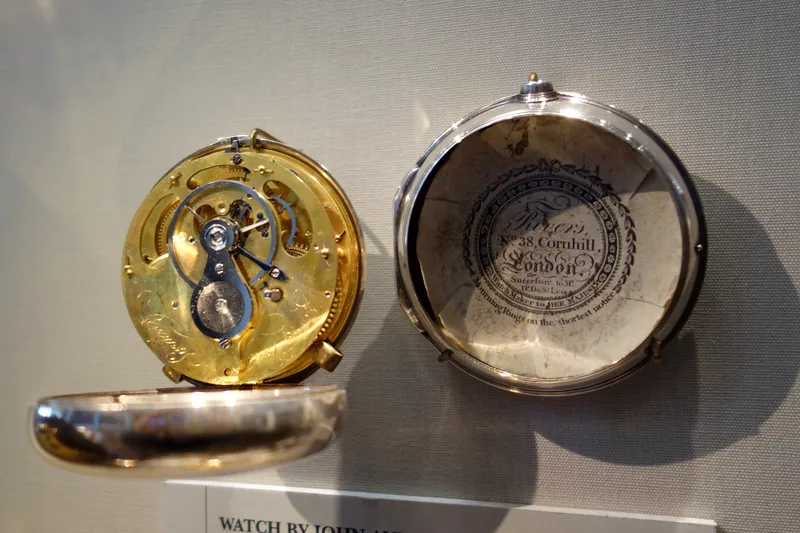
Assay offices stamped specific symbols to indicate both the import status and the branch office that performed the testing. For instance, the London Assay Office used the sign of Sol (a sunburst symbol) for imported items, while Glasgow utilized a double-prone chevron or a stylized tree, fish, and ring emblem. Accompanying these symbols was a specific date letter, giving modern historians an exact year for when the case was tested—offering an invaluable terminus post quem for the unsigned Aegler Rebberg caliber housed within.
Metal Purity and Standards
The cases protecting early Aegler Rebberg calibers were crafted to rigorous metallurgical standards dictated by British and Swiss law. Because wristwatches were transitioning from delicate novelties to durable daily instruments, the choice of metal purity reflected both luxury positioning and structural utility.
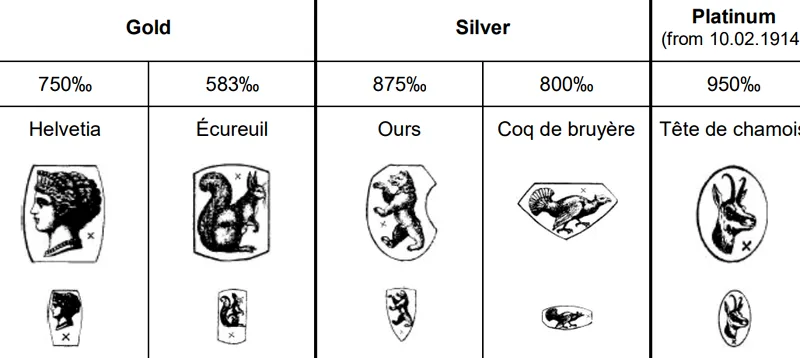
Gold cases of this era were primarily produced in 9-karat (.375), 15-karat (.625), and 18-karat (.750) alloys. The 15-karat standard was particularly popular in the British market until it was officially phased out in 1932 in favor of 14-karat (.585) gold, making 15k hallmarks an immediate indicator of a pre-1930 manufacture date. Silver cases were virtually always manufactured from Sterling Silver (.925 purity) or, occasionally, Continental standard silver (.800 purity). Base metal cases were often fabricated from nickel or branded alloys like "Snowite" and "Dennison Nickel," designed for rugged military application.
To better understand how case hallmarks, metal purities, and movement grades align within early Rolex production, consult the archival reference table below:
| Feature / Specification | Historical Archival Standard | Collector Verification Note |
|---|---|---|
| Movement Architecture | Aegler Rebberg 6-bridge or 3/4 plate finger-bridge layout (9¾''', 11''', 13''') | Unsigned mainplates; distinctive finger-bridge layout over escape, third, and wheel trains. |
| Escapement & Jewel Count | Straight-line Swiss lever escapement; 15, 17, or 18 jewels (Prima/Extra Prima) | High-grade variants feature screwed chatons, cut bimetallic balance, and Breguet hairspring. |
| Sponsor / Maker Marks | "W&D" (Wilsdorf & Davis), "ROLEX", or "R.W.C. Ltd." stamped inside caseback | Absence of movement brand requires caseback sponsor mark alignment to confirm authenticity. |
| Precious Metal Purity | Sterling Silver (.925), Gold (9ct .375, 15ct .625, 18ct .750) | Look for British Assay Office import marks (London sunburst, Glasgow chevrons) with date letter. |
| Keyless Works Mechanism | Rocking bar or setting lever mechanism; pin-set (early) or crown-set (stem-wind) | Early Rebberg calibers transitioned from side pin-set mechanisms (pre-1915) to pull-out crown setting. |
| Case Construction Types | Screw-down Borgel cases (Patent 23948), hinged officer cases, or wire-lug trench cases | Borgel cases feature a front-loading threaded movement ring and integrated bezel. |
How to Identify on Vintage Watch Cases
Authenticating an early rolex unsigned movement aegler rebberg caliber requires careful forensic inspection under a loupe. Because the mainplate lacks a written factory signature, identification relies entirely on mechanical geometry and serial numbering patterns.
1. Bridge Geometry and Layout
The standard Aegler Rebberg caliber features a clean, highly functional bridge configuration. The barrel bridge, center wheel bridge, and separate finger bridges for the third wheel, fourth wheel, and escape wheel create a spacious, elegant balance. The shape of the balance cock is particularly distinct, characterized by a smooth, rounded foot that tapers gracefully toward the jewel setting, securing a polished steel regulator arm (raquette).
2. The Keyless Works and Winding Train
Examining the movement beneath the dial reveals the keyless works—the system of steel wheels and levers responsible for winding and hand-setting. Aegler Rebberg movements feature a uniquely shaped setting lever and spring combination that differs from contemporary ébauches made by A. Schild, Fontainemelon (FHF), or AS. On the exposed side of the movement, the crown wheel and ratchet wheel are secured with mirror-polished, flat-head steel screws. On higher-grade versions, the ratchet wheel may be decorated with sunburst *Côtes de Genève* or snail finishing, even if left unengraved.
3. Caseback Cross-Referencing
Because the movement is unsigned, the internal case markings serve as critical corroborating evidence. Cross-referencing the caliber with a validated vintage Rolex wristwatch collection reveals that an authentic Rebberg movement must sit in a case bearing verified Wilsdorf & Davis or Rolex stamping. Key hallmarks to look for inside the caseback include:
- "W&D": Stamped on virtually all Rolex imports prior to 1915–1920.
- "ROLEX": Introduced progressively onto casebacks starting around 1913–1915, often accompanied by the early trademark logo inside an oval frame.
- Patent Numbers: Swiss Patent 23948 (referencing Francois Borgel's iconic dust-proof screw case) or British patent references for waterproof wire lugs.
- Matching Serial Numbers: Case serial numbers stamped clearly on the outer or inner caseback, following Wilsdorf's early sequential system.
Dating and Authentication Value
Accurately dating an unsigned Aegler Rebberg timepiece demands a dual-analytical approach: analyzing the case assay date letters and evaluating the technical evolution of the movement itself.
The British hallmark system provides an absolute timeline. Every assay office used a specific alphabet cycle, changing the font, casing style, and letter annually. For example, a London import mark featuring a gothic letter "k" corresponds precisely to 1925, while a Glasgow import mark with a cursive "a" pinpoints 1923. By matching this date letter with the mechanical attributes of the movement, horologists can verify whether the unsigned caliber is period-correct to the case.
Mechanically, Aegler Rebberg calibers underwent several key revisions between 1910 and 1930:
- 1910–1915: Dominance of the classic 13-ligne and 11-ligne Rebberg ébauche. Often utilizing pin-set hand setting mechanisms near the 4 o'clock lug. Jewels are friction-set directly into the brass mainplate or nickel bridges. Balance wheels are simple or early cut-bimetallic variants with flat hairsprings.
- 1915–1922: Universal adoption of stem-set keyless works (pull-out crown). Introduction of high-grade "Prima" and "Extra Prima" timewise adjustments. Mainplates are heavily rhodium- or nickel-plated with polished beveling. Jewel counts increase to 15 or 17 rubies, frequently held in screwed gold chatons. Breguet overcoil hairsprings become standard on upper-tier grades.
- 1923–1930: The movement architecture begins transitioning toward the famous Aegler 700 series and the legendary "Hunter" calibers. Winding wheels occasionally start featuring the "ROLEX PRIMA" or "ROLEX 15 RUBIES" laser-flat block engraving, signaling the decline of the completely unsigned era as Hans Wilsdorf gained total brand leverage over global retail markets.
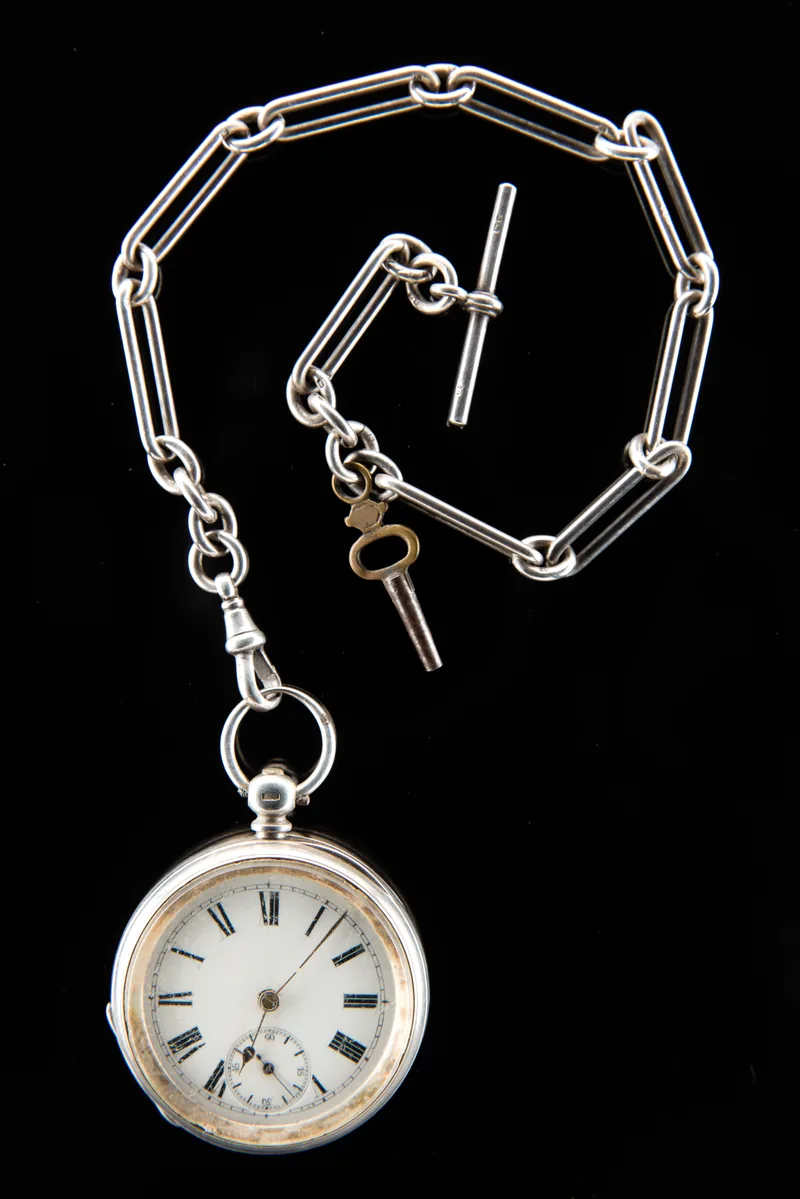
From an appraisal and authentication perspective, an unsigned Aegler Rebberg movement does not diminish the financial or historical value of an early Rolex timepiece, provided the movement architecture, case serial, and hallmarking match perfectly. In fact, among purist archivists, an unmolested, original unsigned movement with pristine factory finishing is often preferred over later movements that were aggressively stamped during subsequent service overhauls.
Collector Significance
The legacy of the Aegler & Rebberg caliber heritage represents one of the most critical chapters in twentieth-century horology. It was precisely this movement architecture that proved to a skeptical public that a compact wristwatch could match—and exceed—the timekeeping accuracy of a pocket watch under harsh daily conditions.
Collectors who explore restored vintage timepieces and conversions quickly realize that the relationship between Rolex and Jean Aegler was not merely a standard buyer-supplier arrangement. Wilsdorf eventually acquired a significant financial stake in Aegler S.A., leading to an exclusive agreement where Aegler produced movements solely for Rolex. This partnership ultimately culminated in the complete integration of Aegler into the Rolex corporate structure, forming the foundation of modern Rolex movement manufacturing in Bienne.
To hold an early rolex unsigned movement aegler rebberg watch is to hold the tangible origin story of modern marine and chronometric watchmaking. These movements bridged the gap between Victorian pocket horology and the modern wrist-worn chronometer. Their survivability—often running smoothly over a century after their initial assembly—stands as an enduring testament to the engineering brilliance of Jean Aegler and the strategic vision of Hans Wilsdorf.
Frequently Asked Questions
Why are many early Rolex movements from 1910 to 1920 completely unsigned?
During the 1910s and 1920s, retail jewelers insisted on putting their own store names on watch dials and cases, refusing to sell pre-branded items. Hans Wilsdorf accommodated these crucial retail partners by supplying Aegler Rebberg movements without any factory engravings on the plates or winding wheels, relying instead on internal caseback hallmarks for internal tracking.
How can I prove an unsigned Aegler Rebberg movement is authentically Rolex?
Authenticity is verified by confirming the distinct bridge geometry, keyless works layout, and escapement specs of an Aegler Rebberg ébauche under a loupe, while cross-referencing the caseback for period-correct Wilsdorf & Davis ("W&D") or early Rolex stamps alongside matching British or Swiss precious metal assay hallmarks.
What role did the British Assay Offices play in dating early Rolex wristwatches?
Under the British Hallmarking Act of 1907, all imported gold and silver watch cases were legally required to be tested and stamped at an official assay office (such as London or Glasgow). These offices stamped a specific, variable date letter into the metal alongside the purity mark, providing modern collectors with an exact date for the casing of the unsigned movement.