In the domain of vintage horology, few elements provide as much definitive context, technical assurance, and historical clarity as the official hallmarks stamped into precious metal watch cases. For collectors, restorers, and horological historians examining late 19th- and early 20th-century timepieces, recognizing these miniature legal guarantees is fundamental. Among the most iconic and frequently encountered Swiss hallmarks on antique silver timepieces is the small profile of a game bird: the grouse, frequently referred to in collector circles as the woodcock (or bécasse in French). Understanding the pocket watch silver hallmark grouse (woodcock) .800 silver mark opens a clear window into the golden age of Swiss watch manufacturing, offering precise data regarding metal purity, legal compliance, regional origin, and manufacturing dates.
What is the Grouse (Woodcock) Hallmark?
The grouse hallmark is an official Swiss control mark (stamp) used to certify that a watch case is constructed from silver with a minimum fineness of .800 (80% pure silver). Officially introduced under Swiss federal law in the late 19th century, the stamp depicts the side-profile silhouette of a capercaillie or grouse—though historically and colloquially misidentified by many English-speaking dealers and collectors as a woodcock. In French official documentation, it is routinely referenced under the term bécasse or coq de bruyère, while in German assay terms it is known as the Auerhahn.
This hallmark was applied exclusively by authorized official assay offices across Switzerland to verify that the alloy met legal standards before the watch case could be offered for sale domestically or prepared for export. The mark features a compact, contoured boundary enclosing the rendered bird, which shows a prominent breast, tail feathers, and a distinct beak. Due to its miniature size—often measuring less than 1.5 millimeters across—the stamp requires a high-power loupe (10x to 15x magnification) to properly discern its fine details from surrounding wear, tarnish, or polishing marks.
 rolex-database-hallmarks-grouse-woodcock-1-3dcaac0a.webp" alt="pocket watch — Clockwork of the Holy Cross Church in Dülmen, North Rhine-Westphalia, GermanyThe" style="max-width:100%; height:auto; display:block; margin:15px auto;">
The presence of the grouse stamp guarantees that the alloy consists of at least 800 parts fine silver per 1,000 parts of total metal, with the remaining 200 parts typically composed of copper. This specific composition provided the ideal balance between structural rigidity, ductility, and tarnish resistance necessary for pocket watch cases, which required durable hinges, snug dust covers, and crisp bezel snapping mechanisms.
Historical Origins and Assay Office
To fully understand the context of the pocket watch silver hallmark grouse (woodcock) .800 silver stamp, one must examine the legal transformation of the Swiss watchmaking industry during the late 19th century. Prior to 1880, precious metal control in Switzerland was highly fragmented, regulated at the cantonal level rather than federally. This created significant inconsistency in purity enforcement, leading to trade disputes with foreign markets like Great Britain, France, and Germany, which maintained strict national assay systems.
To establish international trust and standardize quality across all watchmaking centers, the Swiss Federal Assembly passed the Precious Metals Control Act on December 23, 1880, which officially came into force on January 1, 1882. This legislation created a centralized, uniform system of hallmarks across all Swiss cantons:
- The Bear (Ours): Designated for higher-grade silver (.875 and later .925 sterling fineness).
- The Grouse / Woodcock (Bécasse / Auerhahn): Designated specifically for standard .800 fine silver.
- The Helvetia Head: Designated for 18k (.750) gold.
- The Duck / Marmot: Designated for lower gold purities (14k / .585).
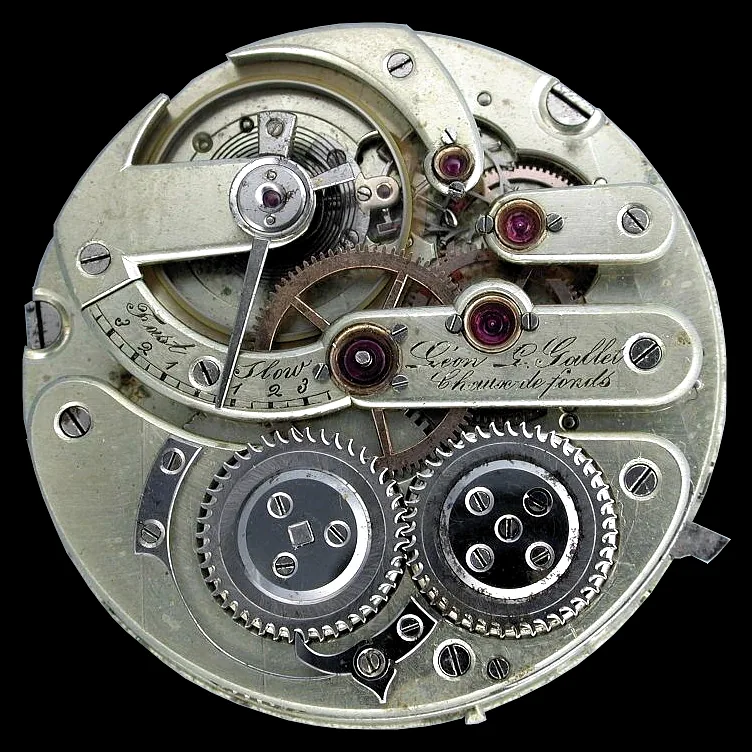
The 1880 act mandated the establishment of official Swiss Bureau de Contrôle (Assay Offices) in key horological hubs. To identify which specific office tested and stamped a watch case, a miniature city letter was engraved directly beneath or adjacent to the grouse mark:
- C: La Chaux-de-Fonds
- G: Geneva (Genève)
- B: Bienne (Biel)
- L: Le Locle
- N: Neuchâtel
- S: Schaffhausen
- P: Porrentruy
This standardized system remained the legal standard for over five decades until November 24, 1934, when Switzerland overhauled its precious metal legislation and introduced the unified duck hallmark for all silver purities, effectively retiring the grouse mark. Therefore, any pocket watch case bearing the grouse hallmark can be decisively dated between 1882 and 1934.
Metal Purity and Standards
The selection of .800 fine silver as a primary standard was a deliberate metallurgical and economic choice by Swiss manufacturers during the late Victorian and Edwardian eras. While sterling silver (.925 fine silver) was the statutory standard in the United Kingdom, it was relatively soft and prone to denting, stretching, and rapid wear when applied to heavy pocket watch cases subject to daily pocket friction, mechanical stress, and key-winding force.
By alloying 800 parts pure silver with 200 parts pure copper, Swiss metallurgists produced a material that maintained the brilliant lustre and corrosion resistance of silver while gaining exceptional mechanical hardness. This .800 alloy was especially crucial for complex case structures, including:
1. Hunter Cases (Savonnette): Key-less winding pocket watches featuring a spring-loaded front cover required rigid rim hinges and precise catch tabs that would not deform over thousands of opening cycles.
2. Open-Face Cases (Lépine): Required firm snap-on bezels and tight-fitting rear cuvettes (dust covers) to seal the movement against pocket lint, moisture, and debris.
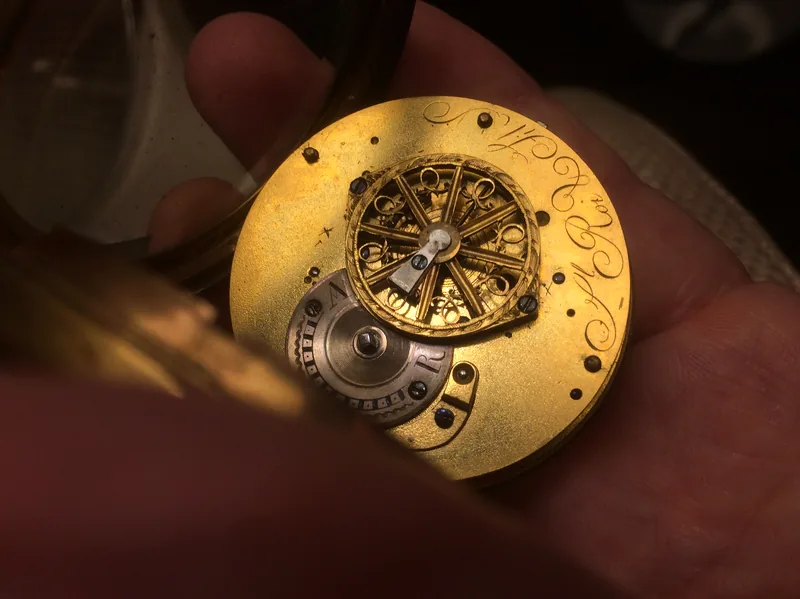
In many instances, watch cases stamped with the grouse hallmark feature decorative gilding along the bezel rims, hinges, and bow. Known widely in collector terminology as Galonné silver (or rose-gold wash), these cases were stamped with the grouse mark on the silver substrate to guarantee the underlying .800 purity, even though thin bands of rose gold were bonded to the exterior edges for aesthetic contrast.
How to Identify on Vintage Watch Cases
Locating and correctly identifying a authentic pocket watch silver hallmark grouse (woodcock) .800 silver stamp requires a systematic physical inspection of the watch case architecture. Because Swiss laws mandated that every detachable silver component pass assay inspection, the hallmark was typically struck in multiple locations across a single watch case.
Key locations to inspect with a high-magnification optical loupe include:
- Inside the Outer Case Back: Stamped directly into the central recessed field, often flanked by the manufacturer’s trademark, serial number, and explicit numerical purity stamps such as "0.800" or "800/1000".
- Inside the Cuvette (Dust Cover): Located on the inner face of the hinged metal lid protecting the movement. Note that base-metal cuvettes (often marked Metal or Cuivre) will not carry the grouse mark.
- Inside the Front Cover (Hunter Cases): Stamped along the smooth internal perimeter of the front lid.
- The Case Neck / Pendant and Bow: Extremely micro-stamped onto the narrow metal stem housing the winding arbor or on the inside loop of the attachment bow.
When analyzing the hallmark under magnification, look for crisp, deep impression borders. A genuine grouse stamp shows a distinct bird shape facing left or right (depending on die variation), standing upright with an elongated beak and defined breast curvature. Near the feet or lower border of the bird shield, look for the microscopic regional assay letter (such as 'C' or 'B').
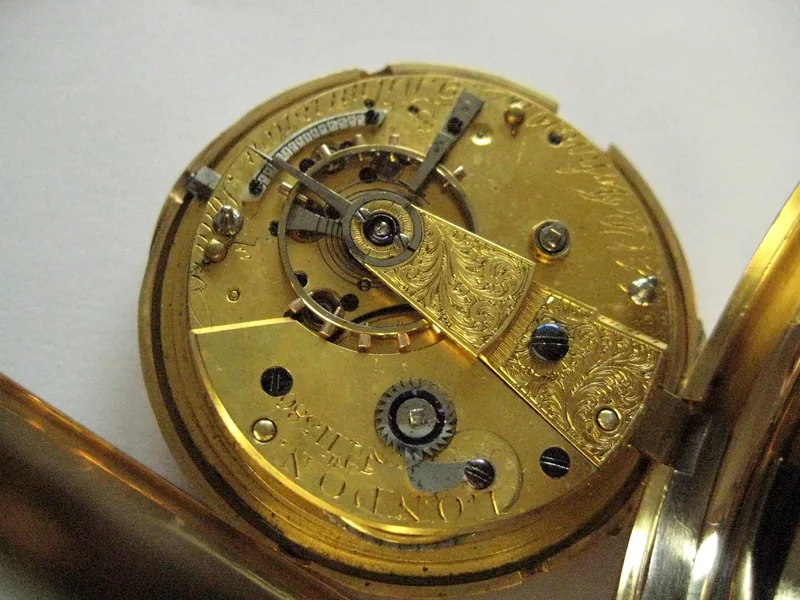
It is also common to find the grouse mark alongside complementary foreign import marks. For instance, Swiss watches exported to Imperial Germany after 1888 will feature both the Swiss grouse hallmark and the German import mark—a crescent moon and imperial crown (Halbmund und Krone)—stamped side-by-side. This dual hallmarking confirms both Swiss manufacture and legal entry into the German Reich market.
Dating and Authentication Value
The primary utility of the grouse hallmark for horologists lies in its tight chronological boundaries and absolute regulatory integrity. Because the Swiss assay system operated under strict federal oversight with severe legal penalties for fraud, the presence of an authentic grouse punch serves as immutable physical evidence regarding the origin and date parameters of the timepiece.
When authenticating a timepiece using the pocket watch silver hallmark grouse (woodcock) .800 silver stamp, consider the following forensic matrix:
| Diagnostic Element | Historical Reality / Verification Standard | Chronological Significance |
|---|---|---|
| Hallmark Presence | Official Swiss Grouse (Woodcock / Bécasse) stamp present | Case produced strictly between Jan 1, 1882 and Nov 24, 1934 |
| Purity Numerical Markings | Accompanied by "0.800", "800", or "800/1000" decimal stamps | Confirms 80% silver alloy content verified by Swiss assay |
| Assay Office Letter | Micro-letter (e.g., 'C', 'G', 'B', 'L') beneath bird | Identifies specific regional testing laboratory in Switzerland |
| Companion Marks | Presence of German Crescent & Crown (post-1888) or Poinçon de Maître | Refines export destination and case maker identity |
Authenticators must remain vigilant against potential fakes or altered cases. Common irregularities include soft, double-struck marks indicative of crude modern punch dies, or cases where a genuine silver back cover has been spliced onto a base-metal body. Always verify that all major case components—the middle case ring, bezel, cuvette, and back cover—bear matching serial numbers alongside their respective grouse stamps.
Collector Significance
From a market standpoint, pocket watches stamped with the grouse hallmark represent the quintessential industrial heritage of Swiss watchmaking during its absolute golden era. Millions of high-quality silver pocket watches powered by movements from famed manufactures—such as Omega, Longines, Zenith, Tissot, and Doxa—were stamped with this specific mark between 1882 and 1934.
For collectors, the presence of a clean, legible grouse mark adds several layers of valuation appeal:
1. Material Assurance: It provides definitive proof that the case is solid .800 silver throughout, rather than silver-plated brass (nickel silver/Argentan) or electroplated base metal.
2. Historical Traceability: It bridges the gap between movement serial numbers and case manufacturing, allowing horological researchers to trace trade patterns, export routes, and regional workshop hubs like La Chaux-de-Fonds and Le Locle.
3. Aesthetic and Condition Indexing: Crisp, unworn hallmarks indicate that a watch case has escaped overly aggressive polishing or excessive wear over its century-long life span. Cases where the bird's beak and feathers remain sharp command higher collector premiums.
When preserving and maintaining a vintage watch case bearing the pocket watch silver hallmark grouse (woodcock) .800 silver stamp, collectors should refrain from using heavy abrasive metal polishes or ultrasonic baths containing harsh acid detergents. Gentle hand-cleaning using a specialized silver polishing cloth will safely remove surface oxidation while retaining the deep, natural patina within the microscopic recesses of the hallmark—preserving its historical legibility and technical value for generations to come.