In the world of antique horology, few elements provide as much definitive intelligence as the small, precision-punched symbols stamped inside precious metal watch cases. For horological scholars, auctioneers, and vintage pocket watch collectors, understanding Swiss official hallmarks is critical to authenticating period timepieces, verifying metallurgical integrity, and tracing a watch’s journey through international trade routes. Among the diverse array of Swiss fauna adopted by federal legislation in the late nineteenth century, the squirrel—known in French as the écureuil—occupies a distinct position of interest.
This comprehensive technical guide explores the technical, historical, and practical aspects of the pocket watch hallmark swiss squirrel .900 silver case. We will analyze its regulatory origins under the landmark Swiss Federal Act of 1880, clarify the metallurgical standards associated with .900 fine silver casing, outline microscopic identification methods, and demonstrate how to utilize these markings to date and value exceptional vintage pocket watches.
1. What is the Swiss Squirrel Hallmark?
The Swiss squirrel hallmark is an official federal control stamp (*poinçon de contrôle*) established by the Swiss Confederation to guarantee precious metal purity in horological casing. Graphically, the mark depicts the silhouette of a sitting or crouching squirrel in side profile, rendered with impressive engraver detail considering its microscopic dimensions—typically measuring less than 1.5 millimeters in height. Depending on the specific punch size and assay office, the hallmark reveals the curled tail, distinct ear tufts, and small paws of the rodent, often framed within a defined border shape.
Introduced under the unified federal system that came into enforcement on January 1, 1882, the squirrel was part of a standardized system of animal symbols designed to replace the chaotic, decentralized system of cantonal and municipal hallmarks that had governed Swiss watchmaking for centuries. Under this federal framework, specific animals were assigned to specific metal standards. While the grouse (*coq de bruyère*) designated .800 silver and the bear (*ours*) designated .935 silver, the squirrel (*écureuil*) was codified into Swiss law as an official hallmark.
 rolex-database-hallmarks-swiss-squirrel-1-3dcaac0a.webp" alt="pocket watch — Clockwork of the Holy Cross Church in Dülmen, North Rhine-Westphalia, GermanyThe" style="max-width:100%; height:auto; display:block; margin:15px auto;">
In collector circles and physical market inventory, cases exhibiting the pocket watch hallmark swiss squirrel .900 silver combination represent high-grade antique silver timepieces manufactured primarily between 1882 and 1934. While federal legal codes primary designated the squirrel mark for .585 (14-karat) gold, Swiss case makers frequently navigated complex international export tariffs and cross-border assay requirements. As a result, silver pocket watch cases destined for high-standard foreign markets—such as Germany, the Austro-Hungarian Empire, Russia, and the Americas—were frequently struck with the squirrel stamp alongside explicit numerical ".900" purity marks and local assay office identifiers to satisfy double-guarantee regulations.
2. Historical Origins and Assay Office
Prior to 1880, the Swiss watchmaking industry suffered from significant regulatory fragmentation. Each canton—Geneva, Neuchâtel, Bern, Vaud, and Jura—maintained its own independent assay protocols, town marks, and purity tolerances. A silver pocket watch case stamped as fine silver in La Chaux-de-Fonds might be rejected or melted down upon entering foreign markets with strict centralized hallmarking systems, such as Great Britain or Imperial Germany. This lack of uniformity exposed Swiss horology to counterfeiting and alloy debasement allegations during the rapid expansion of international watch trade in the late Victorian era.
To preserve the global reputation of Swiss timekeeping, the Swiss Federal Assembly passed the landmark *Federal Act on the Control and Guarantee of the Trade in Gold and Silver Articles* on April 16, 1880, which officially entered into full legal force on January 1, 1882. This legislation established a centralized network of official Federal Assay Offices (*Bureaux de Contrôle*) positioned directly within major watchmaking regions. Independent federal assayers were tasked with testing metal samples via cupellation and touchstone methods before striking the official federal hallmark into the raw case components.
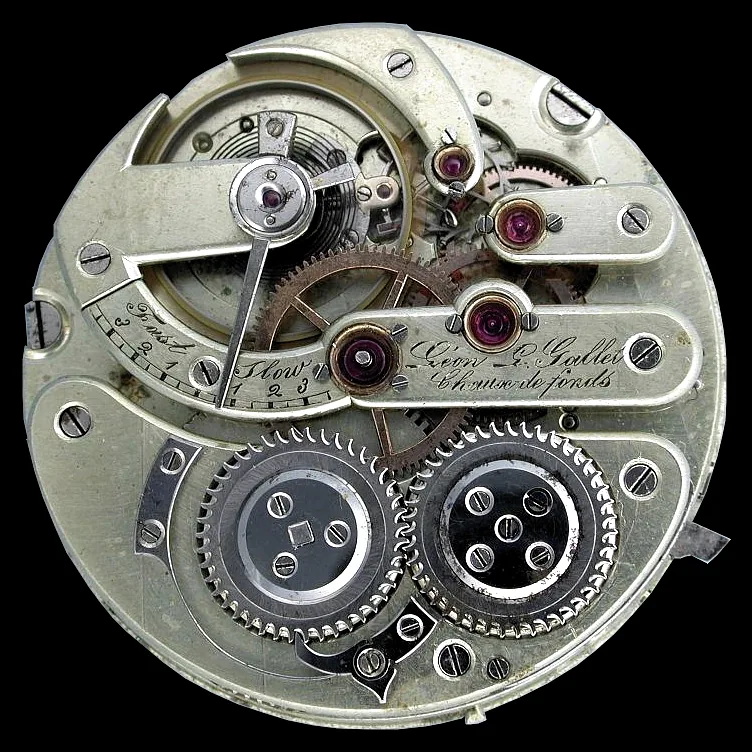
To identify the exact assay office responsible for testing a given pocket watch case, the Swiss system incorporated microscopic letters—known as *Differenzialzeichen* or office identifiers—placed directly under or adjacent to the squirrel symbol:
- G – Geneva (Genf)
- C – La Chaux-de-Fonds
- L – Le Locle
- B – Bienne (Biel)
- N – Neuchâtel
- P – Porrentruy
- S – Saint-Imier / Schaffhausen
This assay system remained active without fundamental modification until June 20, 1933, when major legislative revisions restructured Swiss hallmarking law (effective mid-1934), replacing the animal system with the modern head of a Saint Bernard dog (*tête de Saint-Bernard*) for all precious metal categories. Consequently, any authentic pocket watch case stamped with the official federal squirrel punch can be precisely bounded to a production window of 1882 to 1934.
3. Metal Purity and Standards
In vintage pocket watch construction, silver was chosen not only for its lustrous aesthetic appeal but also for its structural durability and thermal properties. Pure silver (.999 fine) is far too malleable to serve as an effective protective enclosure for high-precision mechanical movements; under daily wear, a case constructed of pure silver would deform, compromising the dust seals, hinge alignment, and bezel fitment necessary to protect the escapement and gear train.
To overcome these physical limitations, horological metallurgists created binary alloys by combining fine silver with base metals, predominantly copper. The silver purity standards commonly found in vintage Swiss pocket watches include:
- .800 Fine Silver (80% pure): The baseline Swiss standard for domestic and low-tier export pocket watches, officially marked with the Grouse (*Coq de Bruyère*).
- .875 Fine Silver (87.5% pure / 84 Zolotniks): Formulated primarily for export to the Russian Imperial market under Tsarist hallmarking regulations.
- .900 Fine Silver (90% pure): Known internationally as "Coin Silver." This alloy strikes an optimal balance between high precious metal purity, bright silver radiance, and mechanical rigidity.
- .925 Fine Silver (92.5% pure): Traditional Sterling Silver, predominantly used for export to Great Britain and the Commonwealth.
- .935 Fine Silver (93.5% pure): A high-purity Swiss grade engineered specifically to comfortably exceed British sterling import tests, marked with the Bear (*Ours*).
The 90% silver and 10% copper formulation of .900 silver provided exceptional structural integrity for pocket watch case components. The addition of copper increases the tensile strength and Vickers hardness of the metal, enabling case makers (*monteurs de boîtes*) to manufacture thin, rigid cuvettes (dust covers), spring-loaded hunter covers (*savonnette* cases), and precise threaded bezels without risking physical distortion.
When analyzing a pocket watch hallmark swiss squirrel .900 silver case, collectors are observing an item designed for international export markets that strictly enforced a minimum purity of 900 parts per thousand. For instance, after the enactment of the German Coinage Act and the German Hallmarking Act of 1888, watch cases imported into the German Empire were required to meet or exceed .800 or .900 purity standards and bear the Imperial *Reichskrone und Halbmond* (Crescent and Crown) stamp alongside foreign origin hallmarks. Swiss manufacturers targeting this profitable market routinely produced .900 fine silver cases, applying the appropriate federal assay marks to satisfy both Swiss border authorities and foreign customs offices.
4. How to Identify on Vintage Watch Cases
Proper identification of the Swiss squirrel hallmark requires systematic examination techniques and specialized optical magnification. Because these hallmarks were struck into finished or semi-finished silver components, locating and evaluating them requires an understanding of pocket watch case architecture.
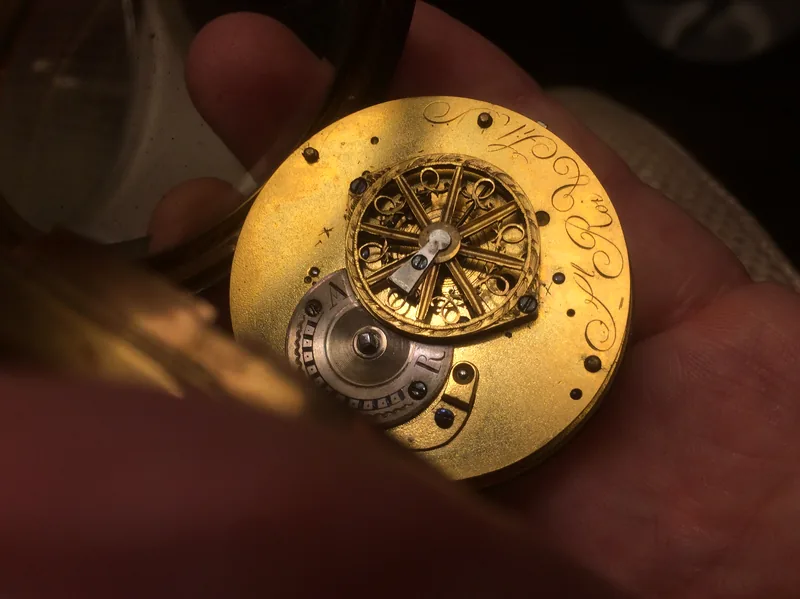
Primary Locations on Pocket Watch Cases
Inspect the internal surfaces of the pocket watch case assembly using a illuminated triplet loupe offering 10x to 20x magnification. The hallmark set is typically concentrated in the following zones:
- Inside the Main Case Back (Fond): The primary location for federal hallmarks, purity stamps, case serial numbers, and case maker trademarks (*poinçons de maître*).
- Inside the Cuvette (Dust Cover): On open-face (*Lépine*) and hunting-case timepieces, the inner silver dust cover protecting the movement frequently mirrors the hallmarks found on the outer case back.
- The Inner Bezel Rim: The narrow internal channel of the front bezel frame.
- The Neck (Pendant) and Bow: On high-grade cases, miniature control marks were struck onto the neck shaft or the internal curve of the bow (pendant ring) to prevent component substitution.
Anatomy of an Authentic Stamping Group
An authentic .900 silver Swiss case from the 1882–1934 era does not display the squirrel hallmark in isolation. Instead, it features a cohesive group of stamps:
- The Numerical Purity Punch: Stamped as "0.900", ".900", or "900". This clearly specifies the 90% silver alloy composition.
- The Official Swiss Hallmark (Squirrel): The crisp profile of the squirrel, containing the miniature assay office letter beneath its feet or embedded within the strike border.
- The Maker’s Mark (Poinçon de Maître): The registered symbol, initials, or shield of the specialized case manufacturer (e.g., Huguenin Frères, François Borgel, Holy Frères, or internal casing shops of integrated manufactures like Longines, Zenith, or Omega).
- Case Serial Numbers: Unique numeric sequences stamped into the case components to ensure all hand-fitted parts (bezel, middle, back, cuvette) stayed together during factory assembly.
- Foreign Import Stamps (If Exported): Supplemental punches such as the German Crescent and Crown (*Halbmond und Krone*), Tsarist Russian 84 zolotnik control marks, or British import marks added upon arrival at destination ports.
Distinguishing Genuine Hallmarks from Counterfeits and Castings
With vintage watches commanding substantial premiums, collectors must distinguish genuine hand-punched hallmarks from modern electroformed cast fakes, re-struck stamps, or acid-etched reproductions. Genuine federal punches were applied with sharp mechanical impact before final hand polishing. Under high magnification, an authentic strike exhibits clean, sharp vertical wall contours, microscopic displacement halos (*burrs*) around the edges of the depression, and internal wear that matches the ambient patination and aging of the surrounding silver surface.
5. Dating and Authentication Value
The presence of a verified Swiss squirrel hallmark provides a definitive chronological foundation for dating a pocket watch case. Because the squirrel symbol was introduced specifically under the 1880 Federal Act and phased out during the federal hallmark consolidation of 1933–1934, any pocket watch bearing this mark can immediately be assigned to the **1882–1934 production window**.
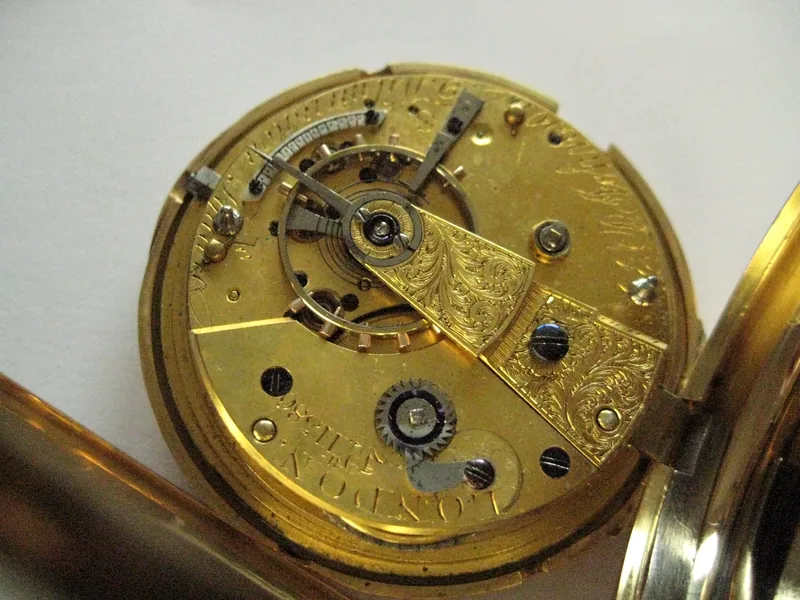
To refine this 52-year date range into a narrow bracket, horological experts synthesize hallmark evidence with movement diagnostic data:
- Cross-Referencing Movement Serial Numbers: Major Swiss manufactures—including Longines, Omega, IWC, Zenith, Vacheron Constantin, and Audemars Piguet—maintained meticulous factory ledgers. Matching the case serial numbers and hallmark period to the movement serial number allows collectors to confirm whether the watch movement and silver case began life together in the factory (original pairing) or represent a later "marriage."
- Evaluating Case Maker Marks: Case makers changed their registered trademarks (*poinçons de maître*) periodically. For example, specific hammer symbols with internal numbers were introduced in 1934, whereas earlier periods utilized distinct initials, geometric frames, or trade logos registered with the Federal Bureau of Intellectual Property in Bern.
- Assay Office Operational Dates: Certain regional assay offices operated under specific letter codes during defined operational shifts. Verifying that the assay letter (e.g., 'C' for La Chaux-de-Fonds) matches the known geographic operation of the watch brand further validates originality.
From an authentication standpoint, finding a clear pocket watch hallmark swiss squirrel .900 silver stamping group dramatically reduces the risk of encountering re-cased movements or modern fabrications. It confirms that the case was subject to strict federal metallurgic testing in late 19th or early 20th-century Switzerland, ensuring its historic integrity.
6. Collector Significance
For discerning horological enthusiasts and antique watch investors, pocket watches featuring the Swiss squirrel hallmark in .900 fine silver occupy a compelling niche. While base-metal (nickel, argentan, or gunmetal) and low-grade silver (.800) cases were produced in massive quantities for utility grade watches, timepieces housed in .900 fine silver were typically intended for middle to high-tier markets, housing well-finished movements.
Timepieces enclosed in high-grade .900 silver casing often feature advanced horological specifications, such as:
- Fully jeweled train layouts (15 to 23 jewels with screwed gold chatons).
- Precision adjustment mechanisms (micro-metric swan-neck regulators, compensated Guillaume balance wheels).
- High-grade complications including deck-chronometers, split-second (*rattrapante*) chronographs, calendar functions, and quarter or minute repeaters.
Beyond horological complexity, the physical condition of the hallmarks themselves plays a critical role in market valuation. Over decades of ownership, routine handling, case opening, and aggressive polishing with abrasive metal cleaners can erode fragile hallmark outlines, obscuring the squirrel profile and erasing the assay letter. A watch case that retains sharp, crisp, fully legible hallmarks commands a significant premium among purists, as it indicates minimal metal loss and careful preservation across its century-long lifespan.
When caring for a vintage **pocket watch hallmark swiss squirrel .900 silver** case, collectors should avoid heavy chemical dips or aggressive mechanical buffing wheels. Silver tarnish (silver sulfide) is a natural environmental reaction that acts as a protective patina. Gentle cleaning with dry micro-fiber jewelry cloths is recommended to preserve the sharp internal relief of historic Swiss punches, ensuring that these vital marks of authenticity remain intact for future generations of horologists.